
Shining a light on solar power in New Ulm
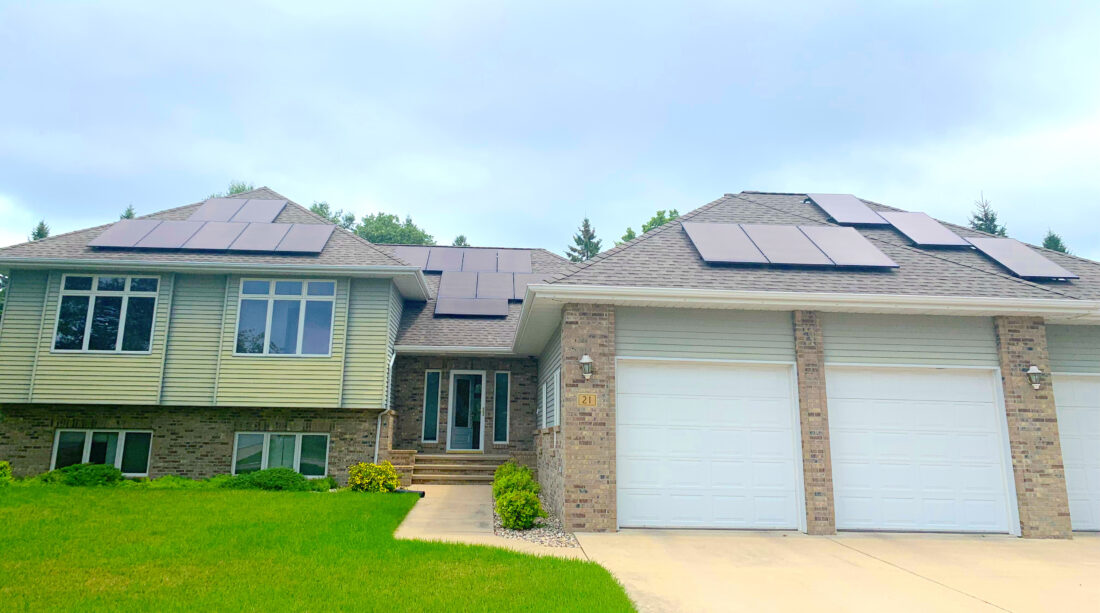
Dr. John Brownfield’s home in New Ulm, where 36 solar panels were installed on the pitched roof three years ago. (Photo by John Brownfield)
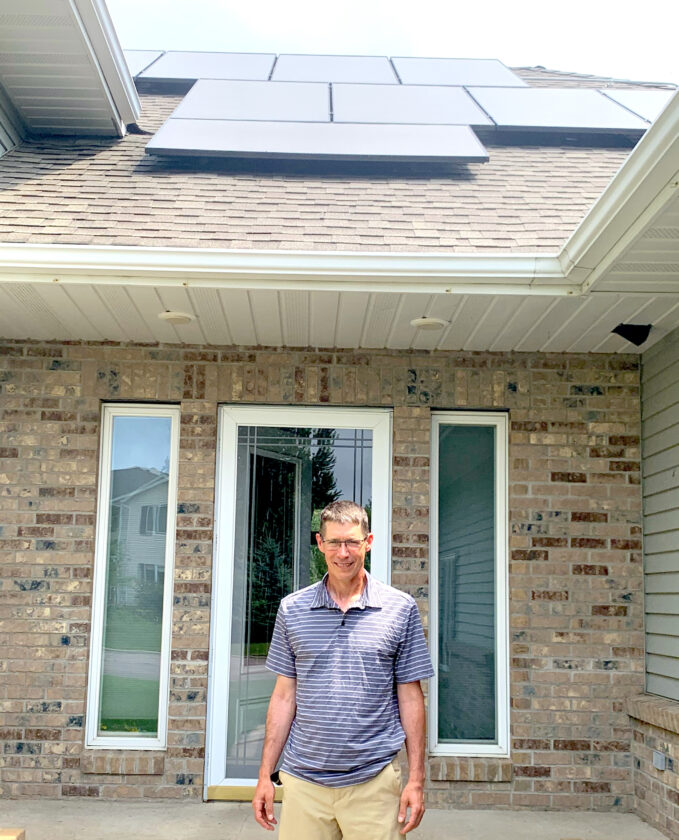
Dr. John Brownfield stands in front of his New Ulm home, which has performed well with its solar panel system. (Photo by Sheila Brownfield)
Dr. John Brownfield’s home in New Ulm, where 36 solar panels were installed on the pitched roof three years ago. (Photo by John Brownfield)
Dr. John Brownfield stands in front of his New Ulm home, which has performed well with its solar panel system. (Photo by Sheila Brownfield)
Trending
NEW ULM -- Dr. John Brownfield installed solar panels on his home three years ago and remains enthusiastic about the decision.
The house, built in 1995, with a pitched roof with no shading trees proved to be a good candidate for solar, according to Brownfield.
"The house gets kind of baked by the sun," Brownfield said. "I think our house is an ideal fit for solar."
Brownfield opted for 36 SunPower panels. The system is grid-tied without battery storage. He said that the power system is very reliable, with power outages being infrequent. For that reason, he decided batteries were not worth the extra expense.
The system has performed well for much of the year. Brownfield reports that the panels produce more energy than his household uses for about eight months out of the year.
His standout month was last May, when his combined electric and city bill dropped to just $4, before he bought his electric vehicle.
"Surprisingly, May was the best month," he said. "May is one of the better months because you don't have to use your air conditioning as much."
Winter months are more challenging in Minnesota.
"For sure January and February and December, we have to use more than we produce," Brownfield said.
Even during those colder months, the system still provides meaningful energy offsets and reduces reliance on the grid, according to Brownfield.
The installation process went smoothly with no major issues involving permits or working with local utilities, he said. At the time, a federal 30% tax credit helped lower the overall cost.
Brownfield said the net cost after incentives came to around $30,000, comparable to what some local homeowners have paid for geothermal systems.
The installing company projected it will take about 14 years of energy savings to break even after the cost of the system and financing.
New Ulm Public Utilities takes a neutral stance on residential solar. Director Brett Fleck said residential solar helps the state meet its renewable energy and zero-carbon goals and gives customers more control over their electricity bills.
From the utility's perspective, however, it creates a financial challenge because the city must still maintain power plants, substations, and the distribution system for times when the sun is not shining.
"We're probably more neutral on it," Fleck said. "If our customers want to invest in solar, we're certainly not going to get in their way. But at this time, I don't believe we're going to be going out there encouraging people to do that just because of the financial part of it."
Net metering is available for customers who install solar. New Ulm Public Utilities previously offered incentives, but those ended more than 10 years ago.
There are currently no grants or rebates offered by the utility for installing solar.
Fleck encouraged residents considering solar to vet vendors carefully, understand the terms of any contract, and have their roof inspected.
"Putting a 20- or 30-year life solar panel on a roof that is nearing the end of life is going to end up costing you more in the long run," he said.
Solar remains a small part of New Ulm's overall energy picture.
According to a recent PUC report, there are 37 distributed solar installations in New Ulm totaling 406.74 kilowatts of capacity.
The systems are estimated to produce about 668,000 kilowatt hours per year, roughly 0.3% of the city's total electricity supplied.
While solar has worked well for Brownfield, it is not a good fit for every house.
Another New Ulm resident, retired internist Dr. Joan Krikava, explained why her home wasn't suitable.
"We do not have solar panels. Our house doesn't have enough flat space to make it worthwhile."
Krikava's situation is fairly common.
Many older homes, particularly those with complex rooflines, limited suitable surface area, heavy tree shading, or less-than-ideal orientations, face similar obstacles.
"Unfortunately, not every house is able to do it," Brownfield said.
He believes wider adoption of rooftop solar could benefit the community.
"I think having solar panels on roofs makes more sense than having solar farms out in the fields where we already have the space. Why not put them on places that don't have to take up space somewhere else?"
Federal tax credits have been an important incentive for many homeowners, although they can change over time.
Local utilities, including New Ulm Public Utilities, manage net metering and the interconnection process.
Anyone thinking about solar is encouraged to research current rebates, financing options (often similar to auto loans,) and specific requirements by speaking with their utility company and multiple qualified installers.
Brownfield worked with Wolf River as the installer (using SunPower panels.)
He advised getting quotes from several companies.
“I really like having the panels and it's been a good experience so far," he said.
Whether your home turns out to be a strong candidate like Brownfield's or faces limitations like Krikava's, taking time to understand the real-world factors is the best way to make an informed decision about renewable energy.