
“Two years before reconstruction”
Feasibility study first of many actions for Hermann the German monument
Trending
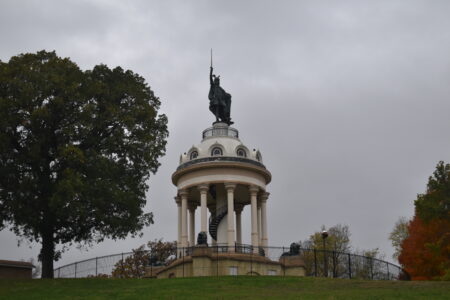
NEW ULM -- New Ulm is looking for the best path forward to fix issues with and restore the Hermann the German monument.
To find out, New Ulm City Council approved a feasibility study to be conducted by MacDonald and Mac Architects for $9,744. This company specializes in historical architecture and is using a feasibility study to determine what options are available for addressing issues the monument has. City Planner John Knisley described the work that has been done up to this point.
"We have taken the extra step of doing core samples of both the deck and the base of the monument," he said. "That was in addition to the 2019 assessment study that we did. We put those two pieces of information together; it was found that there are substantial structural issues with the monument. We had a discussion with the State Historic Preservation Office (SHPO) at the site, and staff would like to pursue reconstruction rather than rehabilitation of the monument. The SHPO is in favor [of this decision]."
Knisley said a document will need to be created that outlines the reasons for doing reconstruction over rehabilitation. By conducting the feasibility study, it will allow them to get all of the information related to this together and study it. Putting this together is also necessary for the Minnesota Historical Society, which will need justification for the city's plans regarding the historic landmark.
The study is expected to be complete after 16 weeks, meaning the results will not be in until after the new year begins. Council president Andrea Boettger thanked Knisley for their work and explained what reconstruction will mean for the monument versus rehabilitation.
"The reconstruction versus the rehabilitation is taking it apart piece by piece, fixing it, and putting it back together versus leaving it as one and trying to rehabilitate that as it is," she said. "We all have been in the meetings and know a lot of the issues that we have with Hermann."
Boettger believed reconstruction would cost more, but Knisley said it would cost less to take the building apart and put it back together than to continue doing rehabilitation work. Though the feasibility study is a step forward, Knisley told the council it's an early step in a long process before work can even begin.
"We’ll be coming back to the council multiple times through this process," he said. "To give you a realistic timeline with the grant cycles the way they are, we’re looking at at least two years before we start to do reconstruction. We’ll be coming back to the council through each grant cycle to give you an update as well as to be able to apply for the grants."
Councilman Dave Christian made the motion to approve the feasibility study. Councilman Eric Warmka provided the second.