Hurry up and wait
Inflation, supply chain raising cost of Oak Hills project
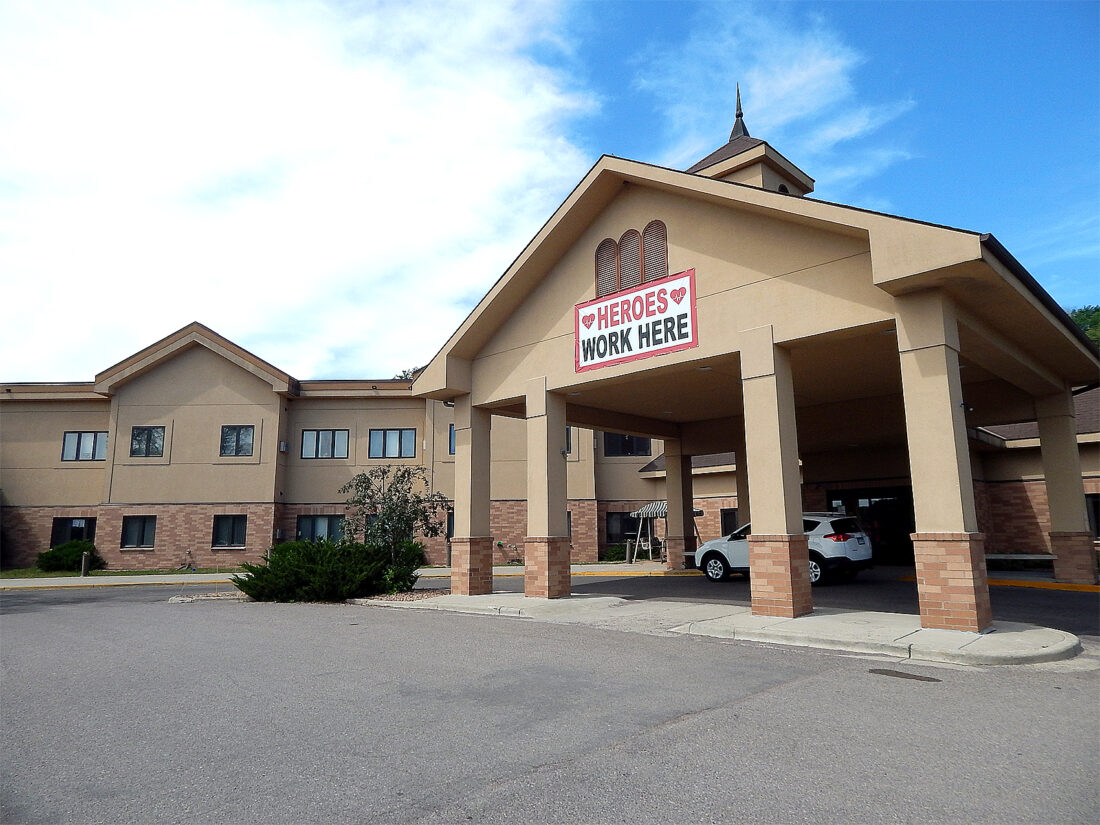
Staff photo by Fritz Busch Several pressure points from different directions are bearing down on the Oak Hills expansion project, with the global economy in inflation and supply-chain delays literally expanding the cost of the project.
NEW ULM– The fundraising need for the Oak Hills Living Center expansion project has increased from $2.6 million to $3.3 million.
Since January, Oak Hills has been fundraising to cover the cost of facility expansions. Originally it was estimated a $13 million project; with $10.4 million in tax-exempt bonds with the remaining $2.6 million raised through a community capital campaign.
However, due to inflation, costs have increased.
The latest round of budgeting has placed the total cost at $14.8 million. The new funding formula will have $11.5 million in tax-exempt bonds and $3.3 million in community fundraising.
Currently, the community has already raised $1.07 million.
Oak Hills Fund Development Director Wendy Lang said the project will move forward despite cost increases.
“If we wait, the prices will just go higher,” Lang said. Even with the cost increase, it is still more financially responsible for the community to start the project now, saving money in the long run.
In 2019, the state announced plans to change licensure for assisted living facilities. Changes went into effect Aug. 1, 2021. The expansions planned will be more expensive with the changes to licensure, but Oak Hills could be grandfathered in under the previous licensure if the expansion plans were submitted before Aug. 1, 2022. This means Oak Hills must be ready to start construction before the end of this month.
Originally, groundbreaking was set July 14, but this has been pushed back until the bonding process is finished. Oak Hills is currently waiting on approval on the bonds, then bids can be released and work can begin.
Supply-chain issues also force Oak Hills to make immediate decisions on items needed for the construction like generators and electrical panels because there is a year wait time on delivery.
The other need is related to demographics. A market-rate study conducted in 2019 and 2020 confirmed Oak Hills Living Center will need to restructure its assisted living to accommodate a growing and aging population in the area.
Oak Hills currently has 94 skilled nursing units — 22 dedicated to short-term rehab; 16 private pay assisted living and 16 Housing and Urban Development units for a total of 126 units, but this is not enough to meet future demand.
New expansion is set to include 15 memory care and 15 enhanced assisted living units; renovation of 16 assisted living units; and creation of community space, chapel and renovated entrances.
The enhanced assisted living units are hybrids of assisted living and skilled nursing care. Individuals in the enhanced assisted living facilities will be able to maintain the same level of independence, but extra assistance if needed.
Assisted living spaces are especially valued because these types of living facilities are the least expensive option for residential care, compared to home care or nursing home care.
The need for assisted living space in the region is expected to increase further following the recent announcement Winthrop’s care facility, Good Samaritan Society, is consolidating services with a location in Arlington effective Aug. 26. The Lodge of Winthrop assisted living will remain open, but other residents will need to move to other locations.
“A number of factors including ongoing staffing challenges, a decline in the number of residents, and the rising cost of providing care and services have unfortunately led to a situation that is not sustainable,” Good Samaritan Society executive director Mike Deuth said. “We look for creative solutions, but unfortunately, sometimes short-term fixes are not enough to address the long-term challenges. In Winthrop, it has been extremely challenging to hire and retain nursing staff to ensure we can continue to maintain the high-quality, safe care our residents need and deserve.”
Winthrop’s struggles are not unique. Lang said there is a need for staffing increase for all caregiver wages, with 40 nursing homes in Minnesota at risk of closure.
“We need community members to reach out to legislators and advocate they go back to work in a special session to permanently increase caregiver wages,” Lang said in an email. “Just 6% of the budget surplus would fund caregiver wages to $25/hour permanently.”
Local News

MVL has gone ‘Crazy for You’
‘Grandparents Happy Hour Law’ won’t change much in NU
NEW ULM — It appears Minnesota’s new “Grandparents Happy Hour” law effective Aug. 1, 2026 in nursing homes ...
Police logs
New Ulm Police • Received a two-vehicle injury crash reported at 10:58 a.m. Thursday on Highway 19 east of ...
Potential rate increase for water and wastewater
‘With malice toward none’