
Potential rate increase for water and wastewater
Trending
NEW ULM -- The New Ulm Public Utilities Commission discussed proposed rate increases for water and wastewater service Tuesday to cover rising capital costs and strengthen reserve balances.
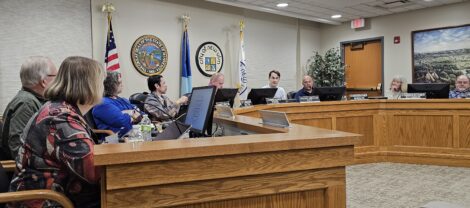
The commission held a special work session at city hall following its regular meeting.
Consultant Dave Berg of Dave Berg Consulting presented the results of a cost-of-service and rate study for the two utilities.
Berg said capital spending needs have risen sharply. Water utility capital improvements averaged about $980,000 per year over the past six years but are now projected at $2.1 million per year for the next five years.
Wastewater capital spending is projected to increase from about $1.5 million to $3.5 million annually.
Without rate increases, reserve balances for both utilities would fall millions of dollars below target levels by 2030, Berg said.
Water reserves would decline from about $3.4 million to a negative $5.5 million. Wastewater reserves would drop from about $4.8 million to a negative $5.8 million.
Berg recommended a five-year series of gradual increases: approximately 16.5% per year for water and 11.5% per year for wastewater.
He also recommended phasing out inverted block rates for large commercial and industrial customers while retaining them for residential customers to promote conservation.
A single large increase of 63% for water and 41% for wastewater was modeled, but not recommended.
For a typical residential customer using 3,000 gallons per month, the combined water and wastewater bill would rise about $4.49 in the first year, Berg said. A customer using 10,000 gallons per month would see an increase of roughly $10 to $11.
New Ulm's rates would remain competitive with or lower than those in Marshall, St. Peter and Willmar. Only Hutchinson had lower rates in the comparison.
Utilities Director Brett Fleck said the city has maintained high water quality and service reliability by deferring projects, securing grants and using interfund loans.
Many assets, including pipes installed in the 1890s and much of the wastewater treatment plant built in the mid-1970s, are reaching the end of their useful lives, he said.
Fleck said staff has done an "incredible job squeezing the life out of these assets," but additional investment is needed to avoid risks such as insufficient water supply or pressure and sewer overflows.
A few New Ulm city council members were in the audience for the session. When the floor was opened for discussion, First Ward City Councilor Dave Christian raised his hand to voice concerns about the effect on large industrial customers.
"The Schell's brewey, Kraft Foods, Minnesota Valley Testing, 3M, how are they gonna react to that?" Christian said. "You can be looking at $10, $12, $14,000 a month increase [and] I'm gonna get the phone call."
Christian said industrial budgets are set in advance and clear communication and possible separate timing for residential and industrial rate changes would be important.
Fleck said any rate changes would require commission approval followed by a 30-day publication period. He said staff plans additional outreach, including one-on-one meetings with major industrial users, presentations to the city council and public communication.
The commission agreed to hold additional work sessions in May to review capital plans before deciding on the timing and structure of any increases.
Berg cautioned that projections are estimates.
"The only guarantee I give is that the projections are wrong," he said. "You always have to keep your eye on the ball."
Fleck said the previous water and wastewater rate study began in 2019, with the first increase from that study taking effect in 2021. The proposed increases would follow that four-year plan.
The commission took no formal action on the rate recommendations. Additional discussion and possible votes are expected in coming weeks.