
Trending
NEW ULM--Captain Willibald "Bill" Charles Bianchi will be honored and remembered for a life of extraordinary courage, service, and quiet humility. Visitation gathering will be held from 10:00 to 11:00 a.m. at the New Ulm National Guard – Readiness Center in New Ulm on Saturday, May 2nd. A military tribute speech ceremony will take place at 11 a.m. at the Readiness Center prior to the procession to the cemetery. A graveside service and full military honors will take place at 12:00 p.m. on Saturday, May 2, 2026, in the Soldiers Rest Section of the New Ulm City Cemetery. A reception will follow the burial ceremony back at New Ulm National Guard – Readiness Center. The Minnesota Valley Funeral Homes of New Ulm are assisting the family with arrangements at this time. To leave an online condolence for his family or sign the guestbook, please visit mvfh.org.
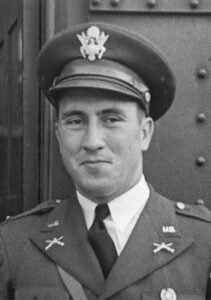
Captain Willibald "Bill" Charles Bianchi was born on March 12, 1915, in New Ulm, Minnesota, the son of Joseph and Caroline "Carrie" (Eibner) Bianchi. He was the second child and only son in the family, growing up alongside his sisters Josephine, Magdalene, Jermayn (Germaine), and Mary Louise.
Bill was raised on a 73-acre poultry farm south of New Ulm, where hard work was a daily expectation. He helped his father with farm chores that included milking cows and tending to chickens and turkeys. While Bill was still in high school, his father was tragically killed in an accident on the family farm. As a result, Bill left school to assume responsibility for operating the farm and supporting his mother and sisters. He later completed his high school education through the University of Minnesota Farm School in St. Paul.
At the age of 21, Bill enrolled at South Dakota State University in Brookings, majoring in animal science. While at SDSU, he was deeply involved in the Army ROTC program, attaining the rank of cadet major, and also played on the university's football team. He worked his way through college cleaning classrooms, maintaining furnaces, and working in the college print shop. Fellow students nicknamed him "Medals," a reference to his ROTC uniform, which he wore often, both out of necessity and pride. He graduated in 1940, and was commissioned a second lieutenant in the United States Army. Eager to serve, he requested foreign duty in hopes of seeing action as soon as possible.
In April of 1941, Bill was sent to the Philippines, where he served with the U.S. Army's 45th Infantry Regiment, Philippine Scouts. His early duties included training Filipino soldiers, a task in which he excelled. Under his leadership, raw recruits were transformed into disciplined and determined jungle fighters. Along with other officers of the first American expeditionary force of World War II, Bill worked against time and limited resources to prepare defenses against the advancing Japanese military.
As Japanese forces landed and advanced toward Manila, American and Filipino troops were forced into a fighting retreat onto the Bataan Peninsula. Lacking adequate equipment, aircraft, and armor, these early defenders of Bataan held the line while the United States mobilized for war. They were, in many respects, the pioneers of the American ground war in the Pacific.
On February 3, 1942, near Bagac in the Province of Bataan, then-First Lieutenant Bianchi distinguished himself in combat during the engagement known as the Toul River Pocket. When a rifle platoon was ordered to eliminate two heavily fortified enemy machine gun nests, Bianchi voluntarily advanced with the lead elements. Early in the action, he was wounded by two bullets through his left hand. Refusing first aid, he discarded his rifle and continued fighting with a pistol. He located one machine gun position and personally silenced it with grenades. Wounded a second time by two machine gun bullets through the chest muscles, he then climbed atop an American tank, manned its anti-aircraft machine gun, and fired into strongly held enemy positions until a third severe wound knocked him completely off the tank. His actions weakened the Japanese defenses enough that they were later captured with little or no additional loss of life.
For his bravery and valor above and beyond the call of duty, Bill was awarded the Congressional Medal of Honor. After a brief recovery period of just one month, he returned to active duty and was promoted to Captain.
On April 9, 1942, following the fall of Bataan, Captain Bianchi was captured by Japanese forces along with approximately 75,000 American and Filipino soldiers. After being held without food or water for 24 hours, the prisoners were forced onto the infamous 65-mile Bataan Death March. Despite suffering from hunger, dehydration, heat, and disease, Bianchi was repeatedly seen helping fellow prisoners, encouraging them, and preventing many from being killed by their captors.
Captain Bianchi was imprisoned at several camps, including Camp O'Donnell, Cabanatuan, and later Bilibid Prison in Luzon. Conditions worsened with each transfer. Prisoners endured starvation diets, forced labor, lack of medical care, and unsanitary living conditions. Throughout his captivity, Bianchi earned a reputation as a caregiver and advocate. He bartered with guards to obtain food from Japanese mess halls and helped distribute rations fairly, refusing to favor himself or others. Numerous fellow prisoners later wrote to his mother, crediting Bill with saving their lives.
In October 1944, Bianchi was transferred to Bilibid Prison, and in December was loaded onto the Japanese transport ship Oryoku Maru. After that ship was sunk, he was transferred to another unmarked prison ship anchored off Formosa. On the morning of January 9, 1945, an American aircraft, unaware that Allied prisoners of war were aboard, dropped a bomb into the ship's hold. Captain Bianchi was killed instantly. He was 29 years old. Fellow prisoners believed he was likely assisting the sick at the time of his death.
The Congressional Medal of Honor was presented to his mother, Carrie Bianchi, on June 7, 1946, at Fort Snelling in Minnesota. He remains the only Medal of Honor recipient from New Ulm and the only soldier from Brown County to receive the nation's highest award for valor during World War II.
For decades, Captain Bianchi was buried as an unknown at the National Memorial Cemetery of the Pacific in Honolulu and was memorialized on the Walls of the Missing at the Manila American Cemetery. Through advances in forensic science and DNA analysis, his remains were positively identified on August 11, 2025, finally allowing him to be brought home.
Captain Willibald "Bill" Charles Bianchi never married and left no direct descendants. His legacy has been preserved by his sisters and their families, who donated his Medal of Honor and other decorations to the Brown County Historical Society. The City of New Ulm honored him by naming Bianchi Drive in 1955, and the local American Legion Post was renamed Seifert-Bianchi Post #132 in his honor. South Dakota State University has also memorialized him through scholarships and monuments bearing his name.
Captain Bianchi's life stands as a testament to courage, selflessness, and unwavering character. He was a hero in battle, a protector in captivity, and a symbol of sacrifice whose story will continue to inspire generations. Blessed be his memory.
MVFH.org