
Wanda Gág House launches 2026 season with open house
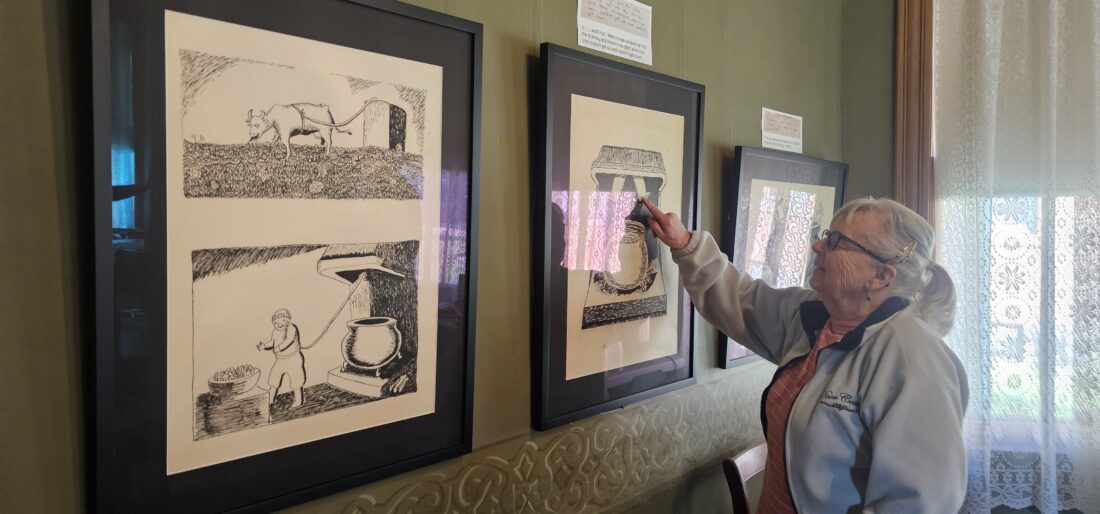
Photo by Amy Zents Docent Judy LaGrow points out the scene in the “Gone Is Gone” storyboards where the man falls into the soup pot — a favorite part for her granddaughter, whom she sent the book to.
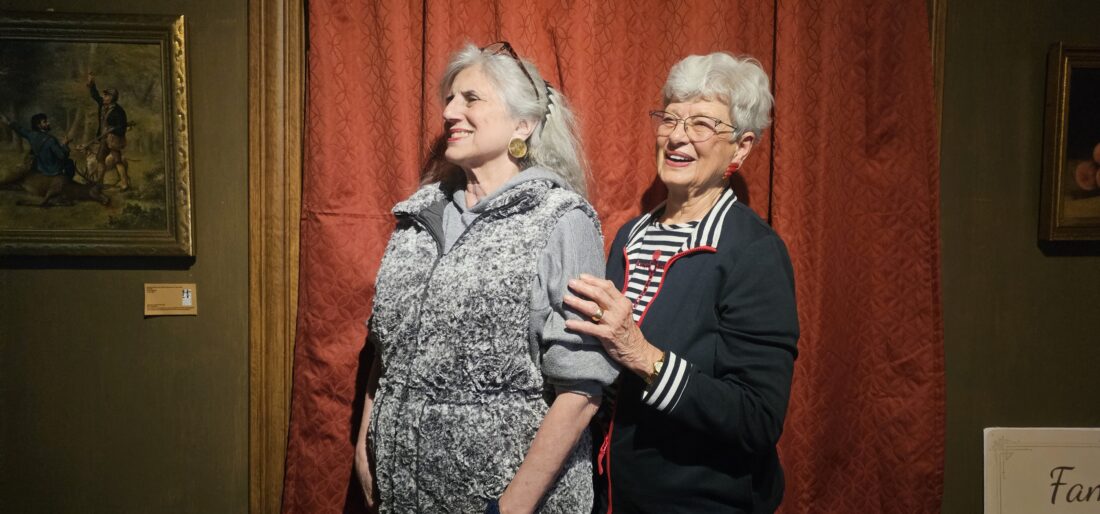
Photo by Amy Zents Rosemary Geer (left) and Cleo Bohne replicate a historic photo of Anton Gág and his bride Lizzie in the Wanda Gág House during Thursday’s open house.
Photo by Amy Zents Docent Judy LaGrow points out the scene in the “Gone Is Gone” storyboards where the man falls into the soup pot — a favorite part for her granddaughter, whom she sent the book to.
Photo by Amy Zents Rosemary Geer (left) and Cleo Bohne replicate a historic photo of Anton Gág and his bride Lizzie in the Wanda Gág House during Thursday’s open house.
Trending
NEW ULM -- The Wanda Gág House held a special open house Thursday evening to launch its 2026 visitor season.
If Wanda Gág were alive today, she would be 133 years old. Born in New Ulm on March 11, 1893, she died June 27, 1946, at age 53.
Her book "Millions of Cats," published in 1928, remains the oldest American picture book in continuous print.
Visitors gathered inside the 1894 Queen Anne-style home at 226 North Washington St. that Gág's father, Anton Gág, designed and decorated.
The house is listed on the National Register of Historic Places and still displays seven areas of his original decorative painting.
Curator Alexander Roth welcomed guests. "It's wonderful. It's amazing. Beautiful night," Roth said. He added that interest in the house keeps growing "because the story of Wanda Gág is getting out there."
Board President Cara Knauf called the past year wonderful. She highlighted new outreach by the Wanda Gág House Association, including tables at the farmers market, National Night Out, a Fourth of July event at Turner Hall, and the Weinachtsmarkt in German Park.
The open house follows several recent milestones. In November 2025 the New Ulm Area Foundation awarded the association a $20,000 grant for exterior repairs and painting.
In March, Roth spoke at Turner Hall about how New Ulm's Turner ideals shaped Gág.
In April ,the Brown County Historical Society opened a major exhibit with rare etchings, zinc plates, color works and personal artifacts.
Large original storyboard drawings for Gág's 1935 book "Gone Is Gone" now hang permanently in the house. Roth noted their size surprised everyone.
"They were expecting them to be like this," he said, holding his hands close together, "and they're huge!" He said the boards marry Gág's literature with her artwork and have become "a new focal point for the house tour."
Local framer Duane Laffranzen of Hollywood Haus Frames did meticulous work preparing the storyboards for display.
Roth praised Laffranzen's attention to detail, noting he even disassembled and cleaned a framed piece when he spotted a tiny speck of debris.
A lively crowd of familiar faces and new visitors filled the home. Many spent extra time with the storyboards and upstairs rooms, including Anton's attic studio.
Cleo Bohne, a returning visitor, looked around with approval. "I love this place," she said. "I think it is much improved."
Bohne remembered visiting when the house was still a work in progress. "They were busy trying to get the layers of paint and paper," she recalled. She praised Roth, saying he brings the house to life "not only here, but around the world."
Roth guided tours through the modest rooms where Gág grew up as the eldest of seven children in a Bohemian immigrant family.
The family spoke German at home. After Anton died in 1907 and Elisabeth in 1916, the younger children stayed in the house.
"They basically existed on cornmeal and donations from neighbors," Roth said.
During cold months they lived in the kitchen to stay warm.
He pointed out a narrow clothes closet, barely wider than a chimney. "That was for five children," Roth said. "They had shelving on one side. They had a rack that was like for five children. It was about a foot long."
In the attic studio Roth showed the original skylight and a tiny darkroom closet where Anton developed photographs.
During renovations workers found buttons made from Minnesota River shells under the floorboards, small treasures dropped by the Gág children more than a century ago.
Roth recently added a mirror in the studio that captures reflections of the space where Wanda lived and worked.
He also pointed to a new architectural drafting table donated by Mitch and Eileen Madsen. It once belonged to Mitch's architect father. Roth said he put the need "out into the universe," and the perfect table appeared.
Roth explained the German word "selbstverständlich." He described it as meaning self-evident or understandable, the natural confidence Gág carried, supported by her father and New Ulm's Turner community.
Visitors can tour the rooms where Gág grew up. They can see original artwork, including the "Gone Is Gone" storyboards and her shimmering sandpaper prints. They can also view Anton Gág's decorative painting throughout the home.
The house offers more than finished pieces on display. Guests examine details of Gág's creative process up close.
Sandpaper prints show how she worked in reverse and could pull only a few impressions.
Revisions visible on the storyboards reveal her careful refinement of a Bohemian folktale.
The site connects local immigrant history, children's literature and fine art. Roth described the house, the artwork and the literature as a triptych.
The open house marked the first time the storyboards fully joined that story in the place where it began.
The Wanda Gág House is open weekends through October: Saturdays 10 a.m. to 4 p.m., Sundays 11 a.m. to 2 p.m., and by appointment. Admission is $5 for adults. Students and children are free. More information is available at wandagaghouse.org.