
First psychiatric facility in MN at 160 years
St. Peter State Hospital museum preserves mental health history
Trending
ST. PETER -- To commemorate the hospital's 160th anniversary, the St. Peter Regional Treatment Center held a special open house last month, inviting the community to explore its long-standing history.
While usually open by appointment only due to its location on the grounds of an active secure treatment center, the museum serves as a vital bridge between the facility's 19th-century origins and its modern mission.
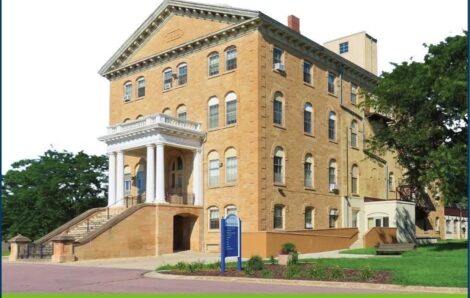
The museum occupies the historic "Old Center" administration building, the last remaining structure from the original Kirkbride-style complex of Minnesota's first public psychiatric hospital. The facility opened in 1866 as the Minnesota Hospital for the Insane.
The Minnesota Legislature authorized the hospital on March 2, 1866. The first patients arrived in December 1866 during a blizzard and were housed temporarily in a downtown St. Peter hotel. The permanent complex followed the Kirkbride Plan, a 19th-century design with long radiating wings intended to provide fresh air, light, and separation of patients by condition.
By the 1870s, the hospital served more than 1,000 patients. Treatment at the time centered on fresh air, nutrition, structured routines, and patient work on the hospital farm. Modern psychiatric medications did not exist.
A fire in 1880 destroyed part of the north wing and killed several patients. The hospital later changed names to St. Peter State Hospital. A patient uprising in 1969 drew attention to conditions and contributed to significant reforms. The museum, established around the 1966 centennial, is divided into sections documenting both staff and patient life.
Staff exhibits include the duties of doctors and nurses, historical medical instruments, salary records, and personnel photographs. The hospital operated its own nursing school starting in the 1890s. One display features the uniform and cape of Donna George, who began work April 8, 1960, and served more than 42 years. Early superintendents highlighted include Dr. Samuel E. Shantz, who arrived from New York in 1866, and Dr. Cyrus K. Bartlett, who served from 1868 to 1894.
Patient-side displays show daily routines, patient-created artwork, personal items, and treatment methods. A simple white cotton funeral shroud marks the practice for patients who died with no family to claim their bodies. The hospital maintained an on-site cemetery for unclaimed patients; Swedish immigrant Magni Holmberg (1874-1954) cared for the grounds in the 1940s.
Other displays include a 1901 E.R. Squibb & Sons price list for medicines such as belladonna leaves and cannabis indica. A portable electroconvulsive therapy machine represents mid-20th-century shock therapies used before many modern medications existed.
Reflecting on the facility's evolution from these historical roots to its current role, Marshall Smith, CEO of Minnesota Direct Care and Treatment (DCT), emphasized the hospital's ongoing importance to the region.
”We have worked diligently over the last 10 years to improve operations, outcomes, and people, and we are proud of how far we have come,” Smith stated. “There is a critical need for continued growth as a civil responsibility. Without funding, program services and people are at risk, which would be a detriment to the community.”
The St. Peter Regional Treatment Center currently serves about 380 patients. Visitors can arrange museum tours by calling 507-985-2249 or emailing dhs.sp.state.HospitalMuseum@state.mn.us.