Trees, brush cut along Hwy 14 will be reused as soil, control erosion
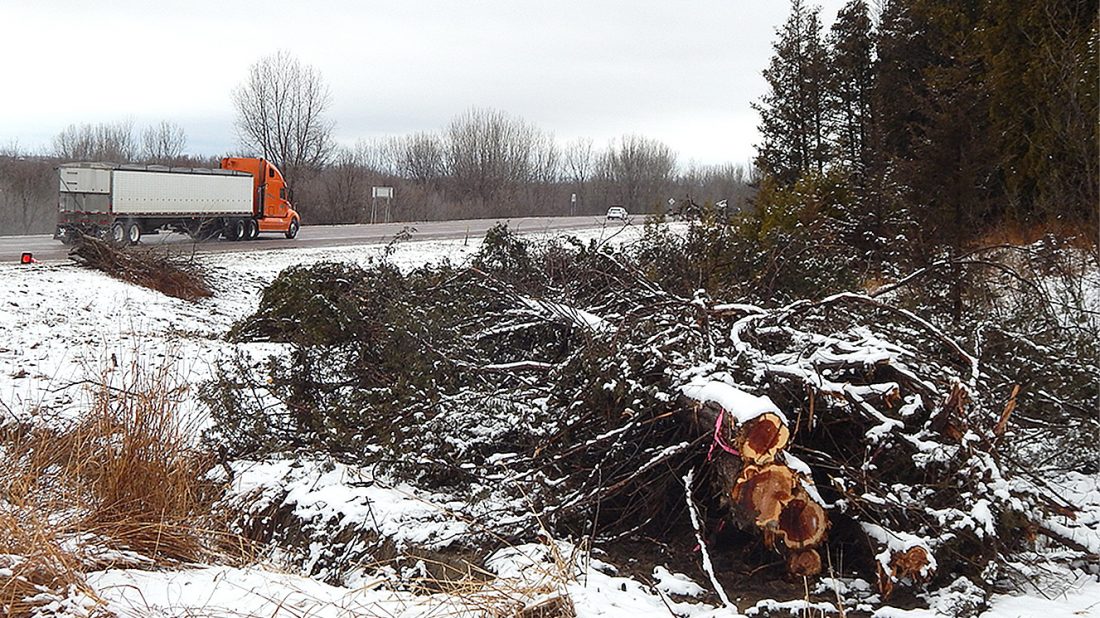
Staff photo by Fritz Busch Bundles of trees and vegetation line the U.S. Highway 14 right of way between New Ulm and Courtland as part of the highway expansion project. Slashed woodchips will be used to control erosion and sediment and reincorporated into the soil after turf is established. Remaining woodchips will be hauled away, some of which to be sold to a company that manufactures bio logs used for top soil erosion prevention.
NEW ULM — The Minnesota Department of Transportation (MnDOT) will reuse or sell trees and vegetation being removed from the U.S. Highway right of way between New Ulm and Courtland.
“The clearing and grubbing of vegetation and trees in highway expansion preparation will ultimately be used to a limited extent on the project as an erosion and sediment control device and reincorporated into the soil, once turf is established,” said Todd Kjolstad, a project supervisor for MnDOT.
“The remaining amounts of slashed woodchips will be hauled off the project by the contractor,” he said. “Some of it will be sold to a company that manufactures bio logs, used to prevent top soil erosion.”
Reasons for woody vegetation removal according to MnDOT include safety, overhead and underground utility line installation and corridor management, infested or infected tree removal, woody invasive species control, advertising media visibility, aesthetics, scenic overlook and outcropping viewing and forest health management.
MnDOT’s Roadside Vegetation Management Unit provides technical assistance and recommendations for all aspects of vegetation management on MnDOT rights of way and managed land, including vegetation removal.
For those outside of MnDOT seeking permission to remove vegetation, before attempting to do any vegetation removal work, MnDOT’s local permit office should be contacted.
Bio log erosion control is described as an effective method to stabilize shorelines, reinforce slopes, control erosion, filtration or act as a log check dam to control silt. In addition, they are considered safe for surrounding wildlife and provide an excellent soil microclimate.
For more information, visit dot.state.mn.us.