
Not small, but ‘fun-size’
A tour of New Ulm’s smaller park units
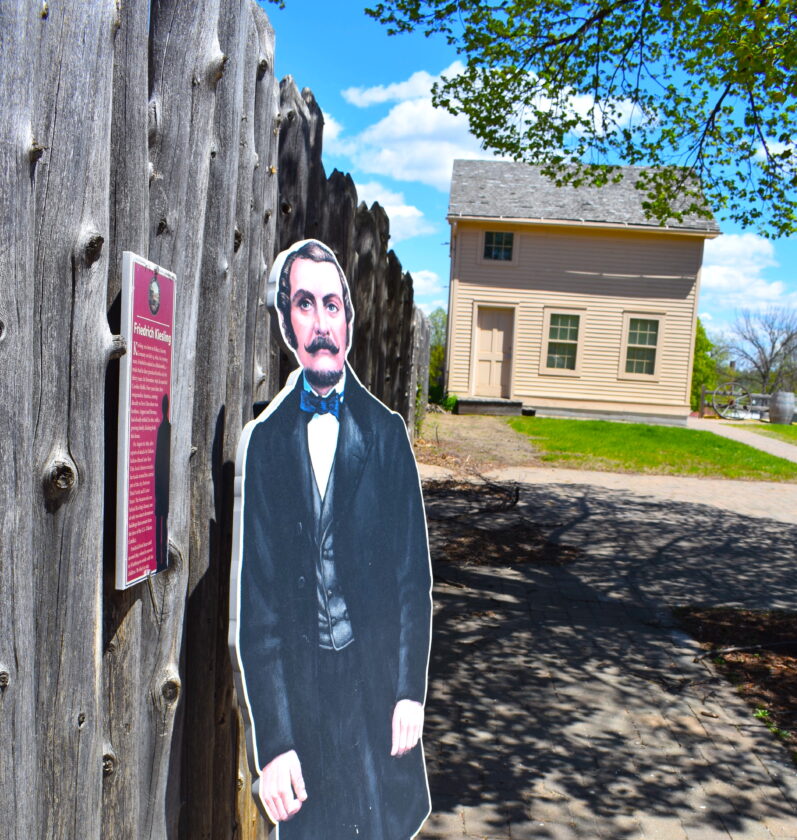
A wooden cut out of Friedrich Kiesling stands on the edge of Kiesling Park with the home bearing his name in the background. Kiesling Park is one of New Ulm’s smaller park units at 0.2 acres, but it also one of the most historic. The home built by Kiesling in 1861 is one of the only wood-frame structures to survive the U.S./Dakota War. The home was inside the barricade during the two battles of New Ulm. Photo by Clay Schuldt
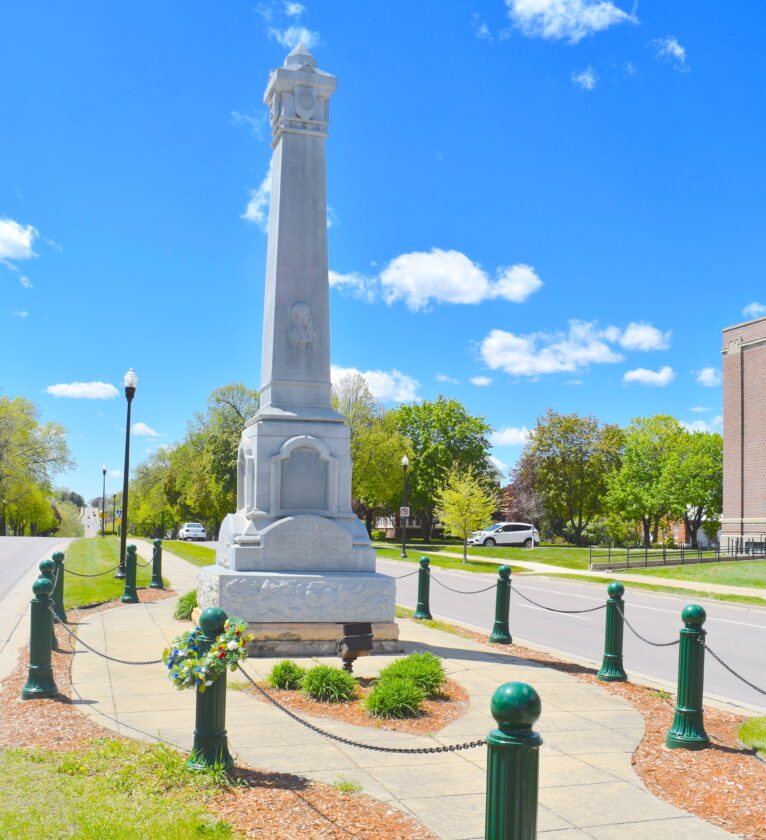
The Defenders Monument, located in the middle of Center Street, is one of the rare monuments maintained by New Ulm Park and Rec. that is not park of a larger city park. The monuments stands alone on 0.3 acre median strip. Photo by Clay Schuldt
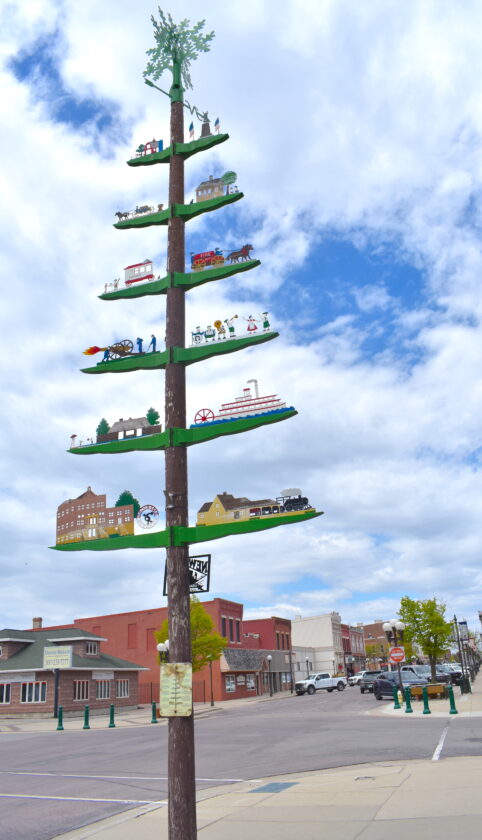
New Ulm’s Heritage Tree has the distinction of being the smallest park unit in New Ulm’s entire park system. The tree stands by itself at the corner of 101 S. Minnesota Street. The Heritage Tree was “planted” in 2004 to honor New Ulm’s 150th anniversary. Photo by Clay Schuldt
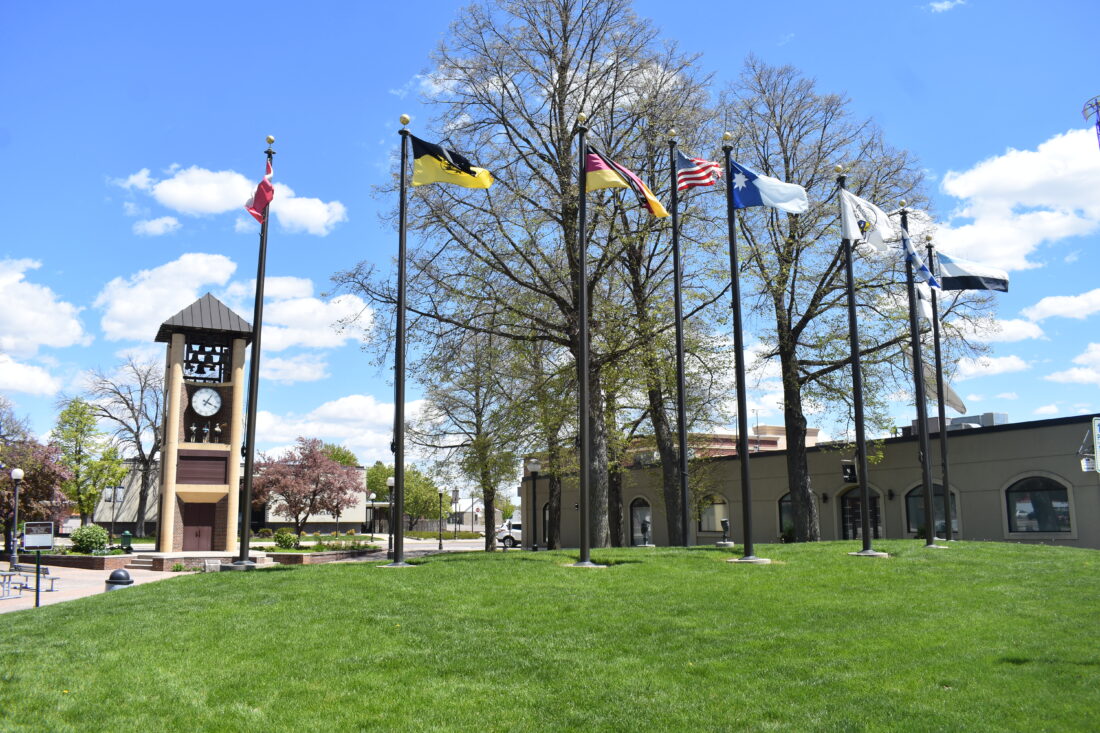
Schonlau is one of New Ulm’s most popular tiny parks. Though it is 0.4 acres in size the Glockenspiel attracts dozens of visitors to the park every day. Photo by Clay Schuldt
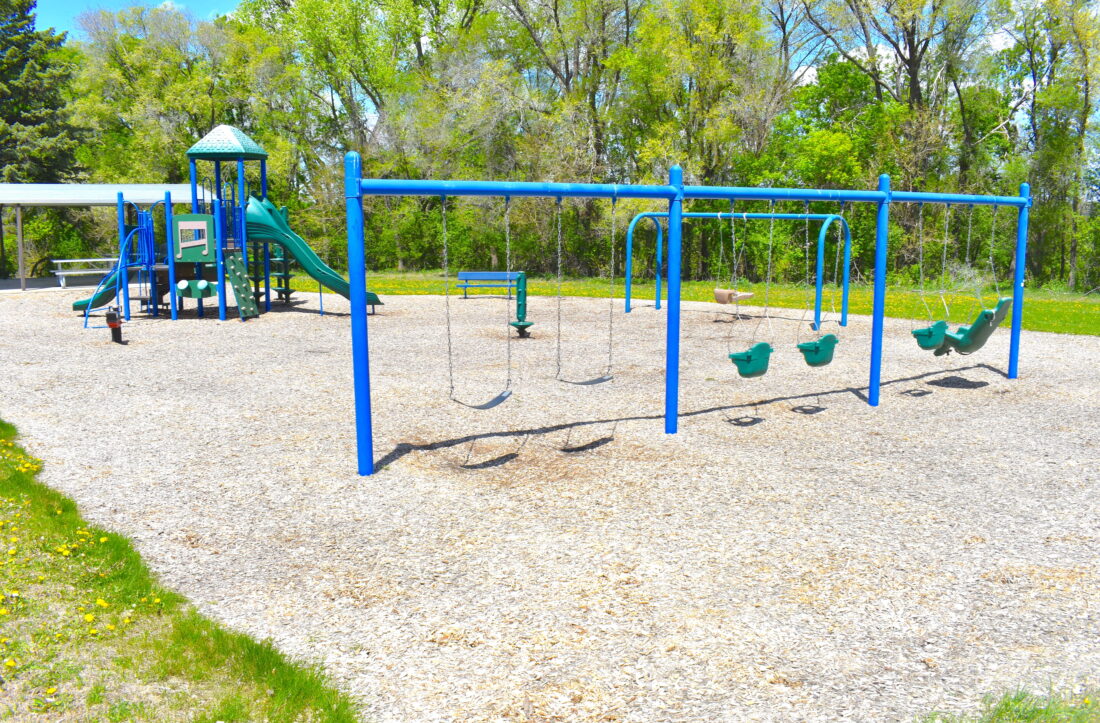
North Market Park is the smallest neighborhood park in New Ulm. Though only 1.1 acres in size, the park is large enough for a playground and picnic shelter. Photo by Clay Schuldt
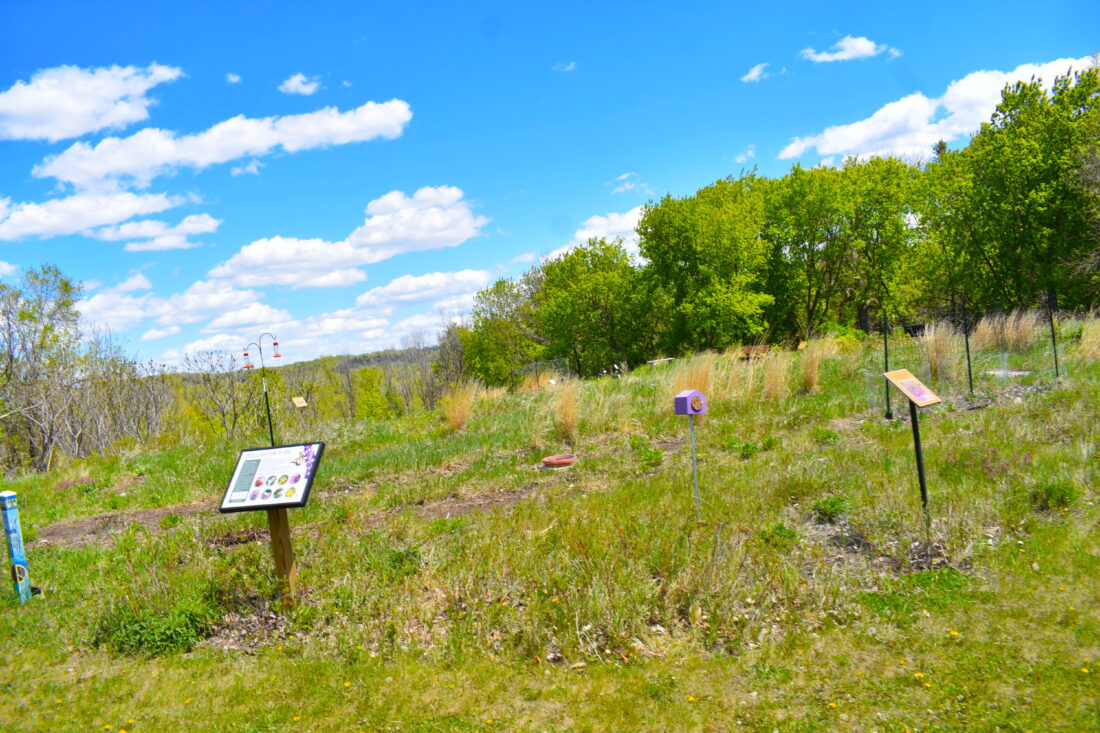
New Ulm’s Pollinator Park started small with a single acre in 2017. Today, the park is around 2.6 acres, but with over 100 acres of undeveloped city land adjacent to it, the park has plenty of room to grow. Photo by Clay Schuldt
A wooden cut out of Friedrich Kiesling stands on the edge of Kiesling Park with the home bearing his name in the background. Kiesling Park is one of New Ulm’s smaller park units at 0.2 acres, but it also one of the most historic. The home built by Kiesling in 1861 is one of the only wood-frame structures to survive the U.S./Dakota War. The home was inside the barricade during the two battles of New Ulm. Photo by Clay Schuldt
The Defenders Monument, located in the middle of Center Street, is one of the rare monuments maintained by New Ulm Park and Rec. that is not park of a larger city park. The monuments stands alone on 0.3 acre median strip. Photo by Clay Schuldt
New Ulm’s Heritage Tree has the distinction of being the smallest park unit in New Ulm’s entire park system. The tree stands by itself at the corner of 101 S. Minnesota Street. The Heritage Tree was “planted” in 2004 to honor New Ulm’s 150th anniversary. Photo by Clay Schuldt
Schonlau is one of New Ulm’s most popular tiny parks. Though it is 0.4 acres in size the Glockenspiel attracts dozens of visitors to the park every day. Photo by Clay Schuldt
North Market Park is the smallest neighborhood park in New Ulm. Though only 1.1 acres in size, the park is large enough for a playground and picnic shelter. Photo by Clay Schuldt
New Ulm’s Pollinator Park started small with a single acre in 2017. Today, the park is around 2.6 acres, but with over 100 acres of undeveloped city land adjacent to it, the park has plenty of room to grow. Photo by Clay Schuldt
Trending
NEW ULM - Few communities in Minnesota can boast about its park system as much as New Ulm.
Per capita, New Ulm has one of the highest park budgets in the state. The park system encompasses over 320 acres of land and is continuing to grow.
Technically, New Ulm has 43 park units managed by New Ulm Park and Recreation. The largest park in New Ulm in terms of size is Minnecon. The oldest park is German Park, which was part of the original plat for the city. Hermann Heights Park is likely the most well-known park in New Ulm thanks to the Hermann Monument.
With a park system this size, it easy to overlook some of the smaller park units in the community.
Of all the park units in the Park and Recreation system, the tiniest is the Heritage Tree, located at 101 S. Minnesota Street.
The Heritage tree was "planted" in the downtown in 2004 to mark New Ulm's 150th anniversary. The artificial tree is designed similar to trees placed in towns throughout Germany. The tree serves to tell the local history of the community. New Ulm's Heritage Tree features branches that include depictions of community landmarks Turner Hall, New Ulm Battery, The popcorn wagon and the Doughboy statue.
The Heritage Tree is an example of what the New Ulm parks department would call a stand-alone-monument.
Park and Rec. Director Joey Schugel said his department is near the completion of a new parks master plan that will re-categorize park units into four main categories: community parks, neighborhood parks, special use parks and natural resource areas. However, there is a fifth designation: monuments.
Schugel said the parks department does maintain multiple monuments in the community, however most monuments are incorporated into a larger park unit. The best example is Hermann Monument, which is located in Hermann Heights Park. There is also the Waraju Distillery ruins in Harman Park and the German Bohemian immigrant Monument on the edge of German Park.
The Heritage Tree is a rare monument managed by the parks department that is not located inside a larger park. However, it is not the only stand-alone park monument.
The Defenders Monument is New Ulm's second smallest park unit taking up 0.3 acres of land on a median strip in the middle of Center Street. Defenders Monument was erected in 1891 by the State of Minnesota to honor the defenders of New Ulm during the U.S. Dakota War. The monument was original placed at the intersection of Center and State Street but was moved out of the intersection in 1917 after the rise of automobiles.
Defenders Monument's location in the middle of city and county road creates unique scenario in terms of maintenance. Schugel said the parks department is currently maintaining the site by mowing the lawn and removing weeds. Since the monument is located in the middle of road the parks department is limited in what other amenities are added. Schugel said there are no plans to add a bench to the Defenders monument site.
After the stand alone monuments, the next smallest park site is Kiesling Park and House. The Kiesling House was constructed in 1861 is one of the only wood-structure homes remaining in New Ulm from before the U.S.-Dakota War of 1862.
Schugel said Kiesling Park is another unique park. It is owned and maintained by the city, but currently the Brown County Historical Society uses the facility for historical programming.
One block north of Kiesling Park is Schonalu Park, which is 0.4 acres in size. Schonalu might be the most famous New Ulm's small parks because it is home to the Glockenspiel.
The 45-foot-high Glockenspiel is one of the world's few, free-standing carillon clock towers. It contains 37 bells that chime each quarter hour and play programmed pieces at specifically timed hours of the day. Three-feet-high, animated figurines appear and move to the music as they depict the history and development of New Ulm.
North Market Park, located at 1414 North German Street is the smallest neighborhood park in New Ulm's system at 1.1 acres in size. Though it is located on small piece of land near the railroad tracks it does hold a small playground and picnic shelter as amenities.
Until recently, New Ulm's Pollinator Park at 2250 N. Broadway would have been included in the parks under one acres, but in recent years the park has expanded.
The Pollinator Park was officially established in 2017 in what was once an undeveloped park known as North Broadway Park. The Pollinator Park started on a single acre, but has slowly expanded downtown toward the bike trail.
Schugel said the Pollinator Park is now approximately 2.6 acres, but will likely continue to grow. The Pollinator Park is adjacent to city land, but much of this land is located in a flood plain. Since this land is located in a flood plain, a park dedicated to pollinating plants is one of the only was to develop it.
In a few years, the Pollinator Park could become one of New Ulm's larger parks, but as the other parks on the list show, small size does not mean small status.