
Dutch elm brings Flandrau trees tumbling down
Trending
There is still that call of nature at the entrance to the Group Camp at Flandrau State Park.
But as the dirt road slopes down between the trees, the view on the right where the camp is located is much different.
Now, heading down that path, the cottages, in the past hidden behind the trees, are clearly visible, and there is the faint scent of smoke in the air.
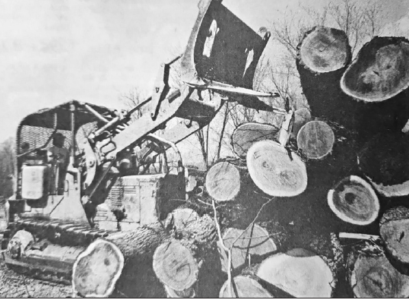
Sounds of nature are joined by the distant buzzing of a saw and the almost somniforous humming of a Caterpillar's engine.
DUTCH ELM disease is leaving its mark on the camp.
An estimated 200 elm, most either dead or dying of the disease, have been cut down in the past few days in an experiment aimed at slowing down its spread.
"It just seems to multiply," says John Wilzbacher, assistant at the Group Camp.
Last year,he explains, about 40 trees were taken after they fell victim to the disease. The year before, it had been about 20 trees.
"If we were to let it go, we wouldn't be able to keep up with it," Wilzbacher says. "The idea was originally to clear out of here as much of the dead and diseased trees as we could."
TO DO that, some of the non-diseased elms have also been cut.
In the deal, Walnut Log and Stave of Courtland took some of the good trees, shipping many of those logs to Germany to make veneer.
"We're supposed to get something back for the trees they're taking," Wilzbacher points out, "but we gave it back and told them to take out the dead ones."
Mike Kilibarda, who runs the Courtland operation, says about 80 per cent of the trees taken had been affected by the disease. The other 20 per cent, according to his view, were also part of the battle against Dutch elm disease.
"All we did was beat the Dutch elm to an extent,and try to get the good wood before the disease does," he says.
Wilzbacher also sees an advantage in getting rid of some of the non-diseased elm trees.
"That's good too," he says, "because even these healthy trees will get the disease and die."
BUT HE is not optimistic about the project's ability to stop the spread of the disease in a state park made up of about 80 per cent elm.
Kilibarda shares Wilbacher's pessimism. He used to operate in Iowa, Kilibarda says, and has moved north with the spread of the disease.
"It's just a matter of time before all the elm trees up here are dead," he says.
So far, according to Kilibarda, the disease hasn't seem to grow in Minnesota as fast as it did in Iowa. He credits the shorter summer season for that.
But he predicts the disease will reach its peak in two to five years and that within 10 years, 80 per cent of the elms in Southern Minnesota will be gone.
MEANWHILE. Wilzbacher says that the clearing created by this latest project will help a lot of the younger trees that hadn't been able to get light in the past.
Next fall, he says, a program of transplanting trees is expected to begin.
"I suppose it will be an ongoing program from now on," he says.