
River Bend students complete field experience at Flandrau
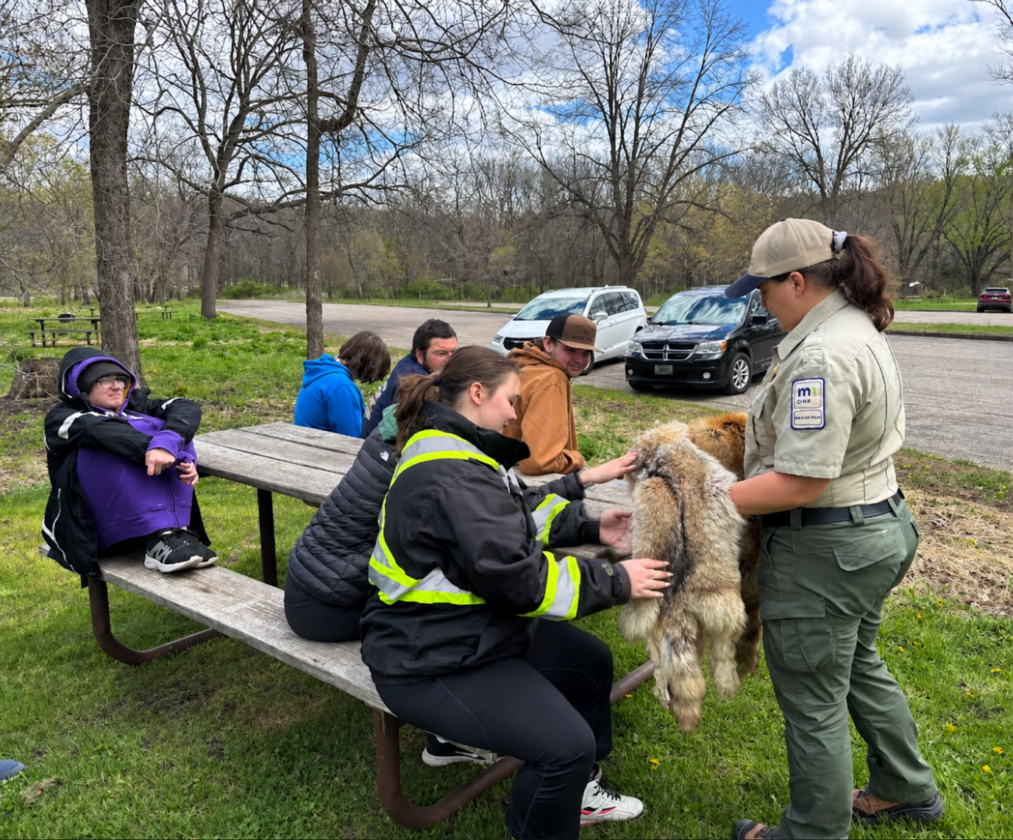
Photos courtesy of River Bend Education District Students from River Bend Education District’s World of Responsible Kids (W.O.R.K.) program and Practical Assessment Exploration Systems (PAES) were able to take part in a field experience on May 1 at Flandrau State Park in New Ulm. Pictured first bench to second wrapping around are Ehrich Knaack (12th grade), Bethany Pierson (12th grade), Augusta Grumdahl, Colin Heffele (12th grade), Dillon Gerzsik (12th grade) and David Wischstadt (12th grade).
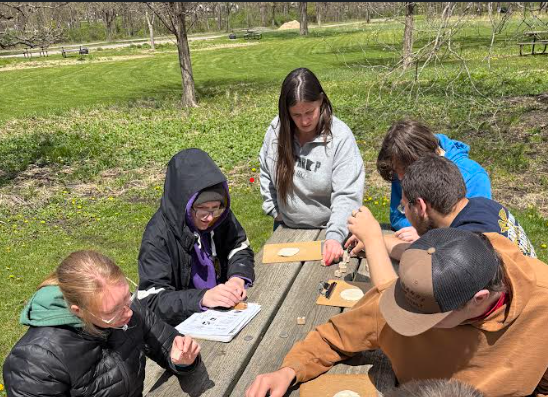
Pictured left to right: Ellen Windschitl, Ehrich Knaack, Jen Isaac, David Dillion and Colin Heffele.
Photos courtesy of River Bend Education District Students from River Bend Education District’s World of Responsible Kids (W.O.R.K.) program and Practical Assessment Exploration Systems (PAES) were able to take part in a field experience on May 1 at Flandrau State Park in New Ulm. Pictured first bench to second wrapping around are Ehrich Knaack (12th grade), Bethany Pierson (12th grade), Augusta Grumdahl, Colin Heffele (12th grade), Dillon Gerzsik (12th grade) and David Wischstadt (12th grade).
Pictured left to right: Ellen Windschitl, Ehrich Knaack, Jen Isaac, David Dillion and Colin Heffele.
Trending
Courtesy of River Bend Education District
NEW ULM -- Students from River Bend Education District's World of Responsible Kids (W.O.R.K.) program and Practical Assessment Exploration Systems (PAES) took their learning beyond the classroom on Friday, May 1, with a field experience at Flandrau State Park.
The group of students, along with three staff members, participated in an interactive outdoor lesson led by Augusta Grumdahl, a naturalist with the Minnesota Department of Natural Resources who has been serving in her role for the past two years. The focus of the visit was "animal signs," helping students better understand how to identify wildlife through the clues animals leave behind in their natural habitats.
Throughout the session, students learned how to recognize animal footprints, fur types, feathers, and even the different kinds of homes animals create in the area. Grumdahl brought a variety of real-life materials to enhance the experience, including animal skulls, preserved furs, and footprint molds. These hands-on visuals gave students a closer look at the physical characteristics that help identify Minnesota wildlife.
One of the highlights of the trip was a mold-making activity, where each student created their own animal track replica to take home. Using casting materials, students carefully formed imprints of animal footprints, reinforcing what they had learned while also creating a meaningful keepsake from the experience.
River Bend staff released a joint statement on the session, stating, "This type of hands-on, real-world learning is exactly what our W.O.R.K. and PAES programs are all about. Students are not only building knowledge, but also gaining confidence, independence, and exposure to potential career pathways in fields like natural resources and environmental science."
The field trip aligns with River Bend's mission to provide students with practical, engaging experiences that build life and career readiness skills. By connecting classroom learning with real-world applications, students are better prepared to explore their interests and understand opportunities within their communities. Experiences like this continue to highlight the value of community partnerships and experiential learning, as students discover that education can happen anywhere from the classroom to the trails of a local state park.