
Beating the heat with the power of earth
Geothermal systems keep temperatures and costs down
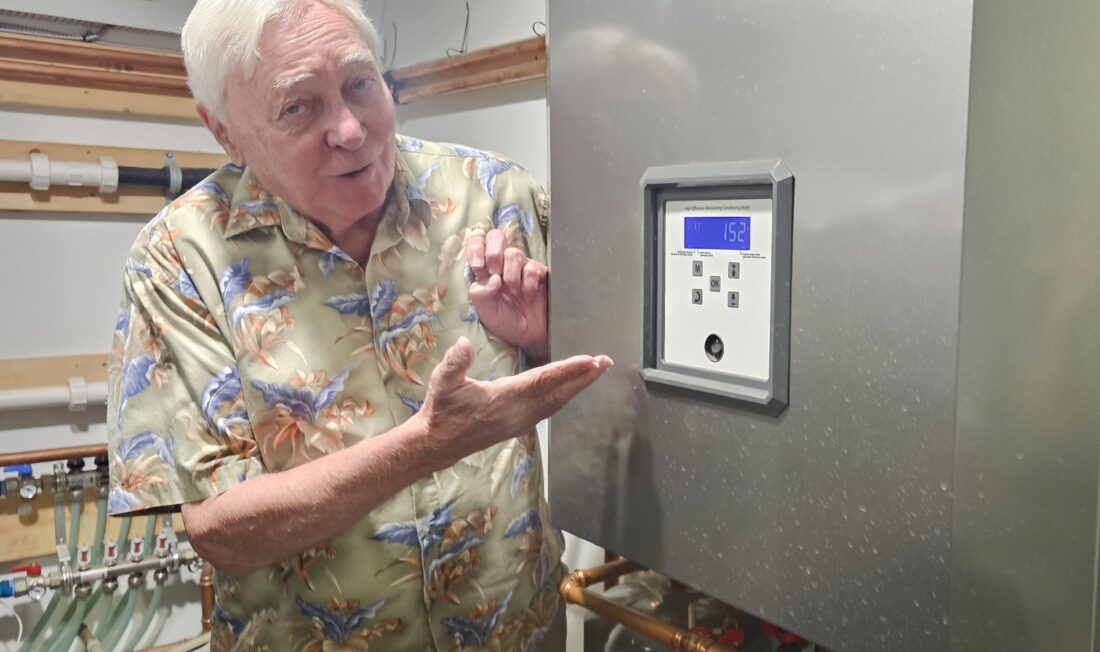
Daniel Beranek explains the inner workings of his open-loop geothermal system. He points to the pressure gauge that monitors water pressure (in pounds per square inch) as it circulates from the six 200-foot wells through the heat pump. (Photo by Amy Zents)
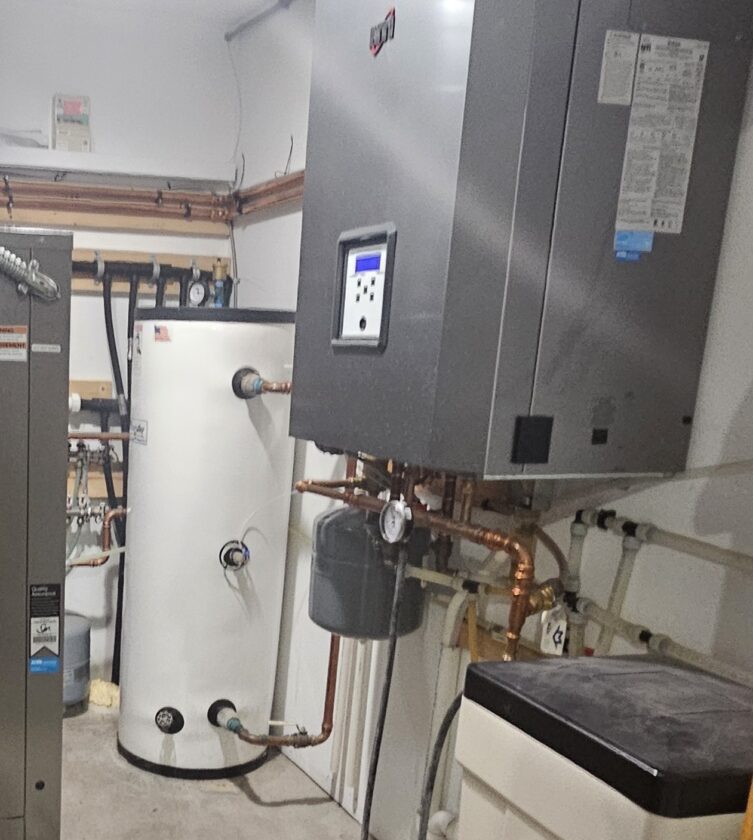
The inner workings of Daniel Beranek’s open-loop geothermal system. The heating unit is on the left, and cooling components are on the right. (Photo by Amy Zents)
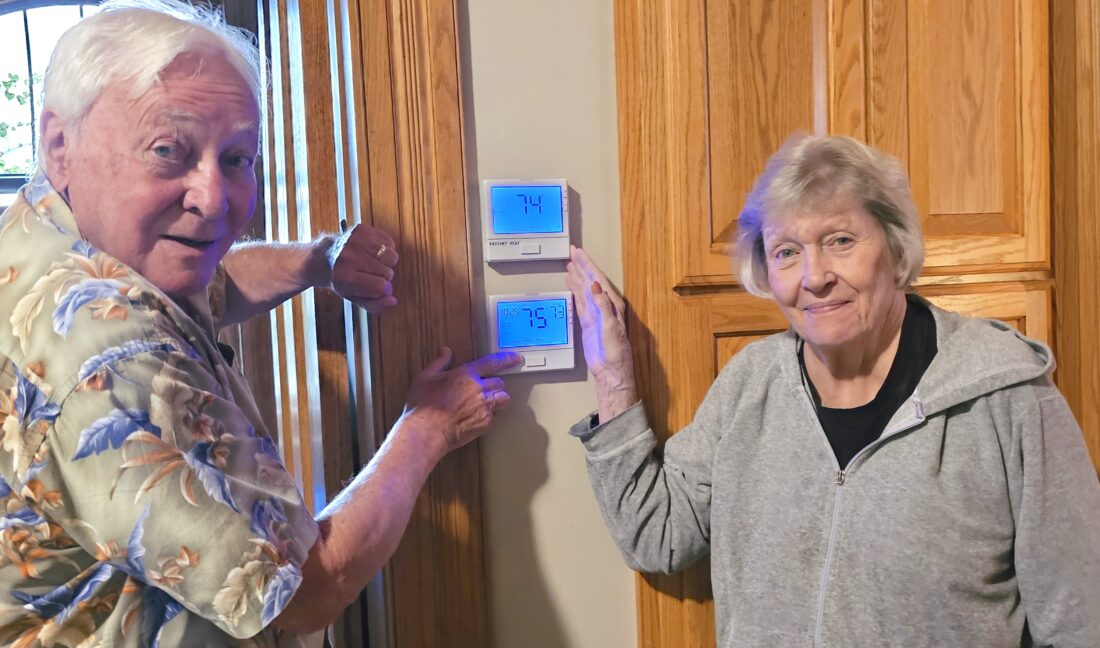
Daniel and Trudy Beranek celebrate their 43rd wedding anniversary on July 2 at their New Ulm home. The couple’s open-loop geothermal system keeps the house comfortable year-round at about 70–72 degrees. (Photo by Amy Zents)
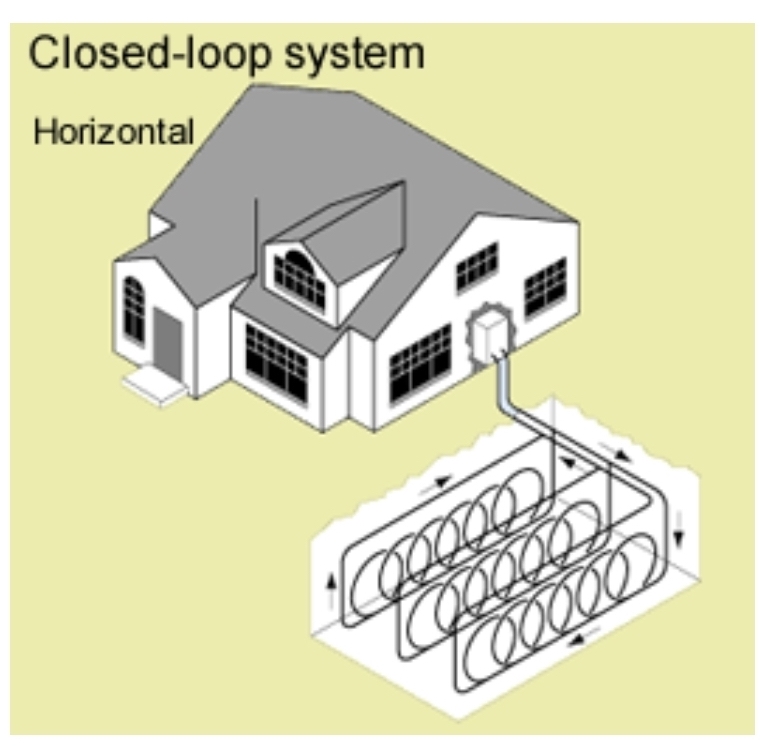
A closed-loop horizontal geothermal heat pump system like the one installed at Peter Wendinger’s rural home near St. George. Pipes buried in the field behind the house circulate fluid to provide efficient heating in winter and cooling during summer heat waves. Source: U.S. Department of Energy, Office of Energy Efficiency and Renewable Energy (public domain)
Daniel Beranek explains the inner workings of his open-loop geothermal system. He points to the pressure gauge that monitors water pressure (in pounds per square inch) as it circulates from the six 200-foot wells through the heat pump. (Photo by Amy Zents)
The inner workings of Daniel Beranek’s open-loop geothermal system. The heating unit is on the left, and cooling components are on the right. (Photo by Amy Zents)
Daniel and Trudy Beranek celebrate their 43rd wedding anniversary on July 2 at their New Ulm home. The couple’s open-loop geothermal system keeps the house comfortable year-round at about 70–72 degrees. (Photo by Amy Zents)
A closed-loop horizontal geothermal heat pump system like the one installed at Peter Wendinger’s rural home near St. George. Pipes buried in the field behind the house circulate fluid to provide efficient heating in winter and cooling during summer heat waves. Source: U.S. Department of Energy, Office of Energy Efficiency and Renewable Energy (public domain)
Trending
NEW ULM -- As this summer's heat wave drives up cooling costs, more homeowners in the New Ulm area are turning to geothermal systems for efficient, reliable comfort year-round.
Geothermal systems use the earth's stable underground temperature, around 50 to 53 degrees in this region, to heat and cool homes, as fluid circulates through buried loops to transfer heat from the house into the cooler ground in summer and pull warmth from the ground in winter.
While these systems often require a significant upfront investment, they remain a top choice for long-term efficiency.
Open-loop systems, which require a reliable water source, typically cost between $10,000 and $28,000, while closed-loop systems, which utilize sealed underground pipe fields, generally range from $15,000 to $38,000.
Although the federal residential tax credit expired at the end of 2025, homeowners can still find value through lower operating costs, which can reduce monthly utility bills by 30% to 70%, as well as various state-administered rebates and local utility incentives.
Experts recommend working with a certified installer to identify local options that can help offset the initial price.
Peter Wendinger installed a closed-loop, geothermal system about five years ago at his rural home near St. George. He previously relied on a fuel oil furnace that cost $35 a day or more during below-zero weather.
"What prompted me was the fuel oil furnace," Wendinger said. "My neighbor Tom Brown put geothermal in and said in the summertime on a hot week he was spending only a dollar a day for electricity. That's cheap."
Wendinger's system uses three horizontal loops of 1.5-inch plastic pipe bored 17 feet deep in the field behind the house, providing a steady 53-degree exchange year-round.
During the current heat wave, Wendinger said he can comfortably set the thermostat as low as 60 degrees.
"It's a lifetime investment," he said. "It's going to give you back every year."
According to Steve Gag of Gag Sheet Metal, geothermal customer Daniel Beranek of New Ulm uses an open-loop well system and is very satisfied with the results.
Beranek's home incorporates the original Hauenstein Brewery office building from about 1914, and he intentionally designed his new addition to replicate the style of the historic structure.
Beranek, who had six 200-foot vertical wells dug beneath his driveway, confirmed he is pleased with the setup.
"It does a good job in winter," Beranek said, "but in the summer I think it's really made my utility bill quite a bit lower. I've especially been happy on the cooling side of things."
Beranek's system also provides in-floor heating, which he said is a nice bonus during the winter months.
Gag's company has been installing geothermal systems for about 20 years. He notes that while geothermal remains a premium choice, air-source heat pumps have become popular for town lots where land is limited.
Modern cold-climate air-source units handle both heating and cooling efficiently, and the Brown County Rural Electric Association offers rebates for both geothermal and air-source systems for its rural customers.
New Ulm Public Utilities does not have a standard published rebate for geothermal but will issue one upon request.
Derek Nelson, energy services representative with New Ulm Public Utilities, has observed growing interest in these efficient options.
Local installers, such as J&P Plumbing and Gag Sheet Metal, recommend professional site assessments to determine the best fit for a home's specific needs.
Beranek and Wendinger were highly positive about their geothermal systems.
Wendinger said he would "absolutely recommend it to his rural neighbors.”
With more hot weather in the forecast, geothermal systems are proving to be a smart, long-term solution for New Ulm-area homeowners seeking lower operating costs and reliable, safe and quiet comfort.