
State legislators review issues in latest session
Trending
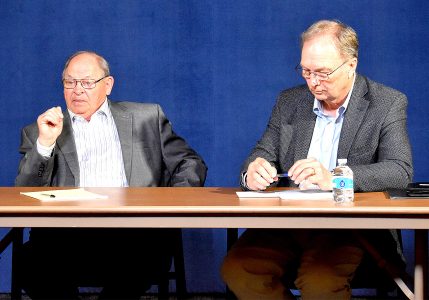
NEW ULM-- Mental health, the budget surplus and freight transportation were the key topics at a legislative town hall Thursday hosted by state Rep. Paul Torkelson (R-Hanska) and state Sen. Gary Dahms (R-Redwood Falls) at the New Ulm Public Library.
Torkelson said it was unlikely there would be a special session this year. He said there were things left undone, mostly about the state surplus.
"In my experience, we've never had a situation with this big a surplus in the second year," he said.
There are several areas where the state could spend money, he said, but it is hard to reach an agreement when there is no pressure of passing a budget.
Of the state’s $9.3 billion surplus, the state spent around $3 billion with $6 billion in reserves for next year.
Dahms suspected that in light of the surplus, taxes would be restructured next year. Torkelson said the surplus was not going anywhere and he preferred holding on to the money in reserves rather than spending it immediately.
Mental health was a major talking point. Torkelson said a mental health bill was passed toward the end of the session. It was a big issue being discussed in the state, in part because of COVID, but he said there is a shortage of facilities to handle mental health treatment load.
"We've seen our jails and hospitals having to take care of people longer than they should have," Torkelson said. "We need those mental health facilities to take care of people properly."
New Ulm Park and Recreation Director Tom Schmitz thanked the legislators for supporting bonding for the German Park amphitheater shade structure, which is being constructed this summer.
He asked the legislators to consider including the Hermann Monument on the 2024 bonding bill. Schmitz said Hermann Monument is in dire need of restoration and the city is hoping to have a plan for repairs in time for the 2024 bonding.
Torkelson said in terms of bonding, the Legislature always looks for projects with regional significance. In the case of Hermann, there is international significance making it a great candidate for bonding.
Other issues approved during the session included "hero pay" legislation for essential workers during the pandemic. The bill was passed last year with $250 million, but legislators were unable to agree on who was eligible. This year, an agreement was reached and Hero Pay was increased to $500 million.
Torkelson said the application process is now open. He said this was not a first-come-first-served situation. All applicants to the fund will be checked to determine eligibility and the fund will be divided among all those eligible.
Drought relief was also passed. Torkelson said this was for last year, which saw a significant drought.
Dahms highlighted part of the agriculture bill that provided money for rural broadband. He said COVID alerted the state of gaps in rural broadband.
There are locations in the region without reliable broadband internet access. Legislatures approved the use of $210 million from federal programming for rural programming over five years.
Going into the next session, Dahms believed inflation would be a top issue, but also based on the February surplus forecast, there would be changes to the tax structure.
Mental health also would be a primary issue.
Torkelson said inflation has a dramatic impact but warned the government was not nimble. A private employer can raise wages to attract employees faster than the government. It could be a challenging time for the state government to make necessary hires. The government does not move quickly.
The legislators closed the town hall by encouraging citizens to get out and vote in the primary Tuesday, Aug. 9. Dahms warned Minnesota has a low turnout during primaries and that impacts who represents the districts and states.