
Exchanging ideas, learning in Germany
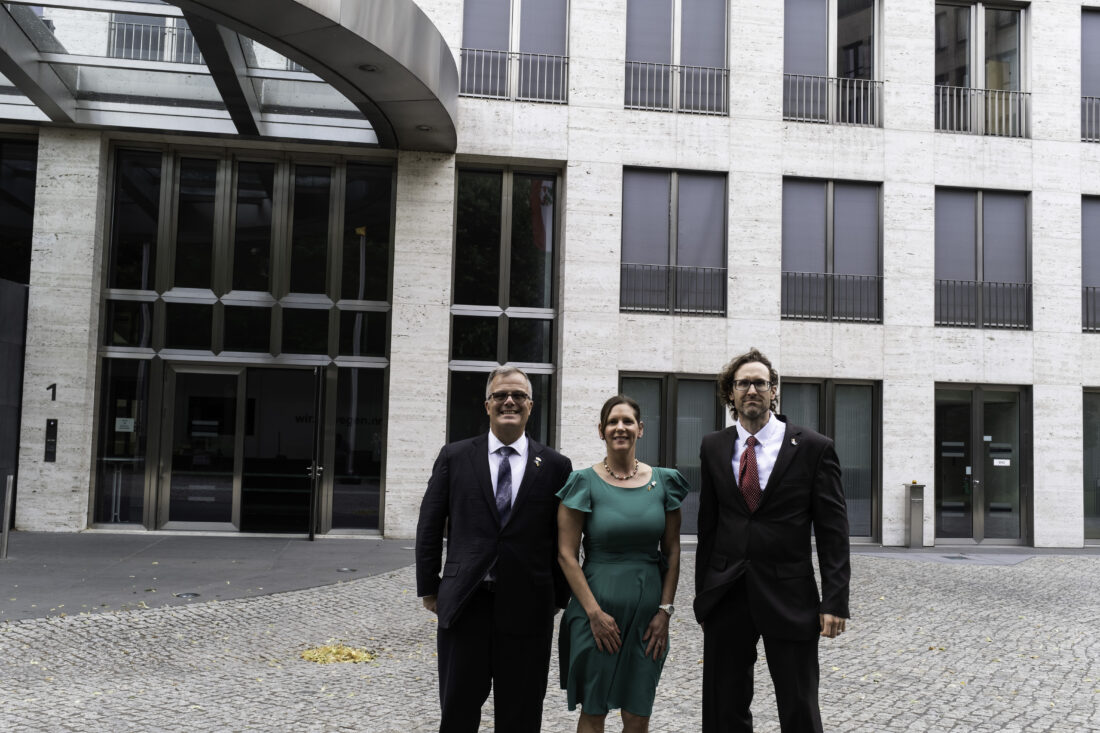
Pictured from left, New Ulmites Dave Borchert, Andrea Boettger and Derek Nelson take a break outside the District Capitol in the State of North Rhein-Westphalia in Dusseldorf, Germany.
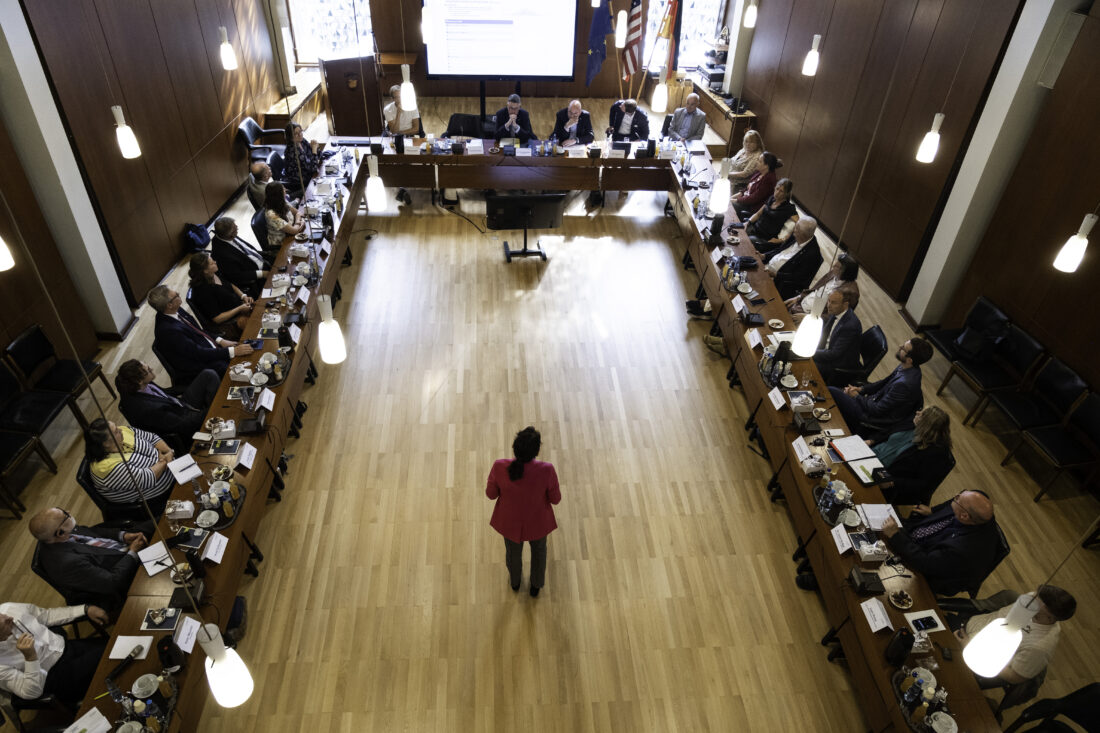
Region Nine Executive Director (RNDC) Nicole Grienewic addresses the Aachen, Germany Parliament District at Aachen, Germany during a June learning exchange visit. The exchange delegation included Region Nine Development Council member and Brown County Commissioner Dave Borchert and Region Nine Vice Chairwoman and New Ulm City Council President Andrea Boettger of New Ulm.
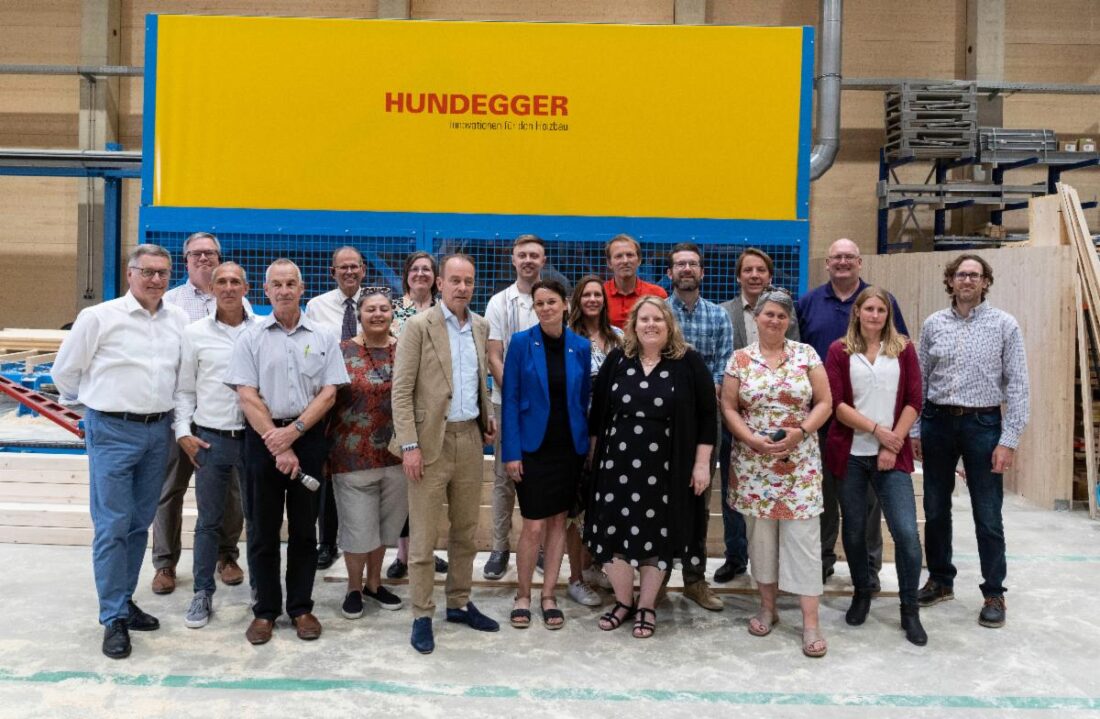
A Region Nine Development Council group poses with Aachen, Germany officials during a June learning and idea exchange visit. The German’s interest in forming a partnership with Region Nine stems from shared strengths in agriculture, manufacturing, higher education, aviation and similar natural features.
Pictured from left, New Ulmites Dave Borchert, Andrea Boettger and Derek Nelson take a break outside the District Capitol in the State of North Rhein-Westphalia in Dusseldorf, Germany.
Region Nine Executive Director (RNDC) Nicole Grienewic addresses the Aachen, Germany Parliament District at Aachen, Germany during a June learning exchange visit. The exchange delegation included Region Nine Development Council member and Brown County Commissioner Dave Borchert and Region Nine Vice Chairwoman and New Ulm City Council President Andrea Boettger of New Ulm.
A Region Nine Development Council group poses with Aachen, Germany officials during a June learning and idea exchange visit. The German’s interest in forming a partnership with Region Nine stems from shared strengths in agriculture, manufacturing, higher education, aviation and similar natural features.
Trending
A June visit to Aachen, Germany with the Region Nine Development Commission (RNDC) proved to be a great learning and idea exchange experience for New Ulm members Dave Borchert, Andrea Boettger and Derek Nelson.
Borchert has many titles including New Ulm Police Chief and Emergency Management Director and Brown County Commissioner and RNDC commissioner among them. Boettger is New Ulm City Council president and RNDC Commissioner. Nelson is New Ulm Public Utilities Energy Services Representative and made the trip as a subject matter expert.
The Minnesota delegation included Region Nine Energy and Environmental Planner Sam Sharp of St. Peter.
The visit follows the Aachen, Germany delegation's visit to south central Minnesota hosted by the RNDC last September.
The German's interest in forming a partnership with Region Nine stems from shared strengths in agriculture, manufacturing, higher education, aviation, and similar natural features that included a very serious, 10,000-year flood in 2021 in Aachen that caused deaths and injuries.
"They had a couple bad floods not long ago that led them to accelerate their emergency management. It was something they really wanted to talk about," said Borchert. "It's very flat but there is no river near Aachen. It's very close to the Netherlands and Belgium border and very flood prone. They had a weather front that didn't move for a long time and dumped lots of rain on them. It wasn't forecast either. Since then, they're greatly improved their systems now. They now have mobile alert systems that broadcast information in Aachen, a city of about 250,000 people."
"It's important for us to have partners in America because we believe in bringing together public entities to learn from one another," said Aachen County Commissioner Dr. Tim Gruttemeir.
Last September, Borchert led a conversation on flood mitigation and recovery. He said fostering early connections with international and regional partners is crucial for disaster preparedness.
"We don't want to be exchanging business cards during a crisis. We want these partnerships in place beforehand," said Borchert.
This summer, he watched as Aachen, Germany flood mitigation efforts included using vertical boring to insert organic fertilizer and sand into the ground as a way prevent flooding for up to two decades.
Key themes on visit to Germany by the RNDC included connecting talent to workforce, clean technologies and innovations and best practices for flood response and extreme weather preparedness.
The Aachen region nurtures a robust ecosystem of startups and research and development industries powered by a close relationship with local universities.
Companies help design curriculum and students apply the principles to real-world opportunities, sustaining the workforce and connecting new graduates to well-paying careers.
Industrial visits included companies ranging from biodegradable magnesium implants for orthopedic procedures to cutting-edge, cost-friendly, energy-efficient and easily integrated wastewater treatment technology.
"They really treated us well. They were very professional and hospitable," said Borchert. "The connection of schools with businesses and industries was common in Germany. Students can learn from experienced people in schools. The Minnesota State Mankato President was with us. He said he apply for a pilot project for that possibly as soon as the next school year."
Borchert said Aachen has lots of concrete and packed gravel. Vertical boring was used to lessen flashing flooding.
"I'd like to work in that direction immediately," he said.
Boettger said a key part of the German visit was touring a medical device manufacturing plant that is interested in connecting with the Mayo Clinic.
"They use magnesium screws and bolts in certain surgeries that slowly evaporate into your body so you don't have metal in your body. They're using innovation in the medical industry," she said. "We toured an incredible trade school that taught roofing, carpentry, baking, fostering all trades and working with sponsoring businesses. They consider it investing in kids that become future employees."
Boettger said there may be German companies looking for international expansion to the U.S.
"Minnesota has lots of foreign companies in the metro area, but rural Minnesota is just as capable of hosting those companies," she said. "Another thing is how great we have it with leadership and development in Region Nine. Other groups have talked about the great work Region Nine is doing in southern Minnesota. We're making great progress here in saving energy and reusing products instead of just disposing of them. Sometimes it great to learn from your peers and think globallly so you can act globally."
Boettger said the Aachen delegation plans to return to southern Minnesota for a longer visit than last fall, possibly this fall or next spring.
"The Germans are very pragmatic (sensible) people. They're solution-oriented. Their strengths are in technology and innovation. We saw that first hand. I think there was a lot of lessons learned. I'm excited to apply them," said Sam Sharp, Region Nine Energy and Environmental Planner.
The Germany trip was funded in part by a McKnight Foundation grant. No taxpayer money was used for the visit.
The RNDC assists private, public and non-profit sectors in Blue Earth, Brown, Faribault, Le Sueur, Martin, Nicollet, Sibley, Waseca, and Watonwan Counties. It provides regional programs that cross traditional jurisdiction and agency boundaries and works with state and federal agencies to implant regional programs.