INJUNCTION CLOSES EXCISE TAX COURT
Decision of Nation-Wide Importance Handed
Down by Federal Judges
Booth and McGee.
——–
TEST SAID TO BE FIRST
OF KIND IN COUNTRY
——–
Action Outgrowth of Suits of Local Attorneys–
Clients Were Arrested
by Dry Agents.
——–
In a ruling of nation-wide importance, Federal Judges Wilbur F. Booth and John F. McGee Thursday restrained the Internal Revenue department’s excise tax court from further operation in Minnesota by issuance of a writ of temporary injunction handed down in United States district court in St. Paul.
The ruling, which affects the whole scheme of the Internal Revenue department to establish excise tax courts all over the country, holds that this method of levying excise taxes on illegal manufacture and sale of liquor is illegal and does not constitute “due process of law.”
First Test in U. S.
It is said to be the first test of the excise court’s legality in the United States. Internal revenue officials at Washington have indicated that should a ruling unfavorable to them be handed down in St. Paul they probably will abandon their plan.
Steps will be taken immediately, however, to appeal the case so that a final decision can be obtained as quickly as possible, it was announced by Raymond W. Johnston, judge of the St. Paul excise court, in ab-sense of L. M. Willcuts, collector of internal revenue for Minnesota. To expedite matters the case probably will be taken direct to the supreme court, Mr. Johnston said.
Outgrowth of Suits.
The ruling was the outgrowth of suits instituted by Somsen, Dempsey & Flor, New Ulm attorneys, in interest of four of their clients, one re-siding in this city and three at Nicollet, who had been arrested for violation of the prohibition act and threatened with prosecution for failure to pay an excise tax. The actions were started in September, shortly after the excise court was put in operation in St. Paul, and hearings on the matter were held October 1.
Judge Johnston and Mr. Willcuts were made defendants in the action, which was defended by Lafayette French, United States district attorney for Minnesota, and Elbert H. Loyd, special attorney of the internal revenue department at Washington.
At that time attorneys for the plaintiffs condemned the excise court as being without authority to function, pointing to provisions of the federal constitution to show that the court was not brought into existence legally, but was set up arbitrarily by the Prohibition department.
Somsen, Dempsey & Flor asked for injunctions prohibiting the Internal Revenue department from seizing or selling property of the plaintiffs to satisfy excise claims, from levying assessments or penalties in connection with the matter and from carrying out orders from Washington under which the new court was to operate.
All three of these requests were granted by the federal judges in their ruling.
First to Operate.
The excise court in St. Paul, which was the first in the United States to be put in operation, has not functioned since the injunction action was started’ against it, although it previously had ruled on three cases and had forty-five other cases on its calendar for disposition. There are 6,000 liquor cases in Minnesota alone on which it was planned to collect an excise tax.
In two of the cases the excise court ruled on, the defendants were found not guilty, but Edward Simon, Waconia, Minn., was found guilty of having been a retail liquor dealer in violation of the prohibition law and was sentenced to pay an excise tax of $500.
The status of his case is not altogether clear, but it is indicated the internal revenue department will make an effort to collect the tax.
Individual attorneys expressed the opinion that the internal revenue department is restrained from this action also by the Federal court order.
Plan to Collect Millions.
Establishment of the excise tribunal is the latest step on the part of the prohibition department to collect millions of dollars in excise taxes from illegal sale and manufacture of liquor despite contrary rulings of the supreme court.
By a curious circumstance, federal courts of Minnesota have been the battle ground on which this whole question has been thrashed out for the United States since collection of the excise tax was first attempted. It was here that the first legal op-position of such collection was established.
Closes Excise Tax Court.
In 1920, Joel M. Dickey, clerk of the United States district court at St. Paul, at that time in private practice, contended that collection of the tax on an illegal industry was unconstitutional, being the first attorney in the United States to raise the issue and he asked for a restraining order on behalf of several clients. Several hundred such cases were instituted and Judge Booth ruled collection of the excise tax was illegal, granting temporary restraining orders against Internal Revenue officials.
Ruling Later Upheld.
His ruling later was upheld by the supreme court, which held the excise tax could not be collected by the Internal Revenue department without “due process of law,” which virtually amounted to individual law suits against each prohibition law violator in United States courts.
With federal courts already cluttered by liquor cases, there was not opportunity of doing this and a year ago the Internal Revenue department,at behest of the Prohibition department, set up within its department the excise court, designed to provide this “due process of law.”
Although the excise court was organized for a year previous it did not start to function until September of last year, when plans for its establishment were announced for the first time, simultaneously with the opening call on its calendar.
First to Get Started.
The St. Paul court was the first to get started in the United States, although since, the courts in many cities have gotten under way.
In addition to providing more severe penalties for violation of the prohibition law, it was hoped by the prohibition department, to raise mil-lions of dollars of additional revenue through collection of the excise tax.
Such taxes in Minnesota alone would have amounted to close to $2,000,000, it was estimated.
$4,000,000 at Stake.
Four million dollars in fines in Minnesota alone, are said to be involved in excise tax court actions. R.,W. Johnson, deputy collector of internal revenue and judge of the excise court states that there are about 6,000 cases of record in the state.
It is said that cases involving Springfield citizens aggregate at least $10,000, and there are a number involving New Ulm people for considerable, amounts.
Brown County Journal,
Jan. 4, 1924
————————
History

Chaos in the run-up to Civil War
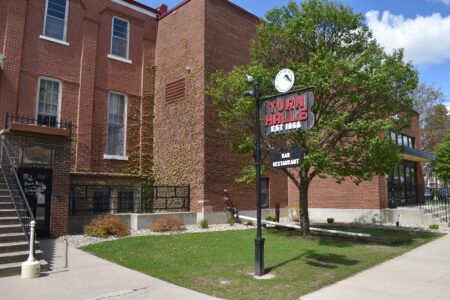
German immigrants find social independence in Minnesota
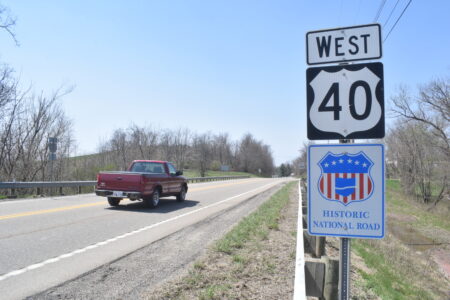
The National Road connected a young nation
‘BOB’ HENDERSON IN COMFREY BURGLARY
Admitted Complicity in Robbery of Erickson & Kisro Clothing Store, Ten Years Ago. ———— WAS ...
RETIRED $112,000 IN BONDS, $161,400 CASH
Annual Audit Shows City Is Decreasing Its Indebtedness and Balancing Its Funds. ———— BONDED DEBT ...