
‘So Long, Civil Liberties’
Speaker addresses influence of Minnesota Commission for Public Safety
Trending
NEW ULM -- The influence of business interests on Minnesotan political interests during the Great War was highlighted during a WWI speaker series event.
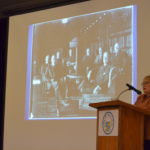
Historian Mary Wingerd presented "So Long, Civil Liberties: World War I and the Rule of the Minnesota Commission for Public Safety" Thursday night.
On its face, the commission was intended to stamp out pro-German and seditious activity. But Wingerd argued it had entirely different motives.
"It is my contention that this was primarily a smokescreen to provide cover for what were the commission's real targets: groups that in fact posed a genuine danger to the commissioners and their backers, if not to the state and the nation," said Wingerd.
The commission was formed in the spring of 1917 by the Minnesota Legislature on the eve of what was probably one of the most unpopular wars ever declared, Wingerd said.
However, probably in part due to a major pro-war, propaganda effort by President Woodrow Wilson's administration, views on the war quickly shifted.
"In Minnesota and the rest of the nation, people almost immediately embraced the war with patriotic fervor," Wingerd said.
The commission was passed by the Legislature at the last minute and given supreme power over the state during WWI.
Almost immediately the commission began abusing its power when it ousted then New Ulm Mayor Louis Fritsche and City Attorney Albert Pfaender after a rally about the newly instituted draft.
There are four members that Wingerd highlighted as being the primary actors in the commission: then-Governor Joseph Burnquist, John McGee, Charles Ames and John Lind.
All four had major ties to Minneapolis business interests, primarily the Grain Exchange.
"Though it had the superficial appearance of statewide representation, the Commission for Public Safety was entirely the brain child of Minneapolis big business," Wingerd said.
The commission existed because of a few factors according to Wingerd. First there was the international business interests in Minneapolis that sold grain across the world, and the second factor was local business ties in St. Paul. Both cities were interested in gathering war-time contracts from the government.
The threat to the cities' business interests came from organized labor, socialists and the Nonpartisan League -- all of which were targets of the commission, Wingerd said.
The Nonpartisan League was a group dedicated to empowering farmers, based in North Dakota. The league became a target of the commission due to it threatening the profits of the Grain Exchange, which had expanded vertically, controlling every step of grain production from planting to selling.
To undermine the league and other enemies, the commission put together a statewide spy network.
"There were so many spies out there that, arguably, you could say that there were more commission spies than there were subversives," Wingerd said.
The commission never discovered any actual sedition and found only a few dissenters.
Wingerd ended her presentation on a positive note. She explained that the commission instigated an alliance between labor and farmer forces during a street car strike.
Farmers were the only supporters of labor at the strike and eventually that relationship grew into the Farmer-Labor Party.
Connor Cummiskey can be emailed at ccummiskey@nujournal.com.