Commissioners OK habitat easement
126 acres of wetlands, grasslands in Mulligan Township
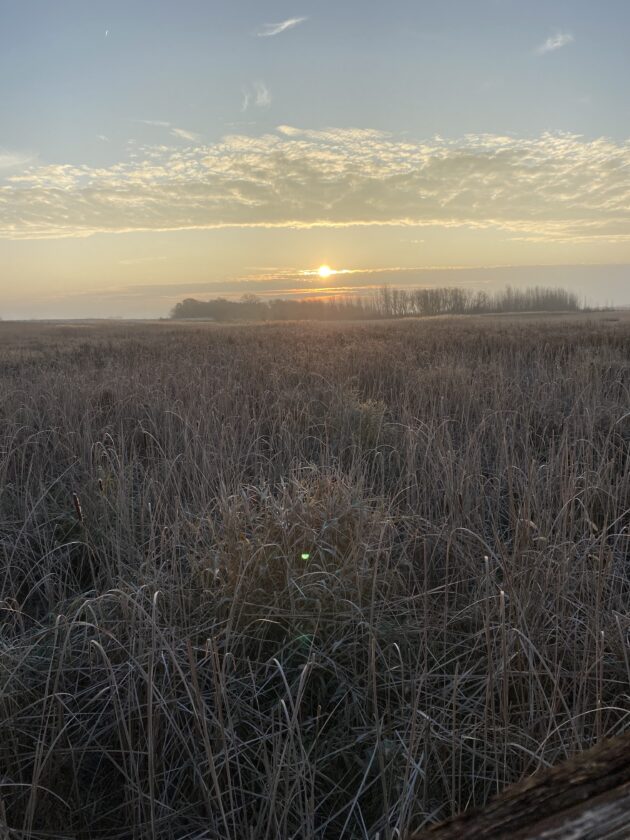
Photo courtesy of Chris Mathiowetz Brown County Commissioners certified a 126-acre U.S. Fish & Wildlife Service habitat easement in Section 35, Mulligan Township Tuesday. Easement private property pictured above is near the Alphonse and LaDonna Mathiowetz farm, pictured in the background.
NEW ULM — Brown County commissioners certified a 126-acre U.S. Fish & Wildlife Service (USFWS) habitat easement in Mulligan Township Tuesday.
The easement protects about 126 acres of grasslands and wetlands in Section 35, Mulligan Township on the southern border of Brown County, about a mile northeast of Wood Lake. It is located on private property and will not be open to the public.
The easement was secured from landowners including the Alphonse and LaDonna Mathiowetz Trust including Joel Mathiowetz of Comfrey, John Mathiowetz of New Ulm, Julie Schmid of Sauk Rapids and nieces and nephews of Joan Mathiowetz.
U.S. Fish & Wildlife Service Realty Specialist Eric Earhart of Windom said easements are acquired primarily for the benefit of wetland bird species. They protect upland and wetland habitat, and do not change cropland or other agricultural uses of surrounding lands.
“We’re here today to notify the county of the habitat easement,” said Earhart. “We all know that in addition to wetland birds, a lot of different wildlife use the property including ducks, deer, pheasants, pollinator insects.”
He said there are many easements available for landowners.
“We allow haying and grazing on our ‘working lands’ easements, depending on what landowners choose to do,” said Earhart. “Property access will continue to be controlled by landowners. The Mathiowetzes chose the haying option, but it doesn’t force them to hay. It just gives them the option to hay it after July 15 each year. They could hay it for themselves, sell it, or lease it to someone else to hay it. They can hay some of it, all of it, or none of it.”
He said easements are funded from the sale of migratory bird stamps and are not funded by tax dollars.
“When hunters want to hunt migratory waterfowl, they must buy a federal duck stamp. Duck hunters support conservation,” said Earhart. “Much of the federal duck stamp sales funds sold anywhere in the U.S. comes right back to the prairie pothole region in Minnesota, North and South Dakota, where a lot of the birds come from.”
He said landowners continue to pay property taxes on privately-owned easements.
“Hunting is not restricted by the easement. It’s determined by state laws on the property,” said Earhart. “Easements are perpetual. Any new landowners are bound by easement terms. The easement includes a 2 ½ acre exclusion zone that would allow a future building site.”
He called the easement property “really in a nice spot.”
“We like to build on existing habitat corridors with other private or state land conservation projects nearby,” said Earhart.
Jon Beyer, USFWS district manager, said the easement property includes existing wetlands.
“We’ll work with the landowners to ensure the wetlands are not drained by drain tile or ditches,” he said. “We’ll look at restoration as long as it doesn’t impact neighboring property. The existing grassland is in pretty good shape. We wouldn’t have to any grassland enhancements.”
Easement acquisition was approved, motion by Commissioner Jeff Veerkamp, seconded by Tony Berg.
Local News
Commissioners OK habitat easement
NU School District looking at deep cuts
NEW ULM – The New Ulm School Board took a hard look at its options for budget reductions over the next year years ...

A career sampler at Civic Center
A life of inclusion

Jacobson ends GFW career as complete player