Beyond the cats
Turner roots shaped Wanda Gág’s independence
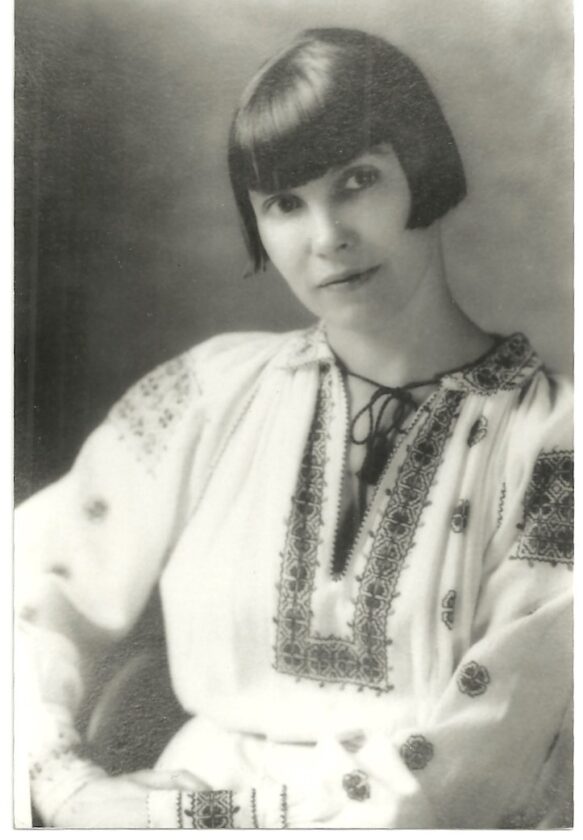
"Wanda Gág in her signature bob haircut and intricately embroidered Bohemian blouse, embodying the free-spirited artist who blended her New Ulm, Minnesota roots with the creative energy of 1920s Greenwich Village. (circa 1920s) (Photo submitted by Brown County Historical Society.)
NEW ULM – New Ulm residents often recognize Wanda Gág as the author of Millions of Cats, the 1928 children’s book that has remained in print for nearly a century.
A Women’s History Month program next week will highlight the broader forces that shaped her career, focusing on the Turner movement and the immigrant community that influenced her early life.
The Brown County Historical Society will present “Fertile Ground: Wanda Gág and the Turner Roots of Freedom” on Thursday, March 26, at Turner Hall.
The program will be led by Alexander Roth, curator with the Wanda Gág House Association and a New Ulm native who has researched and curated multiple Gág exhibits.
Roth said Gág’s most enduring contribution to children’s literature was her innovation with the double-page spread.
“Wanda Gág’s double-page spread, where the illustration goes from one page seamlessly over the next, is definitely an innovation that changed all literature that followed,” he said. “But moreover, it’s Gág’s views on children that were revolutionary. She believed children should have access to great art, regardless of their class background. She understood the interior lives of children.”
Roth said the Turner movement’s worldview created the conditions that allowed Gág to develop as an artist.
“It is the forward-thinking views of the Turners that cultivated the rich ground which allowed Gág to grow and flourish,” he said.
He said the Turner emphasis on education, equality and physical culture shaped both Gág’s upbringing and her later work.
“It is that worldview of Turner views on education of women and girls, their views on social justice, e.g., as abolitionists, that allowed Gág to help shape the 20th century in America,” he said.
Roth said Gág’s early responsibilities at home also played a role.
“The intersection of Turner values of female empowerment or rather taking it as: of course women and girls should be educated and engage in physical training along with the burden of having to financially and physically care for a family at the age of 15, mandated Gág’s financial independence,” he said.
Roth said Gág’s artistic style was also rooted in Turner ideals and her father’s influence.
“The Turners helped give Wanda Gág the confidence and determination to follow her own star,” he said. “Her father, Anton Gág, was also a Turner. Through him and his commitment to art, Wanda learned painting techniques by doing and thus developed her own unique style. She looked at everything around her with an artist’s eye, seeing beauty and life and movement in everything.”
Brown County Historical Society Research Librarian Darla Gebhard said New Ulm’s early-1900s social climate supported Gág’s independence. Gebhard said the environment “allowed a woman like Wanda to become such a radical independent artist,”
Gebhard said, noting that Gág “grew up thinking outside the box.”
The Historical Society will open a new exhibit shortly after the Turner Hall program.
The exhibit will feature recently acquired Gág family works shared between BCHS and the Wanda Gág House Association, including early pieces from Gág’s New Ulm years, loans from collectors and items not previously displayed locally.
Gebhard said the exhibit aims to “show a broader view of Wanda,” including “her feminism, her political connections, and the way she grew into a broader spectrum of creation and creativity once she got to New York.”
Roth said his focus on the Turner connection grew out of a recent speaking engagement.
“Along with curators from New York, Princeton and Minneapolis, I was invited to speak by the Philadelphia Art Museum at a conference called ‘Closer Looking,'” he said.
“As I started to speak, I realized I had a role to play as someone from her hometown. I mentioned that I thought it was important that we understand the ‘fertile ground’ that Wanda Gág grew in, in order to understand her art and life better.”
Roth said his research continues to reveal lesser-known aspects of Gág’s life.
“Coming to mind right now is Gág’s role in social justice,” he said. “Of course, that was cultivated at a very young age for her in Turner Hall. Her perseverance and integrity in using her art itself as a vehicle for social change is nothing but inspiring.”
Local residents can explore Gág’s legacy at several New Ulm landmarks, including the Wanda Gág House on Washington Street, Anton Gág’s murals at the Cathedral of the Holy Trinity, and the Gág family works held by BCHS.
A statue of Wanda Gág by artist Jason Jaspersen stands outside the New Ulm Public Library.
Gebhard said the upcoming program and exhibit offer residents an opportunity to view Gág as both a local figure and an internationally recognized artist shaped by New Ulm’s progressive heritage.
“It’s opening people’s eyes to what all the Gágs accomplished,” she said. “Wanda was not just a local artist; she’s known around the world.”
The March 26 event includes a social hour at 5:30 p.m., dinner at 6 p.m. and a 7 p.m. presentation by Roth.
Tickets are available through the Brown County Historical Society Museum and the New Ulm Area Chamber of Commerce. Tickets are on sale now, but the purchase deadline is approaching. For more information, contact BCHS at education@browncountyhistorymn.org or 507-233-2616.
Local News

The virtues of pollinating perennials
Five dead in crash on U.S. 71
WINDOM — Five people were killed and eight injured in a head-on crash Friday in Cottonwood County, according to ...
Beyond the cats

Seifert receives Republican endorsement in SD15

Fundraiser addresses domestic violence