The virtues of pollinating perennials
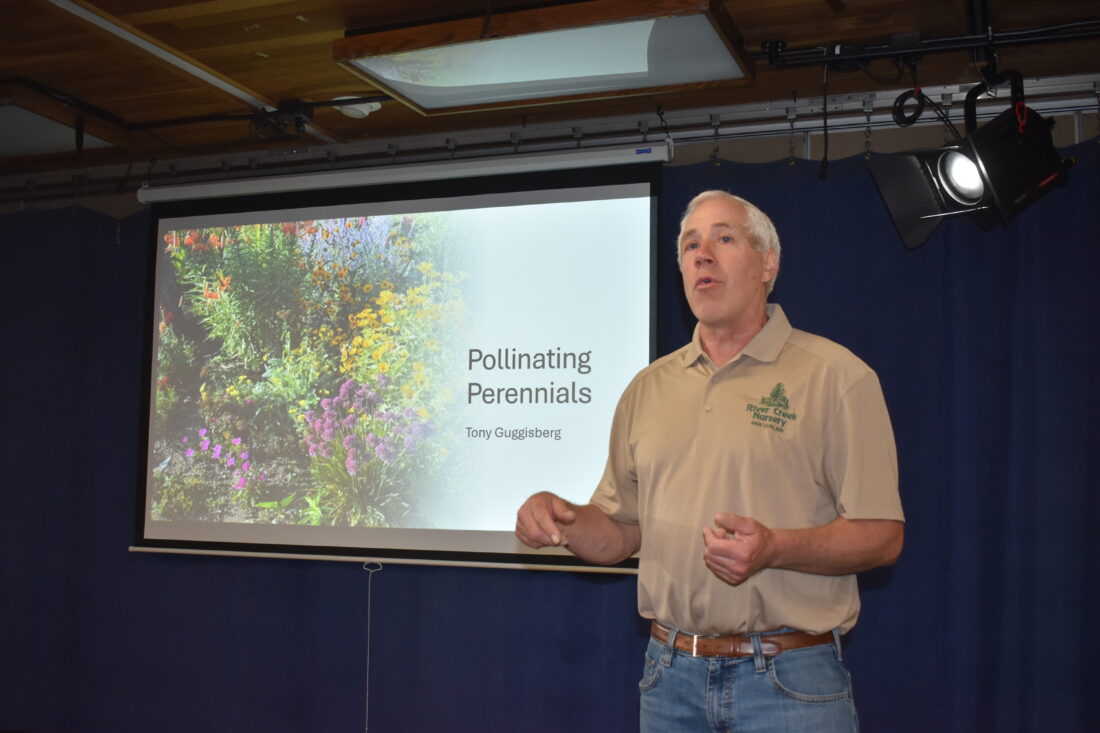
Staff photo by Fritz Busch Horticulturalist and River Creek Nursery owner Tony Guggisberg talks about pollinating perennials that can draw butterflies to lawns at the New Ulm Public Library Saturday.
NEW ULM — As Saturday’s outdoor temperature climbed way above average and intense sunshine showered the area, horticulturalist Tony Guggisberg talked of the virtues of pollinating perennials and lawn care at the New Ulm Public Library.
“Welcome to spring everybody. What a great day,” said New Ulm League of Women Voters President Ruth Ann Webster.
Guggisberg, who owns River Creek Nursery in New Ulm, began his talk by describing perennials that can attract butterflies to yards. He was accompanied by his daughter Emily, who is graduating from South Dakota State University with a horticulture degree.
Guggisberg said interest in pollinating plants and what they can do for butterflies, bees and birds has increased over the past few years.
“I’d like to list great perennials that are easy to care for,” said Guggisberg.
His favorite hearty perennials include asters and Minnesota-grown mums that deer and rabbits don’t eat but draw butterflies and bees and bloom well in the fall.
Other plants on his list are ornamental onions, bee balm which he said attract hummingbirds, butterfly weeds, black-eyed Susans, coneflower, phlox, Russian sage (very good for hot, dry conditions) and swamp milkweed.
He said he views lawn care different than most people.
“Do you realize that lawns are the most high-maintenance parts of your property? You have to mow it weekly when it’s raining often. Some people apply fertilizer three or four times a year and add weed control because they don’t like weeds. I like dandelions and native plants.”
Guggisberg said the most common question he is asked is how to grow grass under trees.
“It’s tough to do. If grass won’t grow under your trees, put mulch under the tree,” he said.
Guggisberg said he has many flowering crabapple trees on his property and they are good for birds to eat.
He said peaches he’s grown here are very fruitful. Guggisberg recommended fast-growing “Contender” peach trees in Minnesota because they are very hearty and tolerant of sub-zero temperatures.
His lawn and garden tips included seeding grass in the fall, not in the spring.
“Limit fertilizer to recommendations. Look at the fertilizer bag. Be careful with lawn chemicals. Don’t rake lawns in spring if they’re wet,” said Guggisberg.
He said composting grass and leaves promotes good soil conditions.
Guggisberg recommended doing yard work early in the day before insects get active. He said using natural techniques like growing lemongrass and citronella keeps mosquitoes away.
Guggisberg said when planting trees near black walnut trees, keep them at least 50 feet away from walnut trees to avoid toxic effects of a chemical produced by walnut trees that can harm other plants.
He recommended individuals consider the Lawns to Legumes program that offers workshops, coaching, planting guides and individual support grants from the Minnesota Board of Water and Soil Resources (BWSR).
Pollinator Pathways grants run by local governments and non-profit organizations with support from BWSR, can be found at https://bwsr/state.mn.us/.
The library program was hosted by the New Ulm League of Women Voters Environmental Committee and CAST (Community and Seniors Together).