NU Garden Club looks to spring
Regional ecologist outlines climate pressures native plant solutions
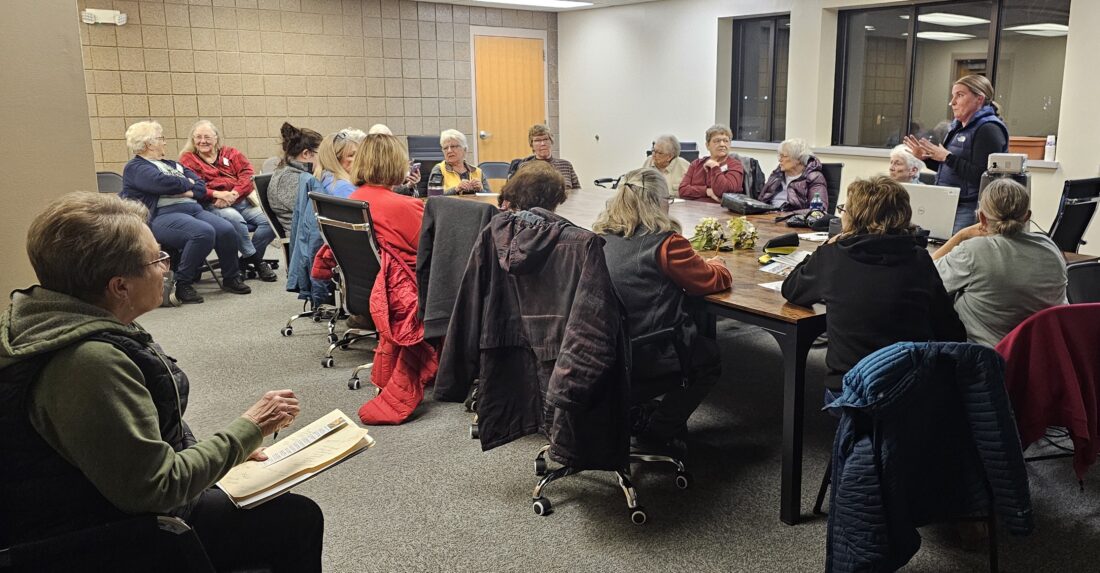
The New Ulm Garden Club filled the room Wednesday evening for a presentation on native plant landscaping by DNR Regional Ecologist Megan Benage.
NEW ULM — The New Ulm Garden Club opened spring season Wednesday evening with a packed house and a timely topic: how to bring Minnesota’s native plants back to local yards, one garden at a time.
Regional Ecologist Megan Benage mixed science, humor and practical advice in a talk that was part environmental wake-up call, part how-to guide for the season ahead.
Benage covers 32 counties for the Minnesota Department of Natural Resources and has been based in New Ulm for more than a decade. She opened with a map of her region, showing the large regions she covers.
“If you have trouble getting a hold of me, that is why,” she said. “I do my best to kind of be everywhere all the time.”
She described an ecologist as someone who studies “all the parts and pieces of an ecosystem: the wildlife, the plants, microbes, soil, and how it all fits together.”
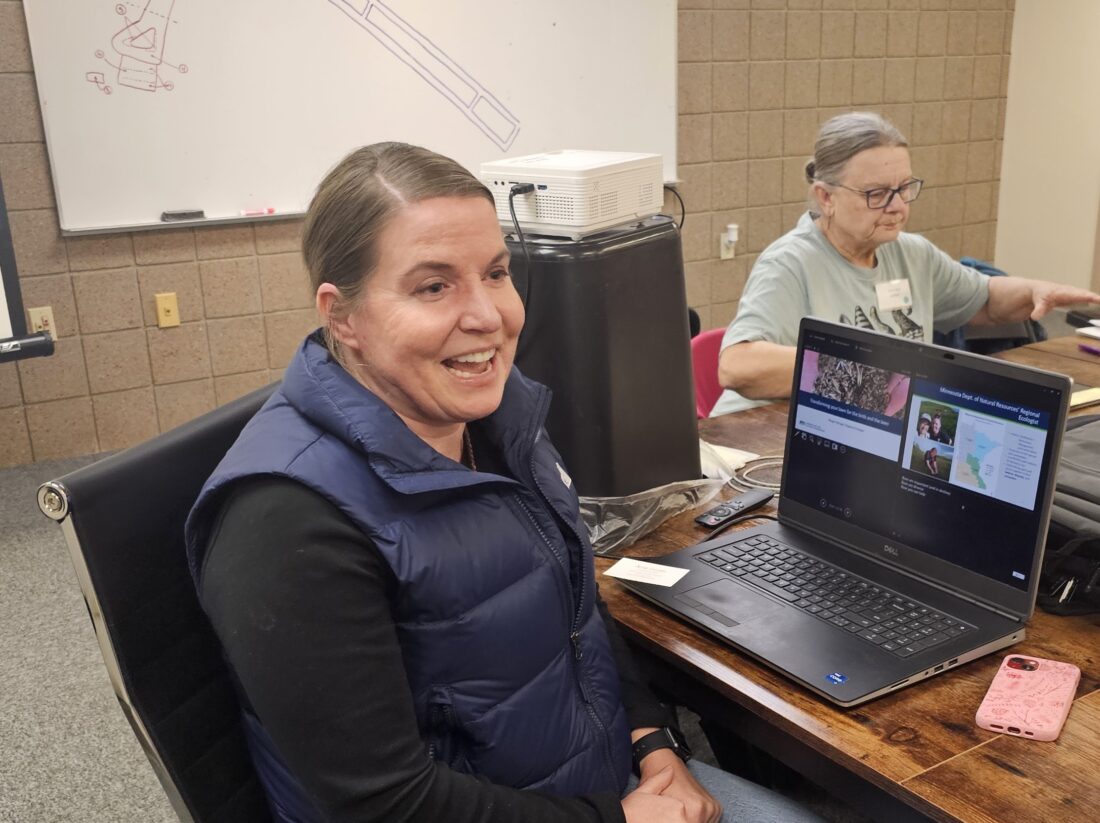
Megan Benage, Regional Ecologist with the Minnesota DNR, sits beside her laptop presentation during the New Ulm Garden Club's spring meeting Wednesday evening.
With more than 20 years in the field, she said she now thinks often about “what kind of positive impression I want to leave for the land.”
A large portion of her presentation focused on the rapid decline of insects and birds.
Benage said insect populations have dropped by an estimated 45 percent over the past 40 years.
“The 20 percent that we know about — almost half of them are gone,” she said.
Birds have experienced similar losses, with roughly 3 billion fewer across North America than in 1970.
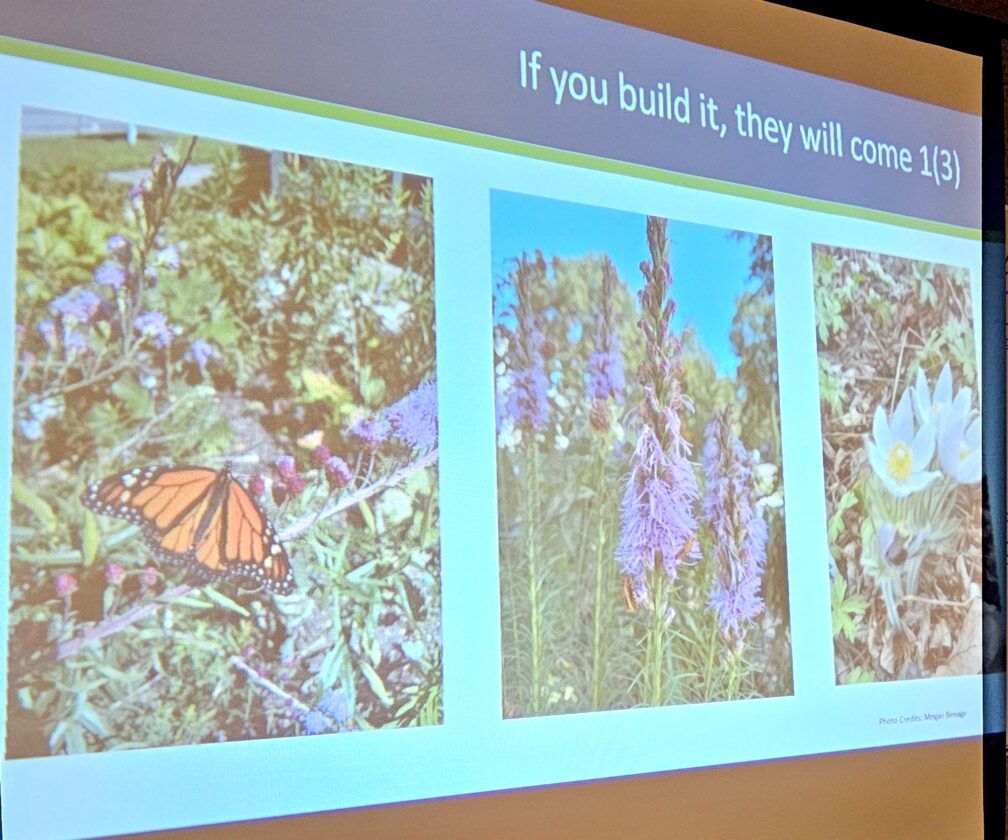
A slide in Megan Benage's presentation reads "If you build it, they will come," showcasing native plants and a monarch butterfly to illustrate attracting pollinators, at the New Ulm Garden Club meeting in New Ulm.
“In your lifetime, you have 3 billion less birds,” she told the audience. “That’s significant.”
She outlined how climate change is reshaping Minnesota. Winters are warmer, summers are hotter and rainfall arrives in more extreme bursts.
South‒central Minnesota has seen a 13 percent increase in annual precipitation since the late 1800s, but much of that moisture now falls in short, heavy events followed by long dry spells.
“We are in a feast‒and‒famine situation,” she said. “We’re getting all of our rain at once, and then it turns off. That’s not how plants work. That’s not how agriculture works.”
Benage said these shifts affect everything from soil health to public safety. Wildfire smoke, once rare in Minnesota, is now a recurring summer hazard.
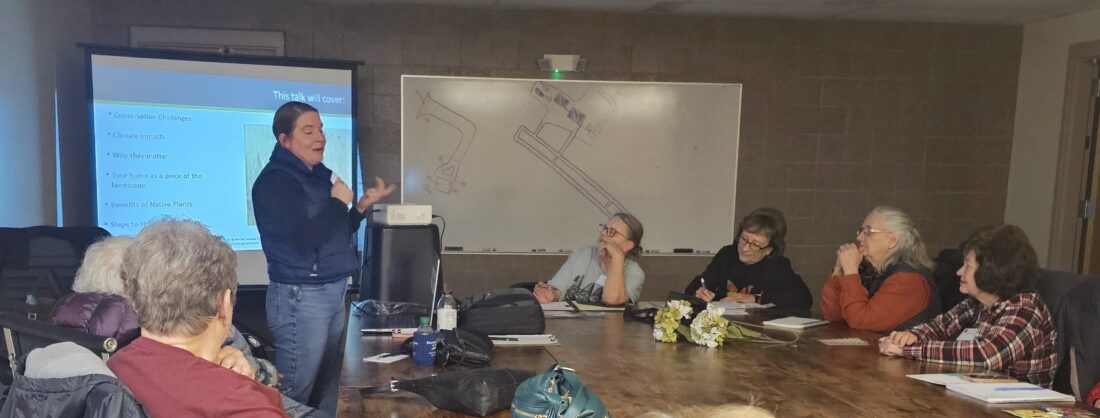
Megan Benage, regional ecologist with the Minnesota Department of Natural Resources, addresses the New Ulm Garden Club on the importance of native plants for combating climate change and biodiversity loss during their monthly meeting on Wednesday evening in New Ulm.
“I’m already experiencing days in the field where I’m wearing a mask to try to do my work,” she said. “It is not fun.”
From there, she turned to the role homeowners can play by incorporating native plants into their yards. She defined “native” as species that evolved in Minnesota’s ecosystems and are adapted to local soils, climate patterns and wildlife.
The plants, she said, support pollinators, stabilize soil, store carbon and manage water more effectively than turfgrass.
To illustrate the difference, she compared root systems. Turfgrass has shallow roots and requires frequent watering to stay green.
Native prairie plants have deep, dense roots that allow them to withstand drought and absorb large volumes of rainfall.
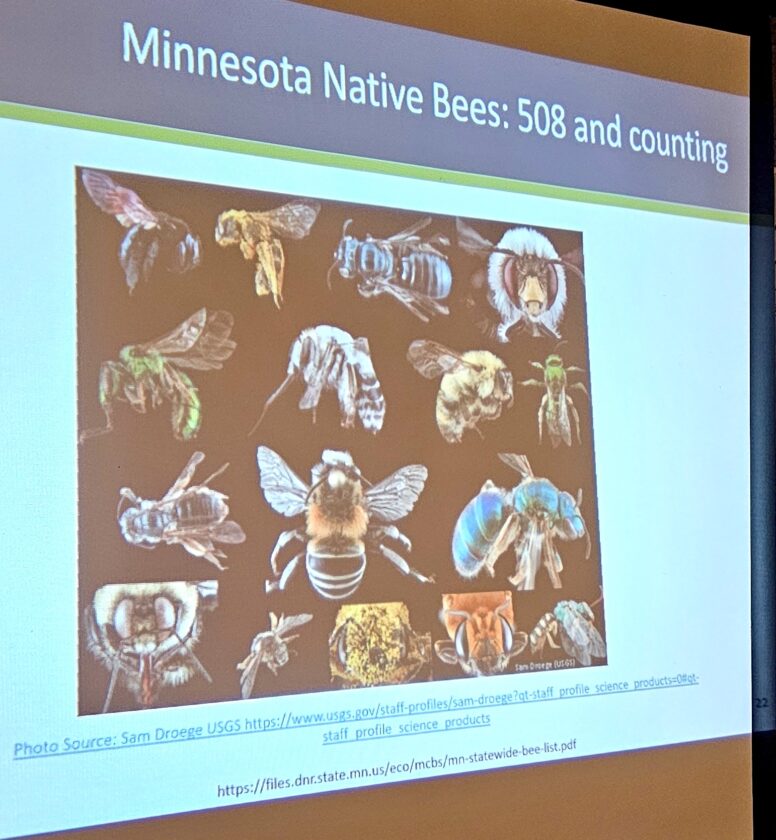
A slide from the presentation showcases the diversity of Minnesota's native bees, noting over 508 species and their crucial role in pollination and habitat health.
“Prairies can absorb an eight‒inch rainfall without blinking an eye,” she said. “Do you think native plants are pretty good at holding water? Yes.”
She walked attendees through the math of lawn watering. A typical tenth‒acre yard may require more than 80,000 gallons of water over an eight‒month growing season.
“We are vastly undervaluing the resource of water,” she said.
Replacing even small sections of lawn with native plants, she added, can significantly reduce outdoor water use.
Benage highlighted the importance of native plants for bees. Nearly 70 percent of Minnesota’s bees nest in the ground, while others rely on hollow stems or plant cavities.
She encouraged gardeners to leave stems standing through fall and early spring to protect overwintering larvae.
“The biggest change you’re going to have to make is leaving those stems,” she said. “There are babies inside of them.”
Throughout the evening, Benage offered practical guidance for homeowners interested in starting or expanding native plant gardens.
She recommended beginning with a small area, choosing a handful of reliable species and observing how they perform over time.
She encouraged residents to purchase plants from reputable native plant nurseries rather than big‒box stores, where true native species may be mislabeled or unavailable.
Audience members asked questions about maintenance, plant selection and how to support pollinators without attracting unwanted pests.
Benage said native plants generally require less watering and fertilizer once established, though they may need weeding during the first couple of years.
She addressed concerns about bees nesting in yards, noting that most native bees are solitary and non‒aggressive.
She pointed attendees to local examples of native plantings, including prairie restorations, pollinator patches and community demonstration gardens.
Visiting these sites, she said, can help gardeners visualize mature plantings and gather ideas for their own yards.
As the meeting wrapped up, Benage returned to the central message of her talk.
“You are more powerful than you imagine,” she told attendees. “You can make so many changes, and it starts with what you’re planting in your garden.”
The Garden Club will continue its spring programming in the coming months. Residents seeking more information about meetings or membership may contact the club directly.
-
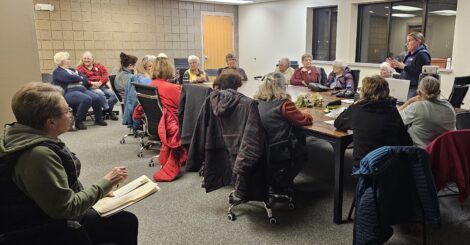
- The New Ulm Garden Club filled the room Wednesday evening for a presentation on native plant landscaping by DNR Regional Ecologist Megan Benage.
-
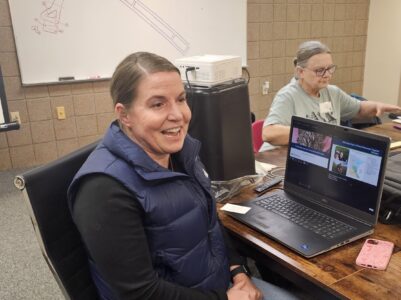
- Megan Benage, Regional Ecologist with the Minnesota DNR, sits beside her laptop presentation during the New Ulm Garden Club’s spring meeting Wednesday evening.
-
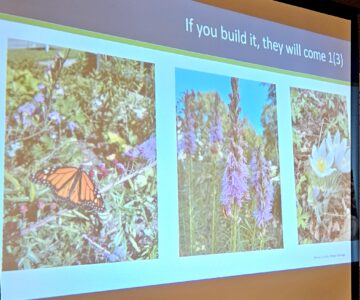
- A slide in Megan Benage’s presentation reads “If you build it, they will come,” showcasing native plants and a monarch butterfly to illustrate attracting pollinators, at the New Ulm Garden Club meeting in New Ulm.
-
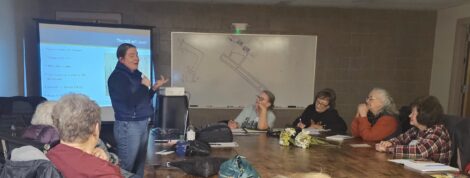
- Megan Benage, regional ecologist with the Minnesota Department of Natural Resources, addresses the New Ulm Garden Club on the importance of native plants for combating climate change and biodiversity loss during their monthly meeting on Wednesday evening in New Ulm.
-
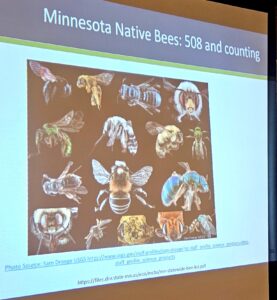
- A slide from the presentation showcases the diversity of Minnesota’s native bees, noting over 508 species and their crucial role in pollination and habitat health.