New Ulm embraces a path to healing
Kellen gives a presentation on The Makatoh Reconciliation and Healing Horse Ride
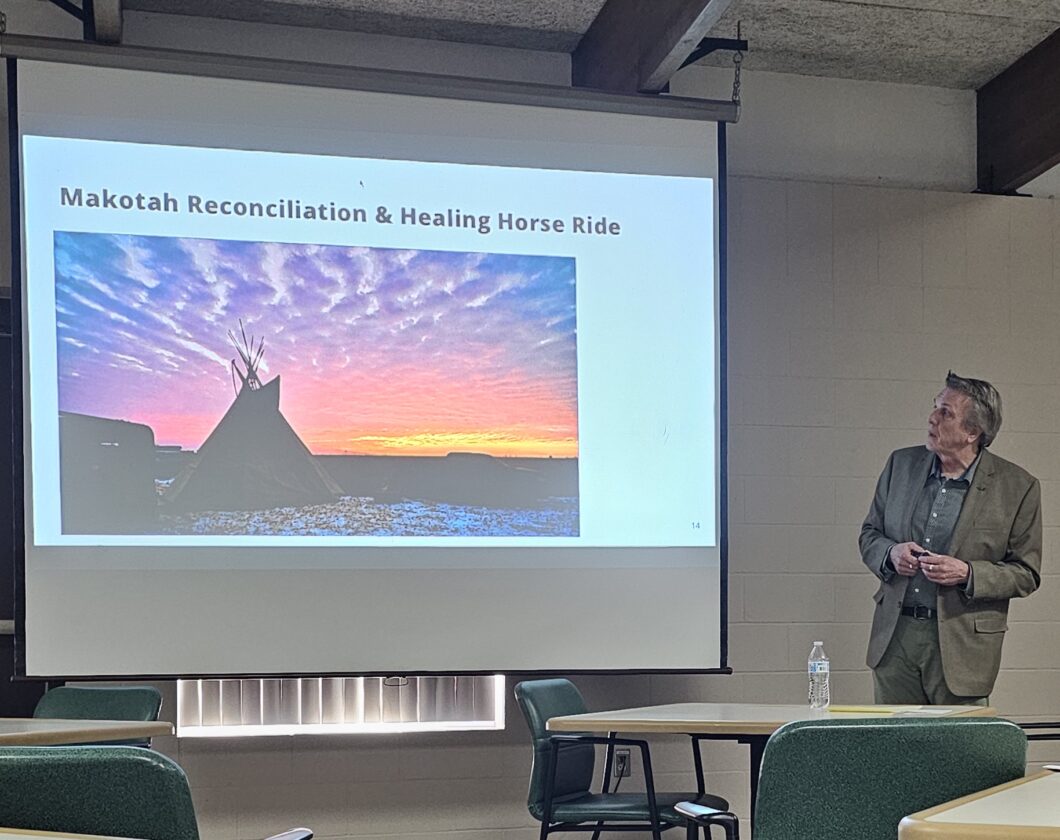
John Kellen, a documentary filmmaker, photographer, and collaborator with Indigenous communities, speaks about the Makatoh Reconciliation and Healing Horse Ride. Kellen also serves as executive director of the Grand Center for Arts & Culture.
NEW ULM — John Kellen, executive director of the Grand Center for Arts & Culture and a documentary filmmaker and photographer, shared the history of The Makatoh Reconciliation and Healing Horse Ride at New Ulm Community Center Thursday.
Dakota riders travel hundreds of miles each December in a memorial ride centered on prayer, remembrance and unity.
The Makatoh Reconciliation and Healing Horse Ride honors the 38 Dakota men executed in Mankato in 1862, the largest mass execution in U.S. history, while fostering healing from a painful shared past. In New Ulm, a town once marked by conflict during the U.S.-Dakota War, the ride is increasingly embraced as a bridge toward reconciliation.
Kellen, who has collaborated with Indigenous communities for four decades, opened with a Dakota land acknowledgment.
“This land is and was Dakota homeland,” he said. “People have inhabited these places for thousands of years, upwards of 14,000 years.”
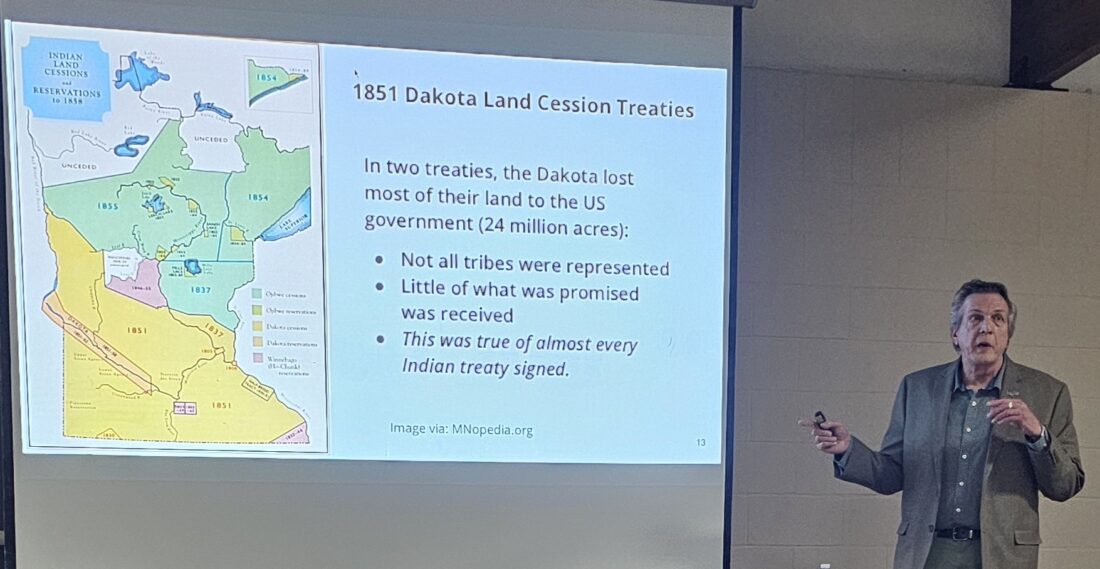
John Kellen explains the 1851 Dakota land‑cession treaties during his presentation at the CAST Senior Center on Thursday.
He encouraged the audience to recognize Dakota place names across Minnesota, including Chaska (“first-born son”), Winona (“first-born daughter”), Shakopee (named for a succession of chiefs known as Šakpe, meaning “six”), and Minnesota itself, derived from Mni Sota, meaning “clear blue water.”
Kellen challenged the common portrayal of the United States as a “nation of immigrants,” citing scholar Cornel West: “We’re not a nation of immigrants; we’re a nation with immigrants, with Indigenous peoples and enslaved Africans in our origin.”
He explained how Dakota land holdings were reduced from 24 million acres through treaties often misunderstood or unfairly negotiated, eventually shrinking to narrow reservation strips. After the 1862 U.S.-Dakota War, remaining treaties were voided and most Dakota people were forcibly removed from Minnesota. Bounties were offered for killing Indigenous people, including Chief Little Crow, whose scalp was displayed at the Minnesota Historical Society for years. The trauma of that era continues to shape families and communities.
The horseback memorial ride began in 2005 when Lakota elder and Vietnam veteran Jim Miller had a vision of 38 riders traveling east to honor the executed men. The first ride took place in 2006 and continued annually until 2022.
“He was healing his own pain,” Kellen said of Miller, a recovering alcoholic who saw the ride as a path to personal and communal recovery.
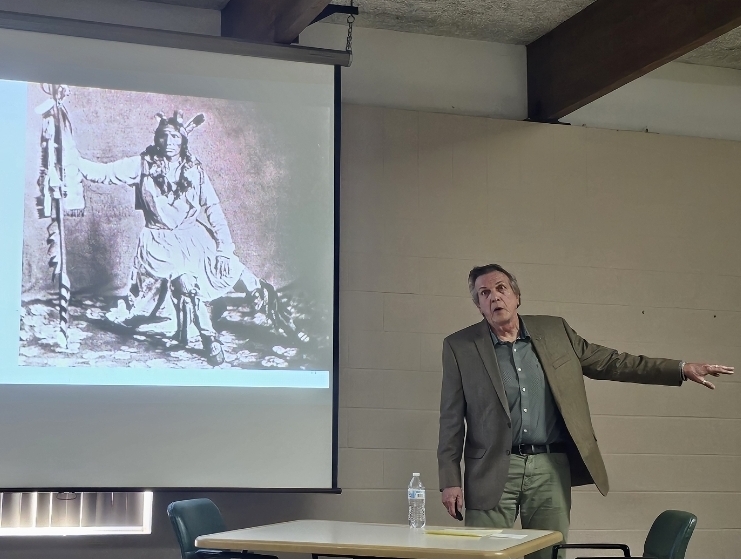
John Kellen points to information about the bounty once placed on Chief Little Crow during his presentation at the CAST Senior Center on Thursday
After Miller’s death in 2022, the ride paused for a year in observance of Dakota mourning traditions. It resumed in 2024 under new leadership, renamed the Makatoh Reconciliation and Healing Horse Ride by tribal council. “Makatoh,” meaning “blue earth,” is a sacred Dakota medicine symbolizing healing and the land itself.
Led by Wilfred Keeble from Crow Creek Reservation in Fort Thompson, SD, the ride emphasizes reconciliation for all. “First and foremost, the ride is sacred,” Kellen said. “Every step of the way, they’re in prayer.”
Participants include many youth. Riders carry a staff adorned with eagle feathers, traditionally led by men, though only a woman may retrieve it if it falls. A riderless horse accompanies them, honoring those no longer present.
Keeble works closely with young riders, teaching traditional practices to strengthen cultural identity and address challenges such as addiction, suicide and disconnection. Horses hold deep spiritual meaning, representing the six directions–north, south, east, west, up and down–with the rider symbolizing the seventh: the human connection.
Colleen Hokinson, a retired Spanish teacher, learned about the ride while visiting St. Joseph’s Mission Museum. “The story is interesting; it’s probably one of the most powerful stories of my life,” she said.
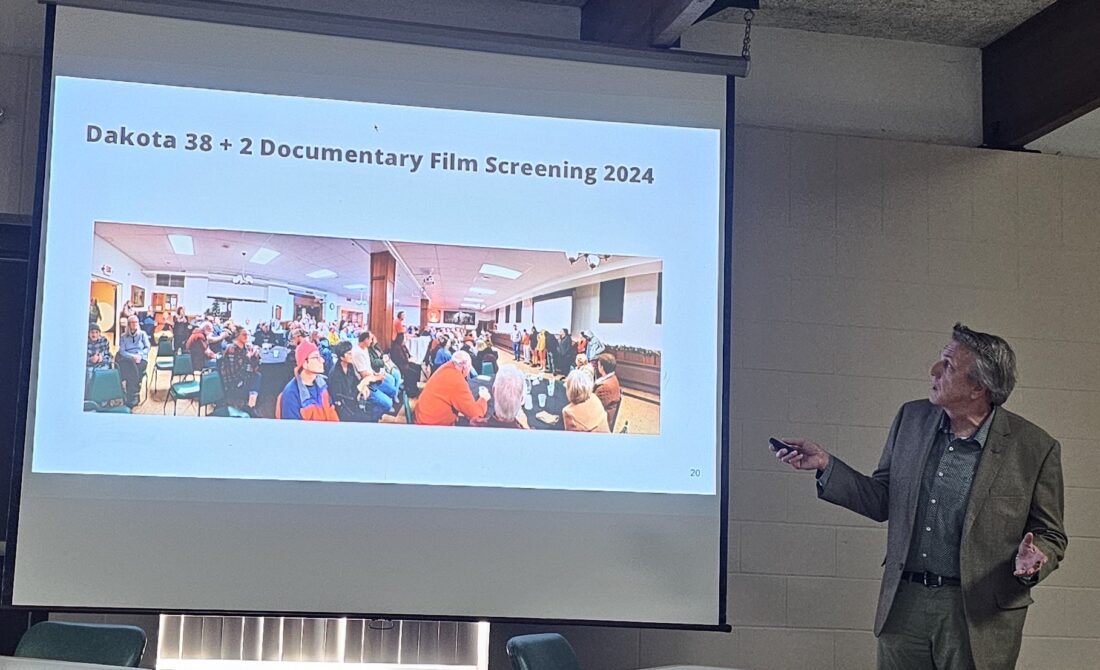
John Kellen, a documentary filmmaker and photographer, has documented the Makatoh Reconciliation and Healing Horse Ride and similar events, capturing moments of cultural significance and unity.
When Hokinson met Keeble and learned the ride might resume its route through New Ulm, she felt compelled to help. “If you decide to do the tour, I promise you I will find lodging for your people in New Ulm,” she recalled telling him.
A small volunteer group formed, including Marlene and John Ingabretson, Brian Hillesheim, and Kristi and Mark Lindquist. They secured lodging at the New Ulm Community Center, additional space at local soccer fields, and horse care at the Brown County Fairgrounds, deliberately avoiding the Armory due to its difficult historical associations.
Riders descending Fifth Street Hill each year navigate the city’s complex history with mindfulness, but growing local cooperation has built trust. Hokinson later learned riders reportedly faced gunfire in 2022 along the route, underscoring the significance of a welcoming reception in New Ulm.
“For them to come back… is a big deal,” she said.
Keeble invited a small number of non-Native riders to participate, a meaningful step toward inclusivity. Kellen described it as an honor, noting moments of connection, such as Dakota children bonding with non-Native rider Mandi Smith’s mule, Banjo, at the soccer field–an example of how animals can bridge cultural divides.
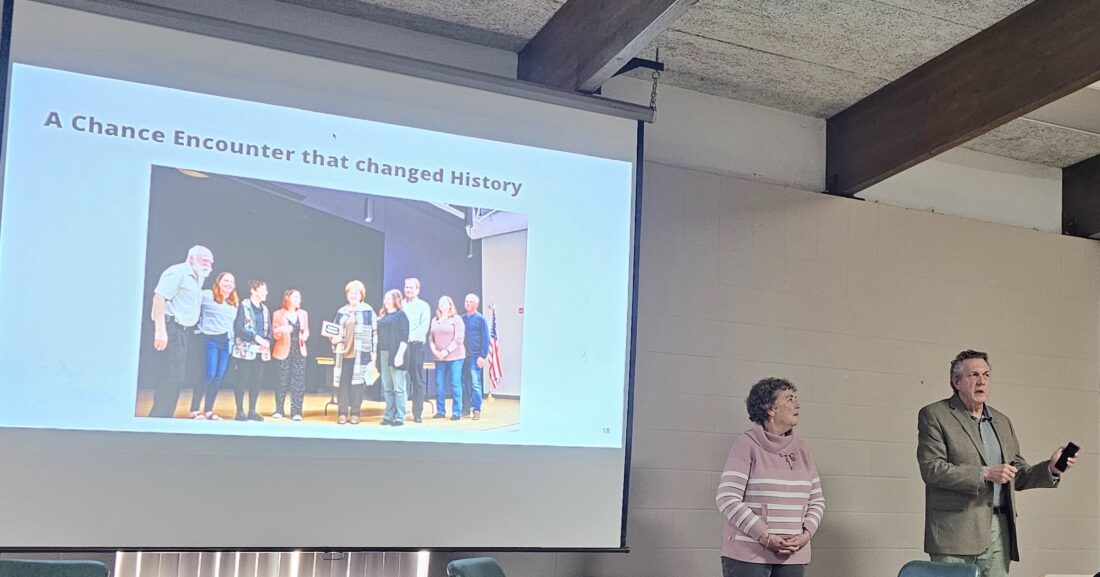
Colleen Hokinson and John Kellen, introduced by Kellen's partner Michelle, collaborated to bring the Makatoh Reconciliation and Healing Horse Ride to New Ulm.
Community support extends to practical aid. While Mankato has historically charged nearly $3,000 for services such as police escorts and street closures, New Ulm’s city council and police have provided assistance without charge.
Audience member Linda Beck highlighted this contrast. “That was the thing that struck me,” she said. She was also surprised to learn Indigenous religious practices were not legally protected until the American Indian Religious Freedom Act of 1978.
Her husband, Bob Beck, a retired National Park Service employee and Turner Hall fundraiser volunteer, mentioned after the presentation that the Upper Sioux Agency land transfer reflects changes in how the state and Indigenous communities handle historically significant sites.
He said, “Upper Sioux Agency State Park was turned over to the Upper Sioux Community. It’s not a state park anymore. That was sacred land to them because it was a burial ground for their ancestors. That’s why they wanted it back.”
The Upper Sioux Agency State Park, located in Yellow Medicine County near Granite Falls, was officially closed on Feb. 16, 2024, when roughly 1,200 acres were transferred back to the Upper Sioux Community (Pezihutazizi Oyate).
Kellen said about 85% of Minnesota’s monuments commemorate war and encouraged memorials focused on shared humanity. As a non-Native presenter, he emphasized respect to avoid cultural appropriation, sharing stories as an ally to shift narratives.
“It’s time to focus on what unites us,” he said. “Indian country is watching.”
After New Ulm hosted the ride for the second year, volunteers said it heightened awareness and sparked dialogue about Minnesota’s difficult history. Kellen, who has documented similar rides across the region, expressed hope amid the awe-inspiring event.
“Now that I know what I know, I feel compelled to try to be part of a solution,” Kellen said. “Pretending it never happened isn’t going to help.”
Cara Knauf, program director at CAST, said plans are underway to show the documentary Dakota 38 + 2 during U.S.-Dakota War Week in August.
-
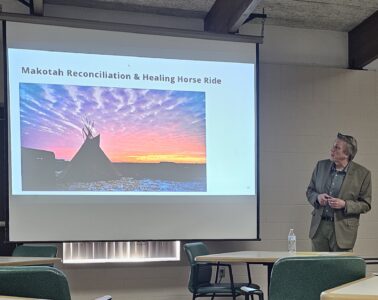
- John Kellen, a documentary filmmaker, photographer, and collaborator with Indigenous communities, speaks about the Makatoh Reconciliation and Healing Horse Ride. Kellen also serves as executive director of the Grand Center for Arts & Culture.
-
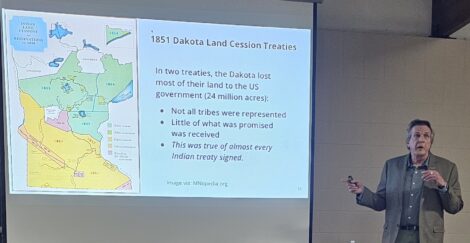
- John Kellen explains the 1851 Dakota land‑cession treaties during his presentation at the CAST Senior Center on Thursday.
-
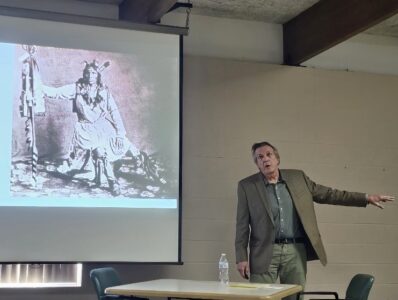
- John Kellen points to information about the bounty once placed on Chief Little Crow during his presentation at the CAST Senior Center on Thursday
-
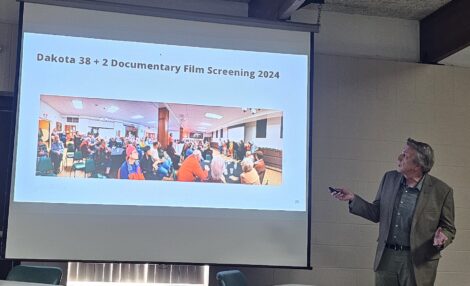
- John Kellen, a documentary filmmaker and photographer, has documented the Makatoh Reconciliation and Healing Horse Ride and similar events, capturing moments of cultural significance and unity.
-
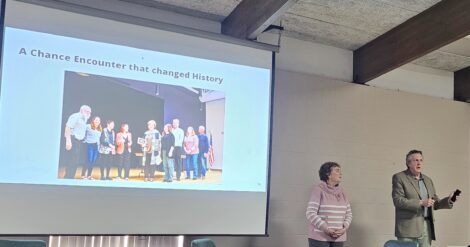
- Colleen Hokinson and John Kellen, introduced by Kellen’s partner Michelle, collaborated to bring the Makatoh Reconciliation and Healing Horse Ride to New Ulm.
Local News
NUFSC presents “Oz on Ice”
School security legislation touted for bipartisan interest
ST. PAUL — Legislative bills to provide funds for all Minnesota schools to add more security measures in their ...
‘Treat patients like family’
NU School Board passes social studies review
NEW ULM -- The District 88 School Board formally approved a review for the school’s K-12 Social Studies ...
New Ulm embraces a path to healing