History of a heritage
German? Bohemian Heritage Society shares history, stories and artifacts
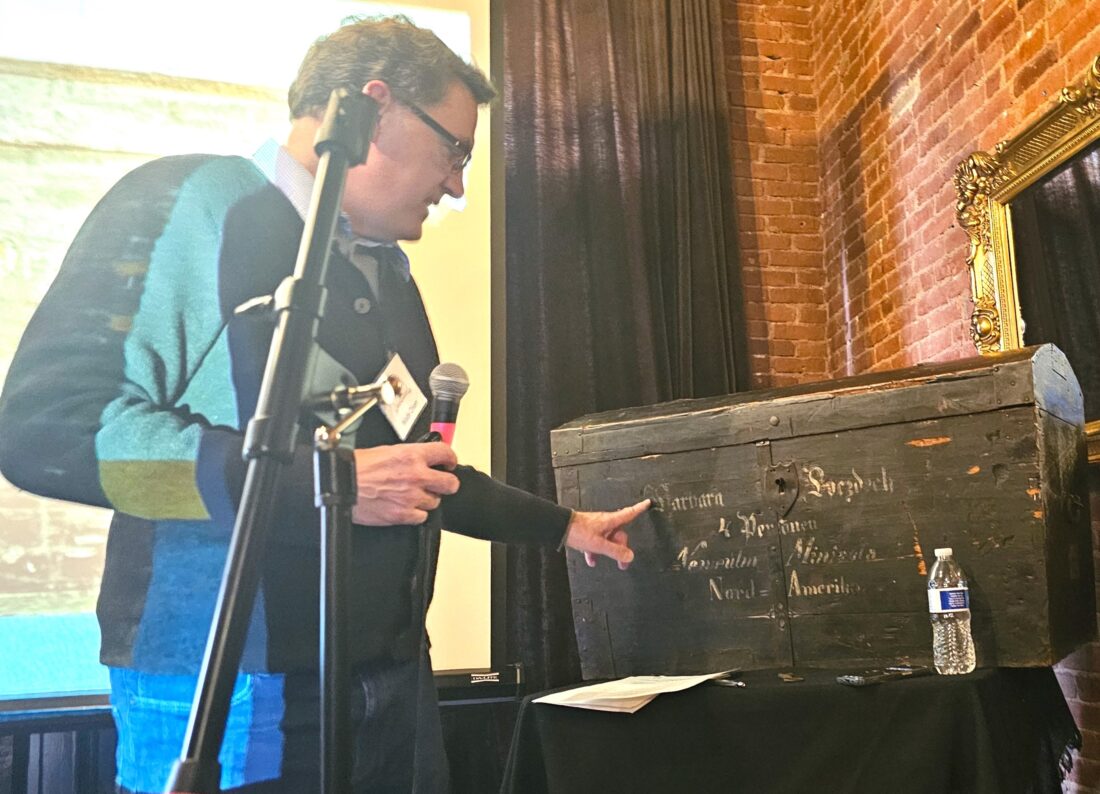
Board president Wade Olson displays an 1881 immigrant trunk at the German Bohemian Heritage Society's open house Saturday. "It's just an empty trunk that gave me a whole lot of stories," Olson said. Photo by Amy Zents
NEW ULM — Local heritage took center stage Saturday at The Grand Center for Arts & Culture during the German Bohemian Heritage Society’s annual open house.
The event drew residents, longtime members and first‒time visitors for a day of history, genealogy and cultural preservation.
Board member Rick Eckstein opened the program with a brief welcome before introducing board president Wade Olson, who led the presentation.
Olson guided attendees through genealogy resources, travel planning, craft traditions and memories of the late Denny Warta, a longtime volunteer known informally as the “German‒Bohemian King, Denny the Eighth.”
Olson, who also operates Travel Wade, LLC, described how his heritage tours reconnect families with ancestral villages across Bohemia and Bavaria. His trips combine archival research with visits to churches, cemeteries and former homesteads.
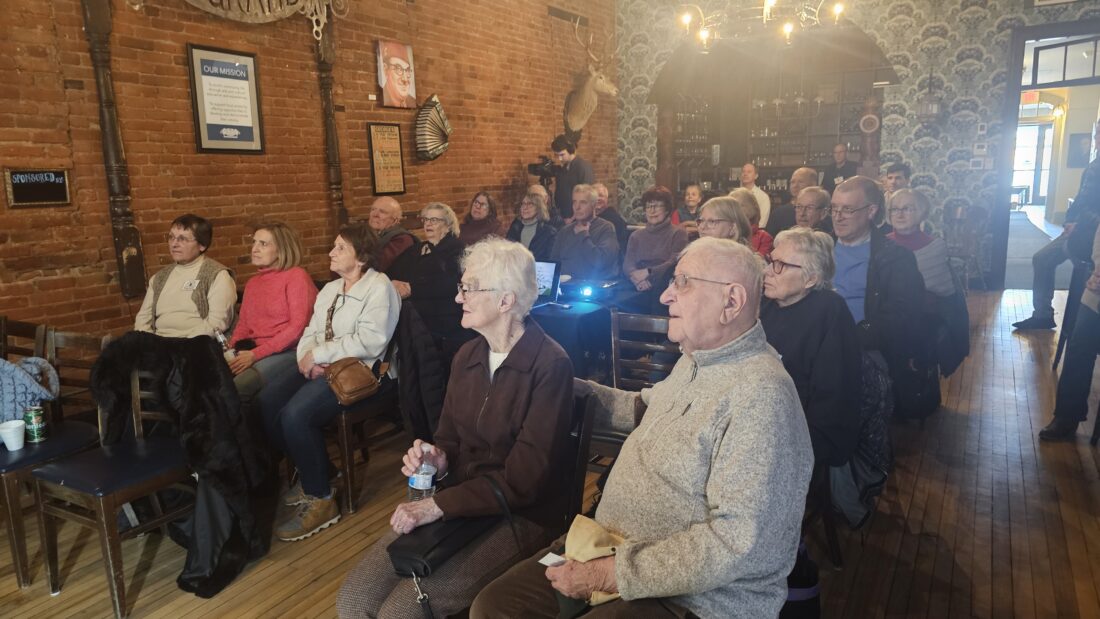
Attendees listen to a presentation by board president Wade Olson during the German Bohemian Heritage Society's annual open house Saturday at The Grand Center for Arts & Culture in New Ulm. Irmgard and Gerhard Kleih of Albert Lea, lower right, also shared their own immigration story during the event. Photo by Amy Zents
Attendee Phil Meidl said Olson’s preparation made the experience meaningful.
“He’s very well‒versed in our histories,” Meidl said. “You’d never figure it out on your own.”
Founded in 1984, the society maintains a research center, publishes newsletters and assists with genealogy inquiries from across the United States and abroad.
Olson said expanding digital access remains a priority.
“Not everybody can come here,” he said. “So we want to make our collections accessible to people from all over the world.”
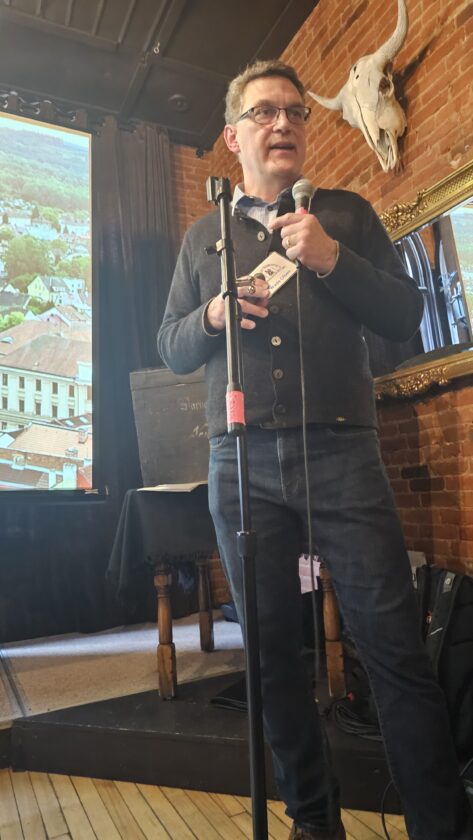
Board president Wade Olson speaks during the German Bohemian Heritage Society's annual open house Saturday at The Grand Center for Arts & Culture in New Ulm. The immigrant trunk discovered by relatives is visible behind him. Photo by Amy Zents
Volunteers are needed to help scan, translate and share family histories. Olson also outlined the historical forces that shaped German‒Bohemian migration. The region, once part of the Holy Roman Empire and later the Austrian Empire, was affected by conflicts including the Thirty Years’ War, the Hussite Wars and shifting borders under Prussian and Napoleonic influence.
Many Minnesotans trace their roots to German communities of the former Austrian Empire and to Bohemia, today’s Czechia. German‒speaking communities lived in Bohemia for centuries until their expulsion after World War II, leaving descendants without a geographic homeland.
The society’s work, Olson said, helps preserve the history of those communities and the records that survived.
A highlight of the afternoon was the display of an immigrant trunk discovered in the basement of Kenny and Suzanne Hoffmann, relatives of Olson. Marked “Zwischendeck,” indicating steerage travel, the trunk was labeled from Domažlice and routed through Bremen.
“It’s just an empty trunk that gave me a whole lot of stories,” Olson said. He noted that such trunks often serve as the only surviving record of a family’s departure.
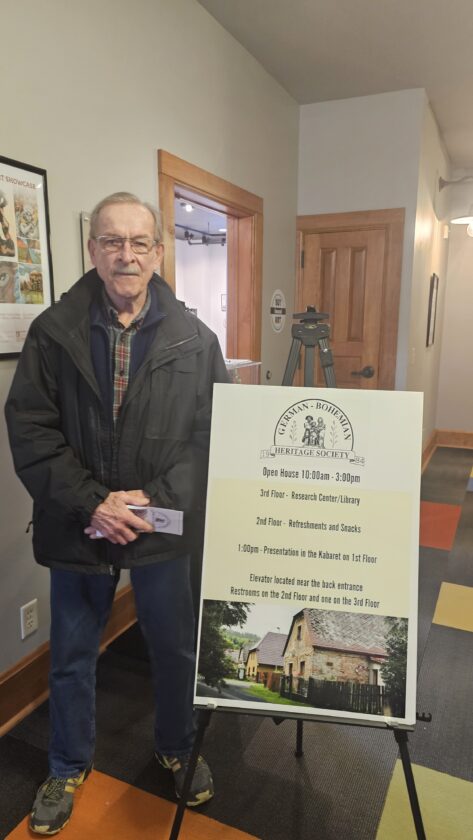
Attendee Phil Meidl, who praised the society’s heritage tours for their detailed ancestral research, stands near the German‑Bohemian Heritage Society’s open house sign Saturday at The Grand Center for Arts & Culture in New Ulm. Photo by Amy Zents
Research connected the trunk to Barbara Bosdech, who emigrated from Bohemia in 1881 as a widow with four children. Her husband died in 1879 at age 42, and her father‒in‒law died a year later.
The trunk’s labels indicated the family had already arranged to settle in New Ulm, reflecting chain migration and sponsorship practices common at the time. Additional labels referenced the ship “Deutsche Habsburg,” the Bohemian West Railroad and a paid delivery service.
A torn label reading “A U S” likely referred to “Tauss,” the German name for Domažlice, confirming the departure point.
Board member Pat Eckstein shared a framed 1895 wedding photograph that further tied the families together. The image shows George Bosdech, Barbara’s youngest son, serving as best man at the wedding of Anton Dietrich and Margaret Neid Dittrich, Eckstein’s grandparents.
Also identified in the photo is Elizabeth Dittrich, who later became Mrs. Joseph Seifert.
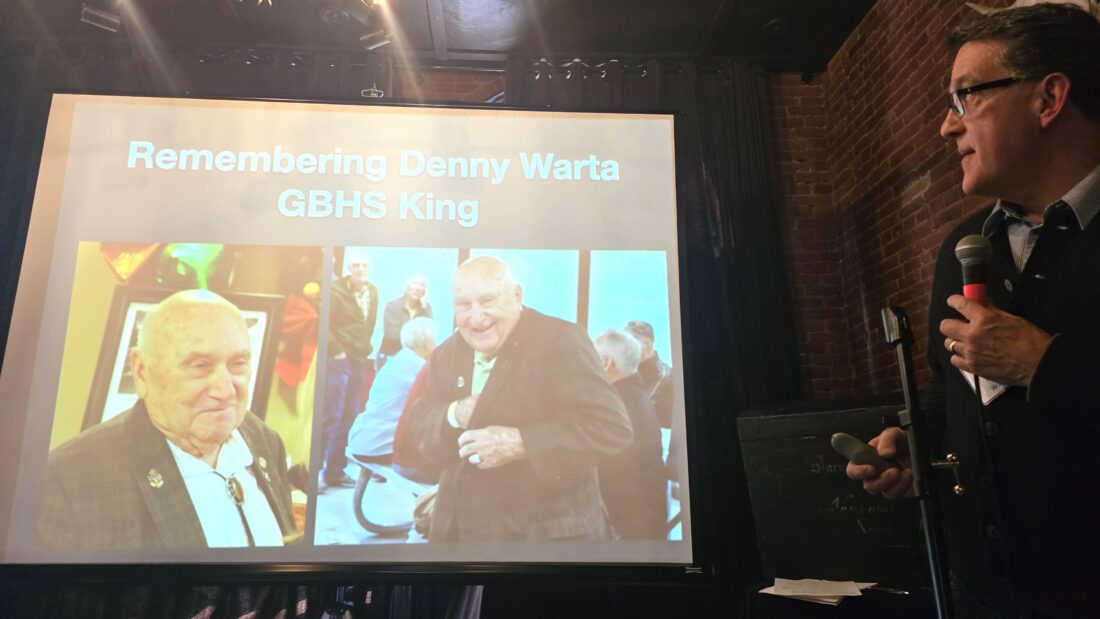
Board president Wade Olson remembers Denny Warta, the German Bohemian Heritage Society's honorary king, during the annual open house Saturday at The Grand Center for Arts & Culture in New Ulm. Photo by Amy Zents
“He was a descendant of the people that had the trunk,” Eckstein said. “George stood up for my grandparents at their wedding in New Ulm.”
The society also paid tribute to Denis Warta, who died last November just shy of his 98th birthday. Known as the German‒Bohemian King since 2002, Warta was part of a lineage of community figures who carried that honorary title dating back to 1875.
Society materials list earlier “kings” as Peter Gag, Joseph A. Eckstein, Tony Weisener, Georg Wurmstien (the Sauerkraut King), John Seifert, Otto Dietz and Kurt Eisen. Olson also referenced the mayors of Ulm, Germany, including Ivo Gönner, Gunter Czisch and current mayor Martin Ansbacher.
Olson recalled receiving envelopes from Warta filled with clippings and handwritten notes.
“He was always teaching you something,” Olson said.
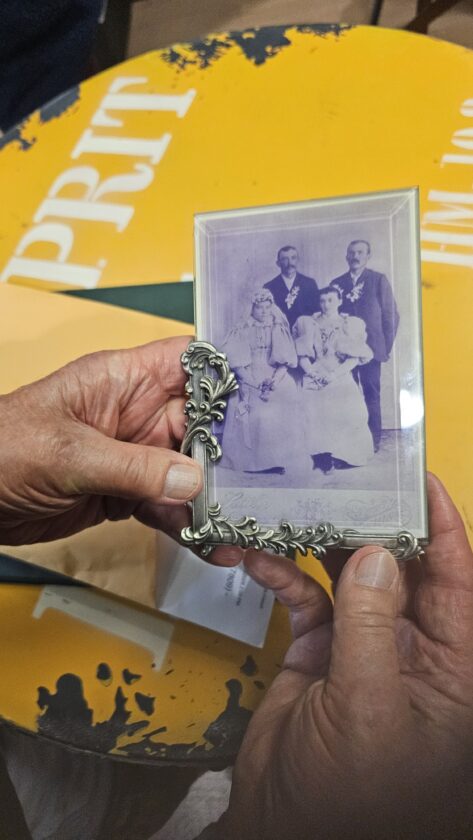
Board member Pat Eckstein holds a framed 1895 New Ulm wedding photograph showing, from upper left clockwise, groom Anton Dietrich, best man George Bosdech, maid of honor Elizabeth Dittrich and bride Margaret Neid Dittrich. Photo by Amy Zents
Warta often included a line from Abraham Lincoln on his greeting cards: “The better part of one’s life consists of his friendships.” According to Olson, the quote reflected Warta’s approach to building and maintaining connections across the community.
Columnist Randy Krzmarzick of Sleepy Eye said Warta shared information freely.
“He shared it so willingly,” Krzmarzick said. “There had to be a joke with the story.”
Warta’s daughter, Diann Warta, said her father maintained friendships across generations without relying on modern communication tools.
“He was a real collector of people, and those relationships were very important to him,” she said. She noted that he was still driving two days before suffering a stroke.
Warta’s niece, Lynn (Myron) Mathiowetz, said her husband’s family emigrated from a neighboring village to the Wartas. “You just never know the connections,” she said.
Gerhard and Irmgard Kleih of Albert Lea shared their own immigration story. Gerhard said he arrived in the United States with no relatives and no contacts.
“I had no relatives and nobody here,” he said.
He crossed the Atlantic on a U.S. Liberty ship for $150 and was sponsored by the World Council of Churches. Irmgard recalled crossing borders at night as a child during postwar upheaval.
The couple recently published a book about their experiences, It All Began with a Coca‒Cola, written by local author and former pastor Milt Ost.
Upstairs, demonstrations of knippling — traditional Bohemian bobbin lace‒making — drew steady interest. Olson explained the craft’s economic role in rural households.
“When the crops failed and the egg money wasn’t available, it was little knipplers selling those patterns that kept the farm going,” he said. “Men and women did this stuff around the warm stove in the kitchen in the winters, and that was an extra source of income for the family.”
A full exhibit on knippling is planned for July at the Brown County Historical Society museum.
Jacob Saffert of Plymouth, one of the younger attendees, called the presentation “very interesting” and said he is planning a June family heritage trip with Olson.
Pat Funk Orne of North Mankato, whose great‒grandmother Teresa Bartel grew up in New Ulm, also attended.
The afternoon concluded with raffle drawings, including cookbooks and heritage dolls. “Good turnout, good food, good friends,” Olson said. “It’s always good to get together and see some new faces and some old faces.”
Upcoming society events include a May 15 Spring Social. That weekend also features a play about Ludwig Bogen, an 1848 revolutionary from Michelstadt who settled in New Ulm.
The Bavarian Blast parade follows in July, with a Sept. 12 picnic at Hermann Heights Park, the Oct. 3 Germanic American Day parade and an Oct. 24 autumn meeting.
More information about the society, its research resources and upcoming events is available at germanbohemianheritagesociety.com.
-
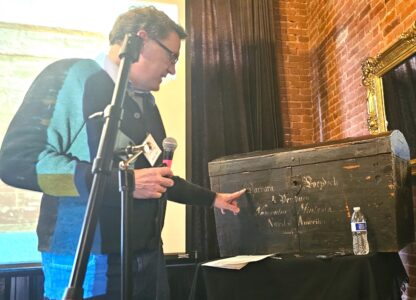
- Board president Wade Olson displays an 1881 immigrant trunk at the German Bohemian Heritage Society’s open house Saturday. “It’s just an empty trunk that gave me a whole lot of stories,” Olson said. Photo by Amy Zents
-
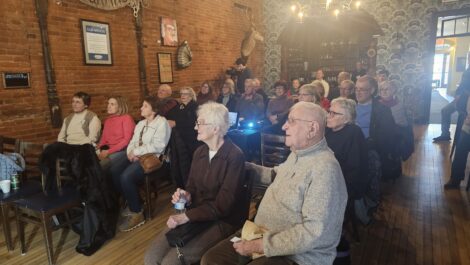
- Attendees listen to a presentation by board president Wade Olson during the German Bohemian Heritage Society’s annual open house Saturday at The Grand Center for Arts & Culture in New Ulm. Irmgard and Gerhard Kleih of Albert Lea, lower right, also shared their own immigration story during the event. Photo by Amy Zents
-
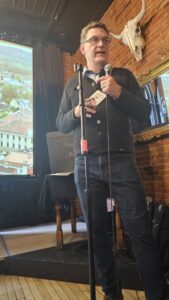
- Board president Wade Olson speaks during the German Bohemian Heritage Society’s annual open house Saturday at The Grand Center for Arts & Culture in New Ulm. The immigrant trunk discovered by relatives is visible behind him. Photo by Amy Zents
-
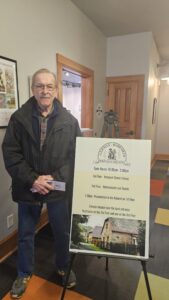
- Attendee Phil Meidl, who praised the society’s heritage tours for their detailed ancestral research, stands near the German‑Bohemian Heritage Society’s open house sign Saturday at The Grand Center for Arts & Culture in New Ulm. Photo by Amy Zents
-
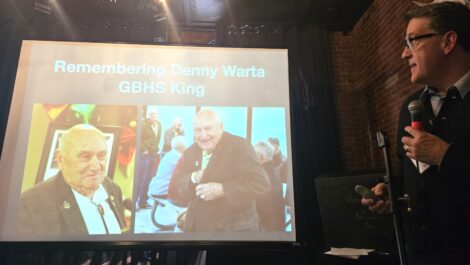
- Board president Wade Olson remembers Denny Warta, the German Bohemian Heritage Society’s honorary king, during the annual open house Saturday at The Grand Center for Arts & Culture in New Ulm. Photo by Amy Zents
-
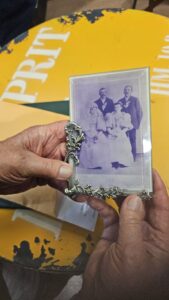
- Board member Pat Eckstein holds a framed 1895 New Ulm wedding photograph showing, from upper left clockwise, groom Anton Dietrich, best man George Bosdech, maid of honor Elizabeth Dittrich and bride Margaret Neid Dittrich. Photo by Amy Zents
-
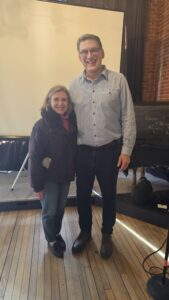
- Lynn Mathiowetz, left, and board president Wade Olson pose following the German Bohemian Heritage Society’s annual open house Saturday at The Grand Center for Arts & Culture in New Ulm. Photo by Amy Zents “My dad used to call Wade my little cousin because we’re related,” Mathiowetz said. “Doubly related. There were three Wartas that married three Hoffmans, so there’s a lot of doubles in that relation.” Photo by Amy Zents
-
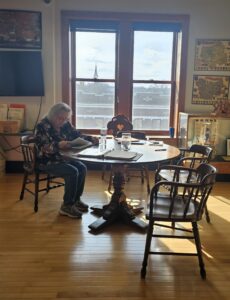
- A visitor reviews genealogy materials at the German Bohemian Heritage Society Research Center during the annual open house Saturday at The Grand Center for Arts & Culture in New Ulm. Photo by Amy Zents
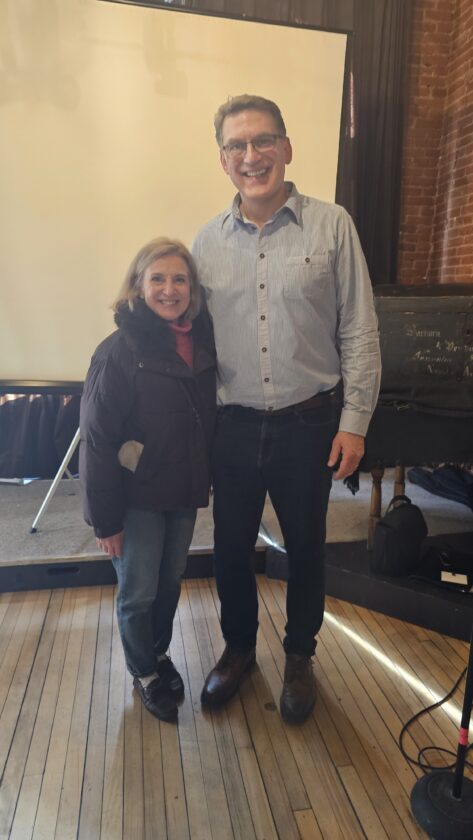
Lynn Mathiowetz, left, and board president Wade Olson pose following the German Bohemian Heritage Society's annual open house Saturday at The Grand Center for Arts & Culture in New Ulm. Photo by Amy Zents "My dad used to call Wade my little cousin because we're related," Mathiowetz said. "Doubly related. There were three Wartas that married three Hoffmans, so there's a lot of doubles in that relation." Photo by Amy Zents
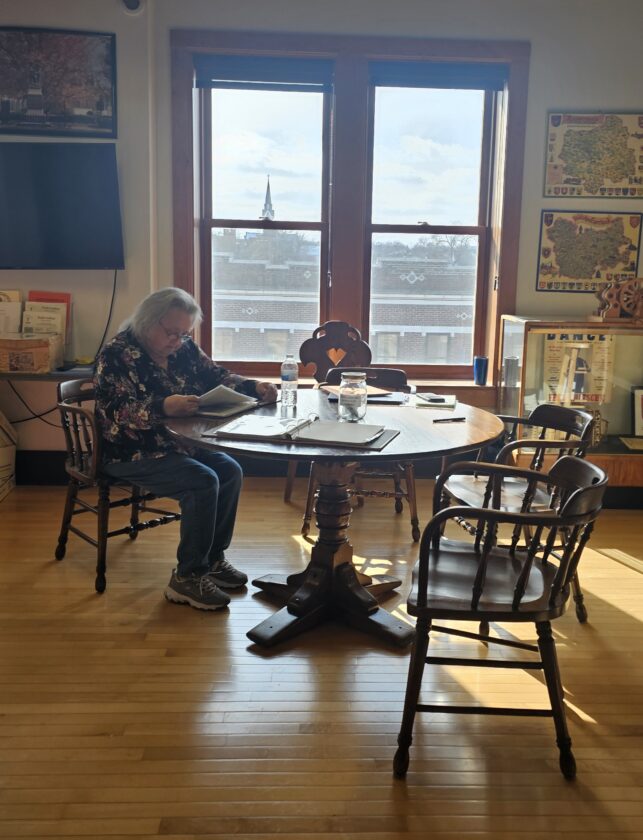
A visitor reviews genealogy materials at the German Bohemian Heritage Society Research Center during the annual open house Saturday at The Grand Center for Arts & Culture in New Ulm. Photo by Amy Zents
Local News

Fishing guides bring expertise and passion to area lakes
History of a heritage
Top works from regional youth artist on display at The Grand
Health, Human Services face federal funding cuts
NEW ULM — The Centers for Disease Control and Prevention (CDC) confirmed they have cancelled about $38 million in ...
2026 Mingle with a Purpose