
Cselovszki urges board members to contact legislators
To avoid losing compensatory funding this school year
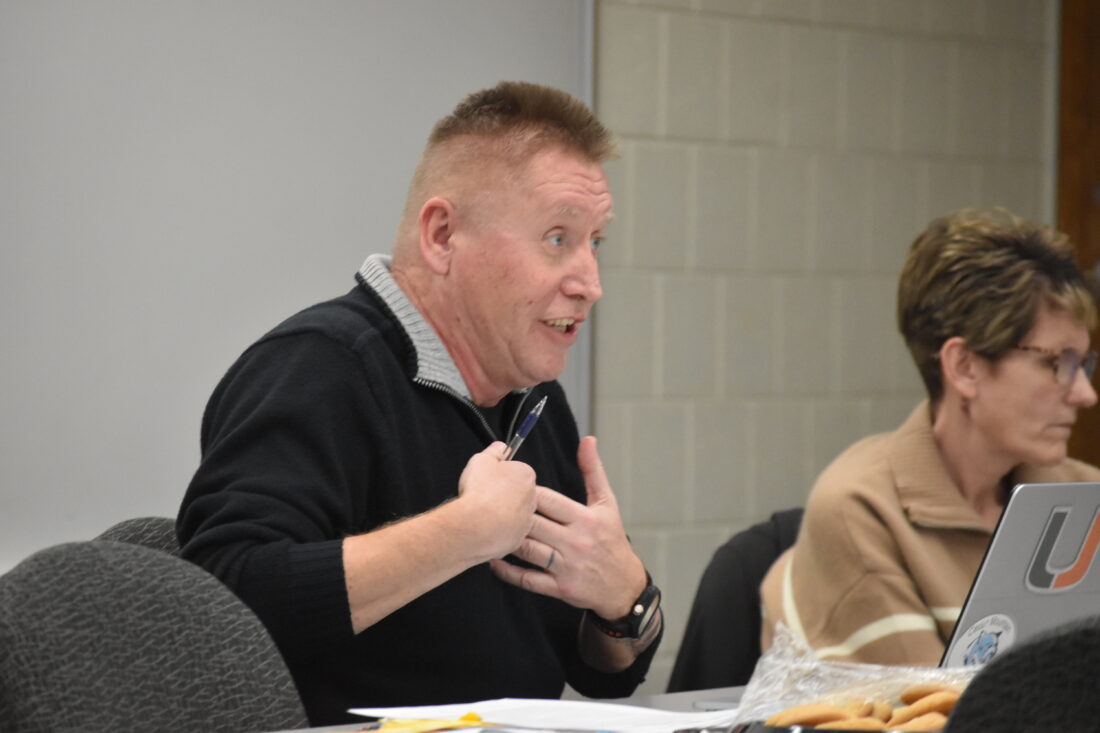
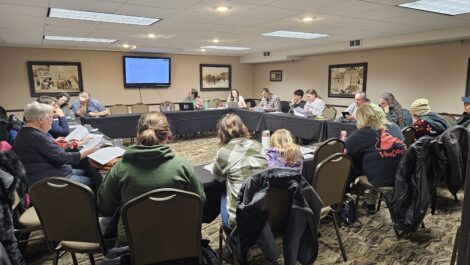
Staff photo by Fritz Busch Sleepy Eye-Cedar Mountain Superintendent John Cselovszki urges school board members Wednesday to contact their legislators in an effort to support compensatory funding formula improvements. Board member Sheila Wurtzberger is pictured at right. Staff photo by Fritz Busch Sleepy Eye Public School board member Darla Remus discusses issues at a Wednesday board meeting.
SLEEPY EYE — Sleepy Eye-Cedar Mountain Superintendent John Cselovszki urged school board members Wednesday to contact their legislators by email or phone about supporting compensatory funding formula improvements this year and permanently.
“The law states that only direct certification students (who automatically qualify for free and reduced-price meals) in schools without needs to submit a separate application,” he said. “Last year, schools were held harmless by the legislature and a task force was appointed. It has not finished its work yet, so unless they pass another hold harmless rule or fix this problem, most school districts will lose revenue (in fiscal year 2027). If the issue is not solved by a legislative committee by this October, our school is projected to lose $272,417. I’m hoping you and I do our best about this. Other superintendents have told me to work hard lobbying for this. I’m fired up about this.”
Cselovszki said compensatory funding is the schools biggest issue right now. He said it’s a huge issue for two thirds of public schools that are losing money because of the law that allows only direct certification students to count for compensatory revenue.”
Direct certification links student enrollment records with data from government assistance programs like the Supplemental Nutrition Assistance Program (SNAP). It ensures low-income children have easier access to nutritious meals at schools, thereby improving their overall health and academic performance.
It also reduces the administrative burden on families and schools, increases school meal program participation, which can enhance student well-being.
Minnesota’s compensatory formula is based on the previous year’s count of free and reduce-price meal-eligible students. It is designed to provide additional funding to schools that serve academically disadvantaged students.
Compensatory revenue is based on the fall count of students called the enrollment count. The count includes enrollment of all students and demographic information such as a student’s race or ethnicity, the student’s English language status, special education status and eligibility for free or reduce-price meals under the national school lunch program.
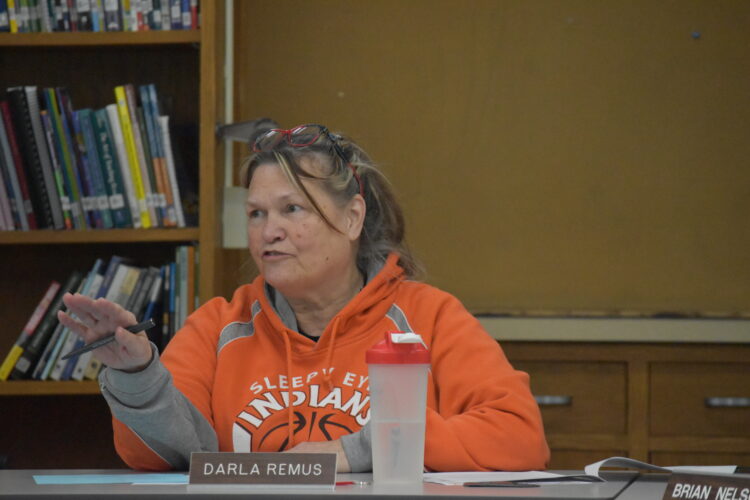
Staff photo by Fritz Busch
Sleepy Eye Public School board member Darla Remus discusses issues at a Wednesday board meeting.
Local News
Crosswind runway plans approved
NU City Council awards bid for 18 S. Street lift station project
NEW ULM – The contract for the 18th South Street Storm Sewer Lift Station project was awarded to Holtmeier ...
Cselovszki urges board members to contact legislators
‘We want the young, the old, we want them all’
‘It’s back to our roots’
NU man faces six felony charges
NEW ULM — A 22-year-old rural New Ulm man faces six felony charges for allegedly strangling a victim and firing a ...