Providing a service for artists
The Grand unveils new matting, framing studio
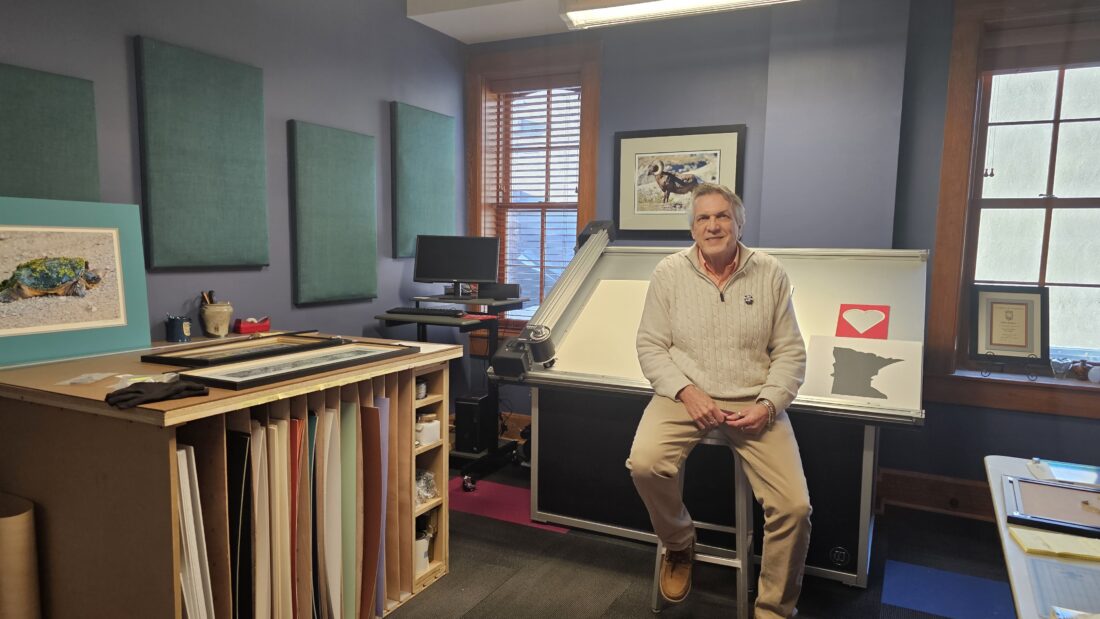
John Kellen, Director of the Grand Center for Arts & Culture and a photographer, at the Wizard 8000, the computerized mat cutter used for precise art framing.
NEW ULM — The Grand Center for Arts & Culture in New Ulm has opened a nonprofit matting and framing studio designed to provide affordable access to professional tools for preparing artwork for exhibition and sale.
The studio is not a retail operation and is not intended to compete with local framing businesses. Organizers say it fills a gap for artists who need professional-quality matting and framing without the high cost of commercial services.
“We’re not a commercial shop,” said John Kellen, director at The Grand Center for Arts & Culture. “We’re not trying to compete with local businesses. This is specifically a service for artists.”
The studio is the second nonprofit professional matting and framing studio of its kind in the United States. The first is in Milan, Minnesota.
At the center of the new studio is a Wizard 8000 computerized mat cutter, which allows users to create precise mats. Kellen said the machine removes much of the guesswork involved in traditional mat cutting.
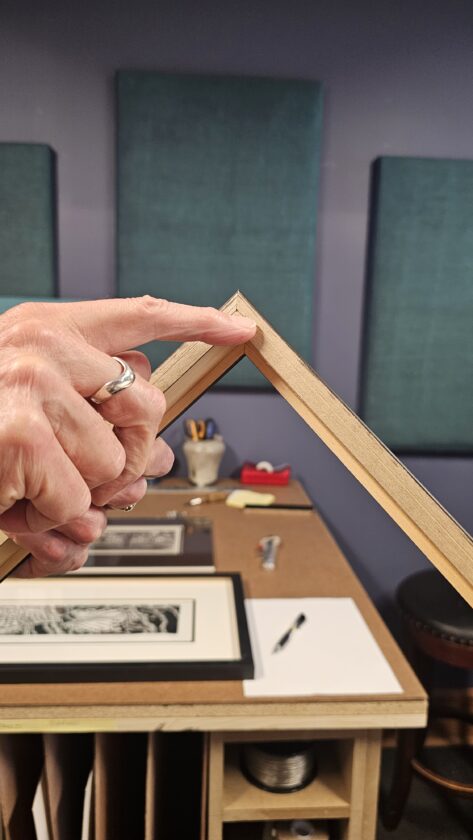
John Kellen gives a simple tutorial on the framing process, holding a simple frame. For a simple, basic frame, only a small amount of glue and a single staple per corner is needed to hold it together and keep it square. However, the number of staples can vary, depending on the frame's thickness
“You have a piece of art, then you take measurements and decide how wide an opening you want,” Kellen said. “You plug those dimensions into the computer, whether you want a single mat or a double mat, and the machine does the cutting.”
The cutter also allows decorative and custom designs through proprietary software. Preprogrammed shapes include hearts, animals, state outlines and other motifs, while advanced users can create original designs.
“You can really design whatever you want,” Kellen said.
The studio also includes a Fletcher 3000 multi-material cutter, capable of cutting acrylic, glass, mat board and foam core. Wood frame assembly takes place in a downstairs workspace with an antique Danish foot-operated chopper and a French underpinning machine.
“With simple wood frames, you only need a little glue and one staple in each corner,” Kellen said. “That holds it together as a perfectly square frame.”
Access to the studio is available through certification classes open to artists and community members. Participants must complete a two-day course covering equipment operation and safety before using the space independently.
“If an artist or community member wants to learn how to do this, they can register, take the two-day class and get certified,” Kellen said.
The nonprofit structure keeps costs low. The Grand buys materials at wholesale and passes savings on to artists.
“Because we’re a nonprofit, we get materials at a discount, and then we pass those savings on to the artist,” Kellen said.
Professional matting and framing can affect how artwork is perceived and sold. Kellen said the studio allows artists to present work at a professional level for exhibitions or sales.
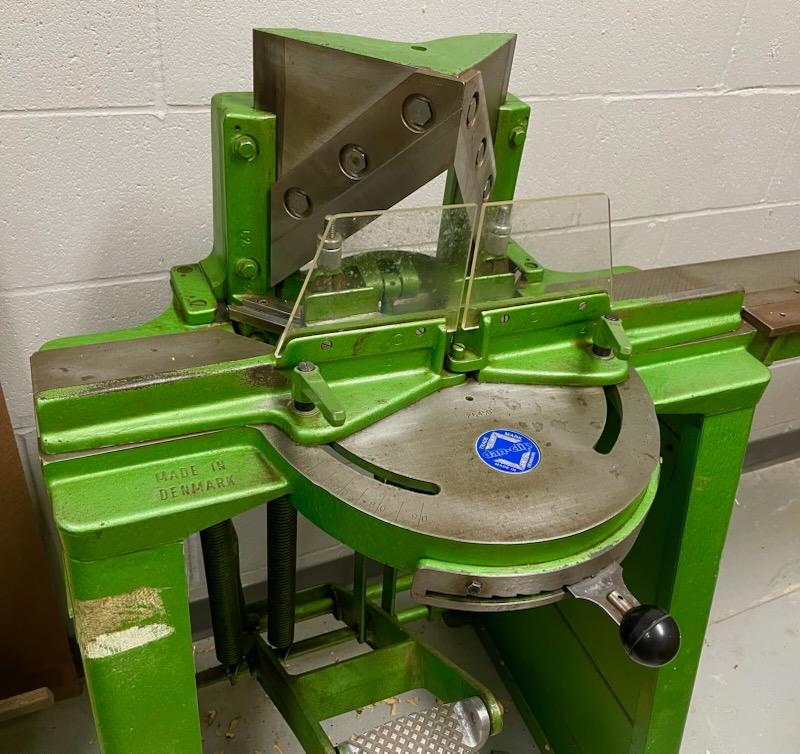
A Danish-made Luna miter guillotine, used for precision angle cuts in framing and fabrication, sits ready for action. The machine’s rotating base and vertical blades allow for clean, accurate joins in wood, plastic, or metal. (Photo by John Kellen)
“Having a computerized mat cutter and a framing studio enhances artists’ ability to exhibit their work and sell it,” he said. “We’re providing the space and services so artists can prepare for exhibitions or for selling their work in a gift shop or at an art fair.”
The studio complements other programs at The Grand, including the Cellar Press and Book Bindery. The project was funded through a combination of grants and a lease-purchase agreement for specialized equipment.
“I’ve had three different grants, about $15,000 total, that helped get this started,” Kellen said. He added that studio rental fees help pay down the cost of the equipment.
Interest in the studio is growing. Kellen said he recently prepared approximately 28 to 30 pieces for an exhibition using similar equipment. He also noted that a visitor who toured the studio made a donation after seeing its potential.
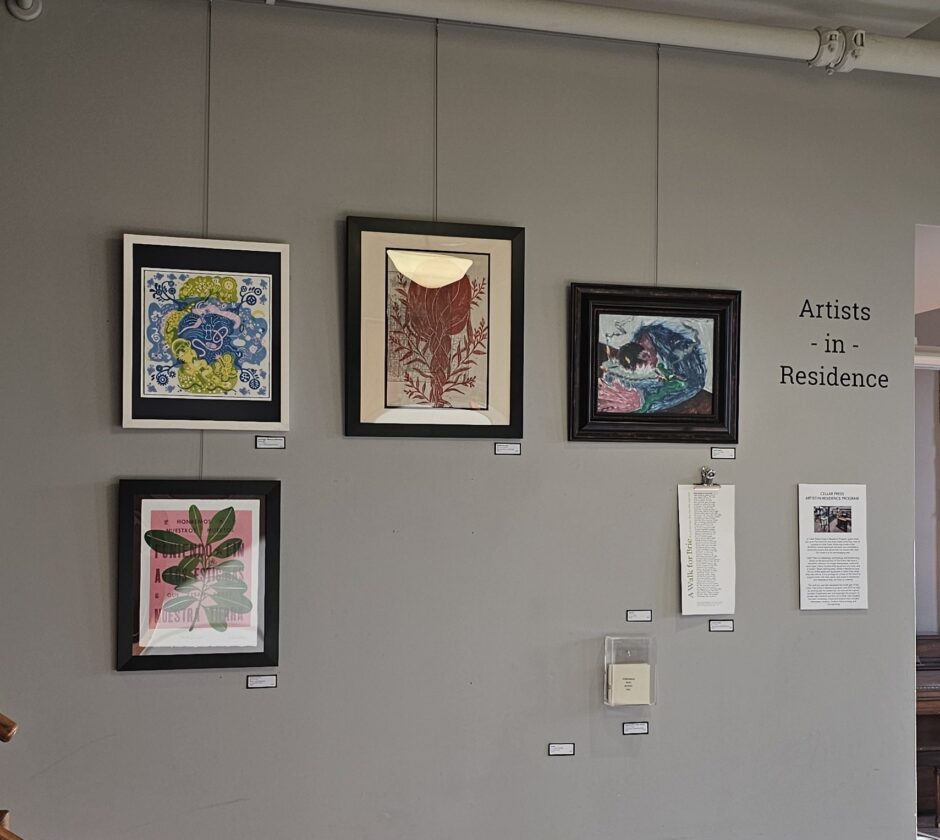
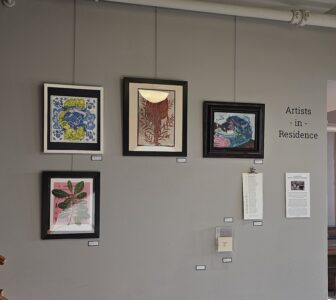
Kellen is also honoring the 2025 artists-in-residence by framing their donated pieces for dedicated wall space on the second level.
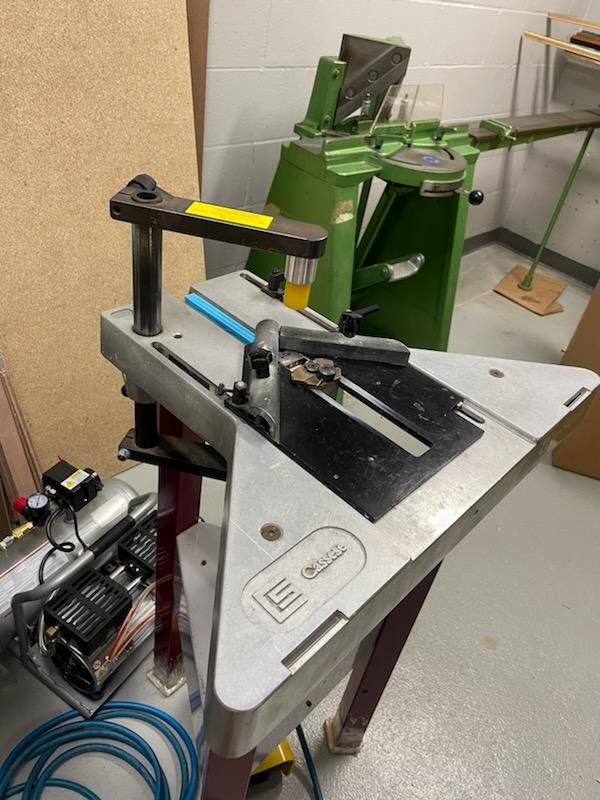
A Cassese underpinning machine from France anchors the international setup at the workshop. The Eastec-labeled unit features a triangular work surface and pneumatic clamps for shaping plastic or metal rods with precision. (Photo by John Kellen)
Looking ahead, Kellen hopes to expand the program by offering additional training opportunities.
“My goal over time is to train enough people so we can offer advanced or intermediate classes,” he said. “The equipment can do much more than what we show at the beginner level.”
The first certification class is scheduled for late February and early March. The Grand plans to offer four to six classes per year, and one spot remains for the first class.
The studio fills a gap for artists who often have limited framing options.
“Most artists either have to figure it out on their own or pay a lot of money at a commercial shop. This gives them another option,” Kellen said.
-
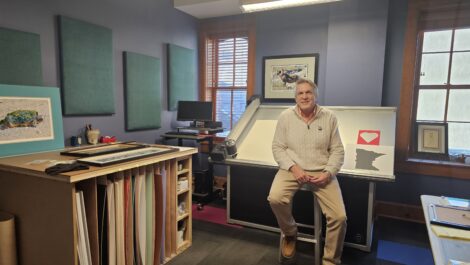
- John Kellen, Director of the Grand Center for Arts & Culture and a photographer, at the Wizard 8000, the computerized mat cutter used for precise art framing.
-
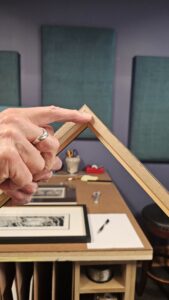
- John Kellen gives a simple tutorial on the framing process, holding a simple frame. For a simple, basic frame, only a small amount of glue and a single staple per corner is needed to hold it together and keep it square. However, the number of staples can vary, depending on the frame’s thickness
-
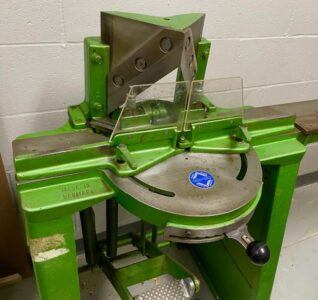
- A Danish-made Luna miter guillotine, used for precision angle cuts in framing and fabrication, sits ready for action. The machine’s rotating base and vertical blades allow for clean, accurate joins in wood, plastic, or metal. (Photo by John Kellen)
-
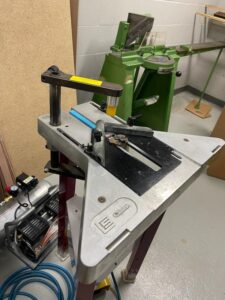
- A Cassese underpinning machine from France anchors the international setup at the workshop. The Eastec-labeled unit features a triangular work surface and pneumatic clamps for shaping plastic or metal rods with precision. (Photo by John Kellen)
Local News
Providing a service for artists
Brown County precinct caucuses Feb. 3
BROWN COUNTY — Citizens have the opportunity to participate in the selection of candidates who will represent ...

Brown Co. Board hears of housing assistance issues

Two ice fishing contests this weekend
Brown Co. Board OKs electronic bidding
NEW ULM — Brown County Commissioners unanimously approved implementing bidVAULT electronic bidding for highway ...