Historical exhibits highlight NU Medical Center legacy
Displays trace more than 140 years of health care history while honoring physicians, nurses, volunteers and community leaders
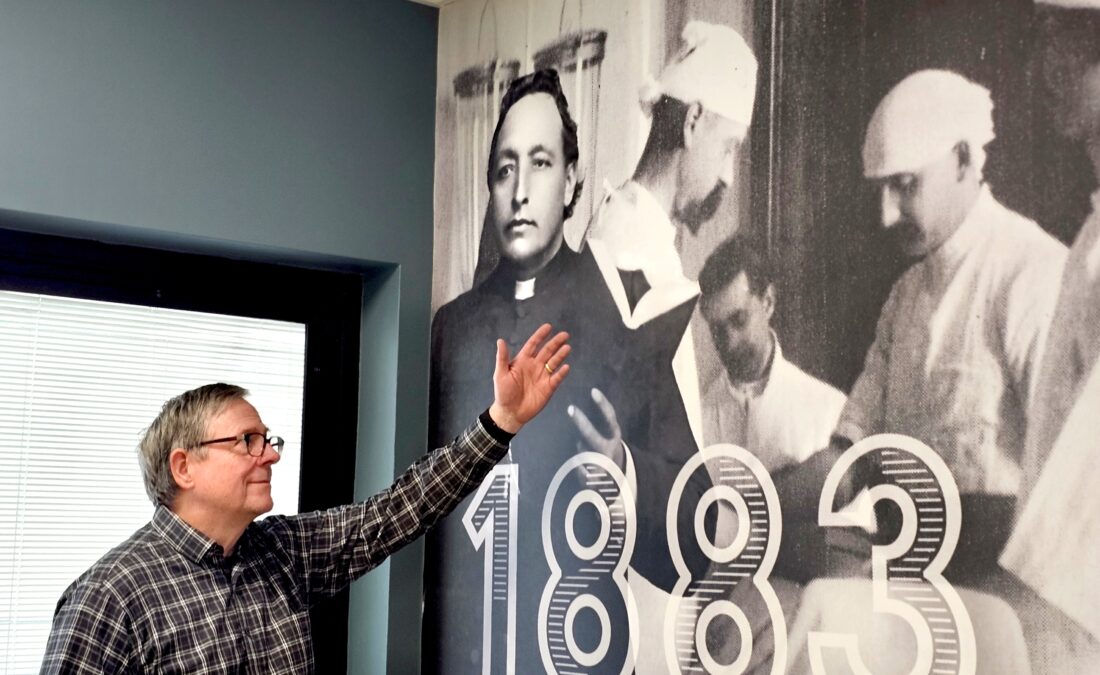
Dr. Dan Groebner, retired physician and local historian, points to a historical mural featuring Dr. Louis Fritsche, who received Minnesota medical license No. 1. The display in Café Loretto at New Ulm Medical Center honors the Fritsche family, a multigenerational family of physicians who made lasting contributions to healthcare in the community. Groebner, who received the Legends Award in 2015, helped guide the creation of the historical exhibits. (Journal photo by Amy Zents)
NEW ULM — New historical exhibits at New Ulm Medical Center highlight the evolution of health care in the community while honoring the people who helped shape it, including physicians, nurses, volunteers and community leaders.
Exhibits are located in three areas of the facility: behind glass on the first floor, along the wall near the main reception desk, and in Café Loretto, the medical center’s cafeteria on the third floor.
Café Loretto reopened following renovations in August 2023. The name was announced at that time after an employee naming contest and reflects Loretto Hospital, the second hospital built in New Ulm in 1912.
At the café’s grand reopening, then-President Toby Freier reflected on the organization’s roots.
“I was thinking about Father Berghold, who founded the first hospital in 1883, and his focus on meeting the immediate need in New Ulm and the legacy that hopefully would follow of caring for the sick,” Freier said. “Giving, serving, healing, caring, loving, our facilities allow us to gather to do just that, and I hope future generations will be gathering here with the same heart and spirit.”
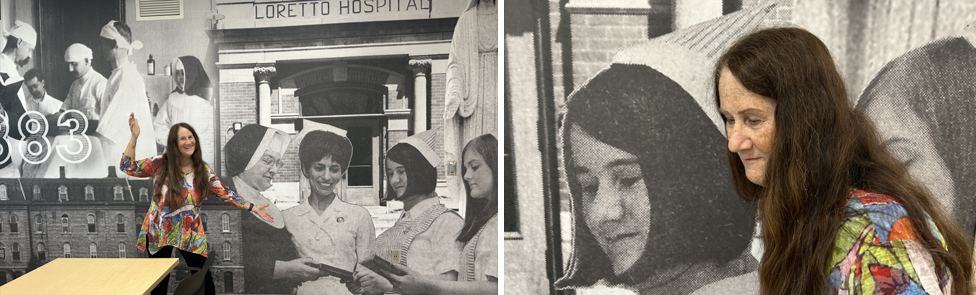
Toni Wilfahrt Grucky, now living in Arizona, views a historical mural in Café Loretto at New Ulm Medical Center during a recent family visit. The display includes a photograph from January 20, 1969, showing Grucky (then Toni Wilfahrt) as a candy striper receiving a service award from Sister Agatho and Mrs. Mavis Davis, alongside fellow volunteer Colleen Ormberg. The mural is part of new historical exhibits honoring the legacy of healthcare workers, volunteers and staff who shaped medical care in New Ulm. (Journal photo by Amy Zents)
The renovation replaced a cafeteria space that had remained largely unchanged since the 1960s.
The exhibits recognize the history of St. Alexander Hospital, Loretto Hospital, Union Hospital and Sioux Valley Hospital, honoring the work of physicians, nurses, volunteers, administrators, board members and hospital auxiliaries who supported and sustained local health care.
Dr. Dan Groebner, a retired physician and local historian, said volunteers played a critical role throughout the hospital’s history.
“Volunteers have always been essential to the hospital’s mission,” Groebner said. “Their time, service and commitment helped make care possible and allowed the organization to grow.”
Groebner said the displays are intended to connect past contributions to present-day care.
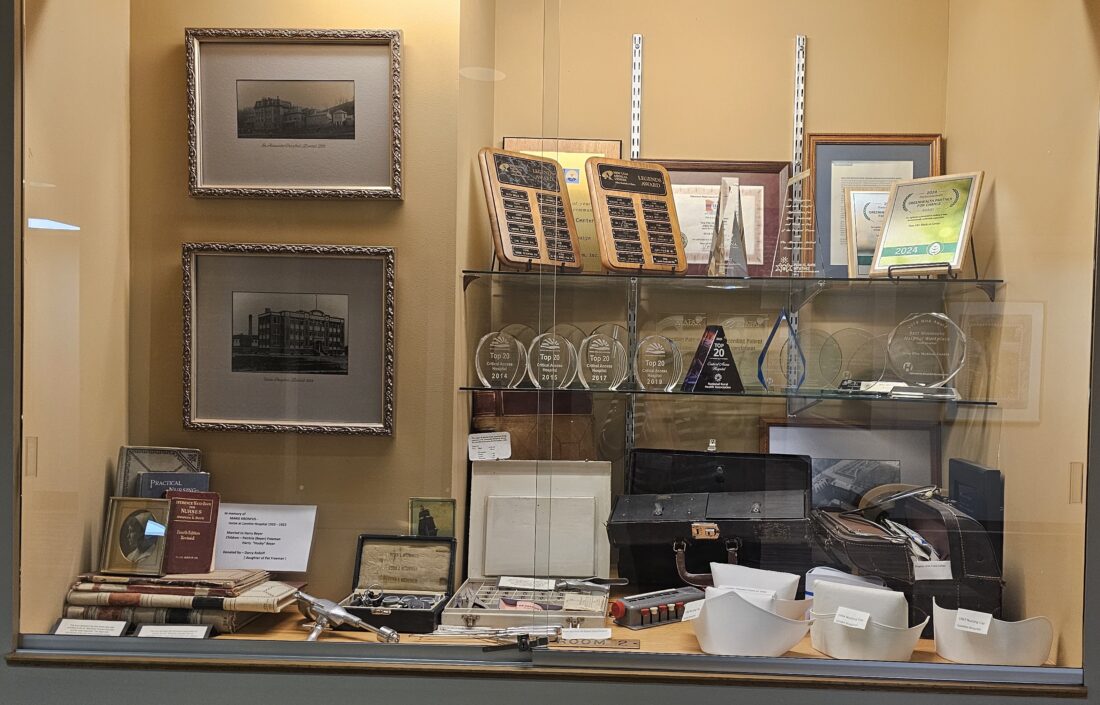
A glass-enclosed display at New Ulm Medical Center features historical medical artifacts including vintage doctor’s bags, early diagnostic instruments, nurses’ reference books from the 1920s, and awards recognizing the medical center’s achievements. Above the display hang framed photographs of St. Alexander Hospital from 1884, illustrating the facility’s evolution over more than 140 years. (Journal photo by Amy Zents)
“The Legends Award and other artifacts help us remember those who made lasting contributions and connect their work to the care we provide today,” he said.
Groebner received the Legends Award in 2015.
One section of the cafeteria exhibit was organized in part by Kayla Goblirsch, who served as a volunteer intern at New Ulm Medical Center during the summer of 2025. Under the guidance of NUMC Director of Operations Carisa Buegler and with assistance from Groebner, Goblirsch researched historical materials, selected photographs and wrote descriptions for the displays.
“One goal I had was to create something that showcases the rich history of New Ulm Medical Center,” Goblirsch said. “It’s important to remember those who paved the way.”
A timeline wall in Café Loretto features six photographs showing how the hospital campus has changed since 1883.
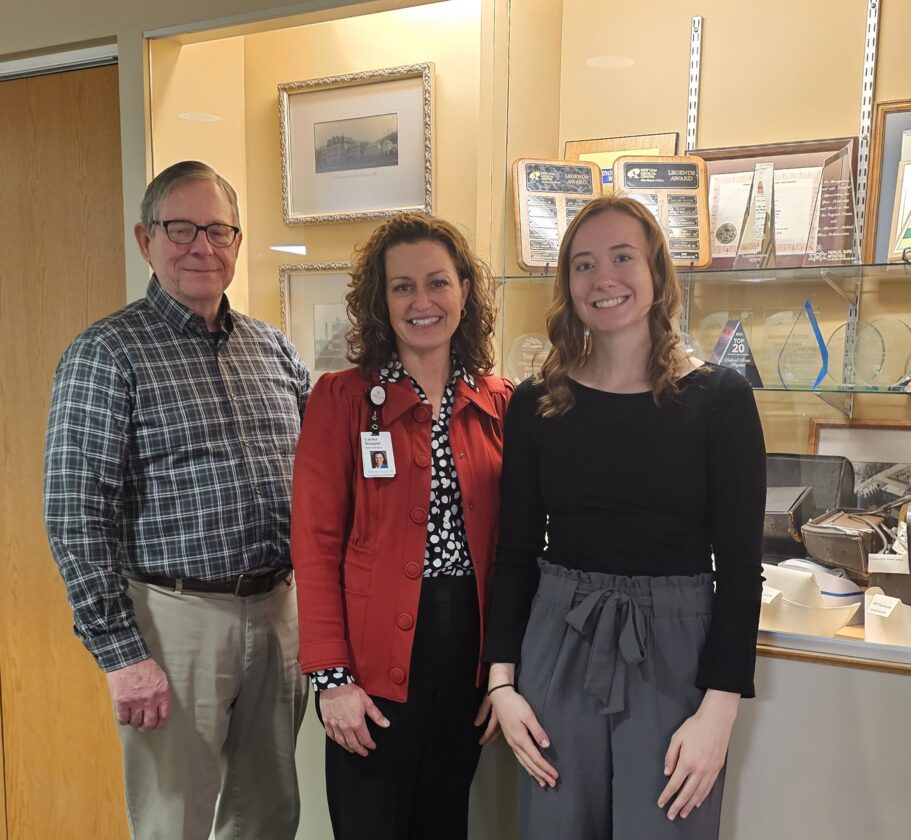
From left, Dr. Dan Groebner, Carisa Buegler and Kayla Goblirsch stand near historical exhibits at New Ulm Medical Center.
Among the earliest artifacts is an 1884 photograph of St. Alexander Hospital, New Ulm’s first hospital, which opened just two years after a devastating tornado struck the city.
Additional artifacts on the main floor in the lobby illustrate changes in medical practice, including early diagnostic tools, nurses’ reference books from the 1920s and a mid-20th-century doctor’s bag attributed to Dr. Frank Carthey.
“The doctor’s bag gives people a tangible sense of what routine medical care looked like at the time,” Groebner said.
The exhibits also address changes in infection control, noting that open flames were once used to sterilize reusable needles, a practice that was controversial in the late 19th century when hand washing itself was not universally accepted. Today, single-use sterile supplies and electronic medical records reflect how far health care has advanced.
Awards panels recognize individuals who made lasting contributions to health care in New Ulm.
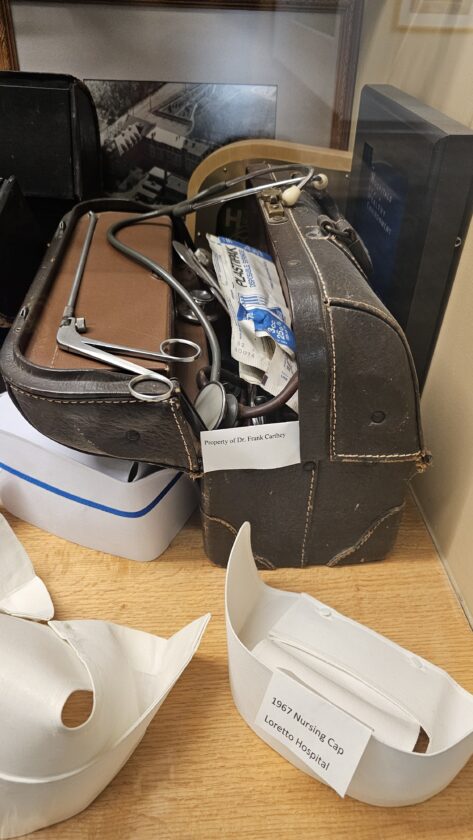
Historical artifacts on display at New Ulm Medical Center include Dr. Frank Carthey’s leather medical bag containing vintage diagnostic tools and a 1967 nursing cap from Loretto Hospital, illustrating the evolution of medical practice over the decades. (Journal photo by Amy Zents)
The Legends Award honors figures such as Father Berghold, Sister Nola, physicians, nurses, volunteers and other health care leaders. One award is named for the Fritsche family, a multigenerational family of physicians beginning with Dr. Louis Fritsche, who received Minnesota medical license No. 1.
Another section highlights equipment used by physicians such as Dr. Peter J. Kitzberger, who began practicing in New Ulm in the early 1950s.
Buegler said placing the exhibits in both public and employee spaces was intentional.
“Patients, visitors and staff all have the opportunity to engage with the history and see the impact of those who came before,” she said.
-
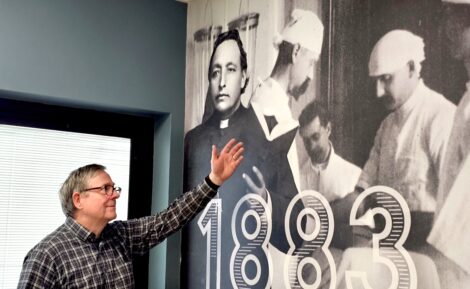
- Dr. Dan Groebner, retired physician and local historian, points to a historical mural featuring Dr. Louis Fritsche, who received Minnesota medical license No. 1. The display in Café Loretto at New Ulm Medical Center honors the Fritsche family, a multigenerational family of physicians who made lasting contributions to healthcare in the community. Groebner, who received the Legends Award in 2015, helped guide the creation of the historical exhibits. (Journal photo by Amy Zents)
-
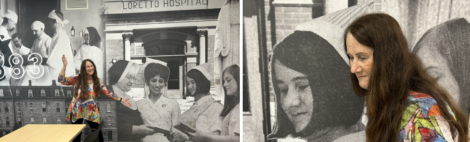
- Toni Wilfahrt Grucky, now living in Arizona, views a historical mural in Café Loretto at New Ulm Medical Center during a recent family visit. The display includes a photograph from January 20, 1969, showing Grucky (then Toni Wilfahrt) as a candy striper receiving a service award from Sister Agatho and Mrs. Mavis Davis, alongside fellow volunteer Colleen Ormberg. The mural is part of new historical exhibits honoring the legacy of healthcare workers, volunteers and staff who shaped medical care in New Ulm. (Journal photo by Amy Zents)
-
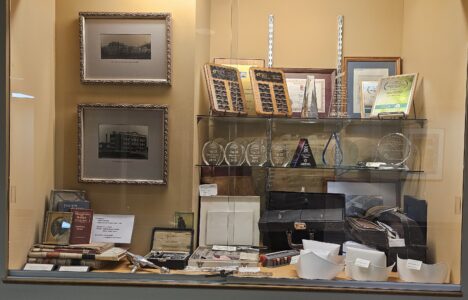
- A glass-enclosed display at New Ulm Medical Center features historical medical artifacts including vintage doctor’s bags, early diagnostic instruments, nurses’ reference books from the 1920s, and awards recognizing the medical center’s achievements. Above the display hang framed photographs of St. Alexander Hospital from 1884, illustrating the facility’s evolution over more than 140 years. (Journal photo by Amy Zents)
-
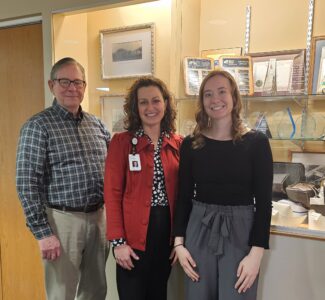
- From left, Dr. Dan Groebner, Carisa Buegler and Kayla Goblirsch stand near historical exhibits at New Ulm Medical Center.
-
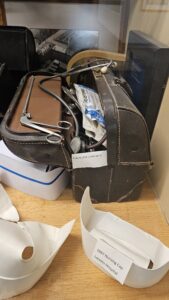
- Historical artifacts on display at New Ulm Medical Center include Dr. Frank Carthey’s leather medical bag containing vintage diagnostic tools and a 1967 nursing cap from Loretto Hospital, illustrating the evolution of medical practice over the decades. (Journal photo by Amy Zents)
-
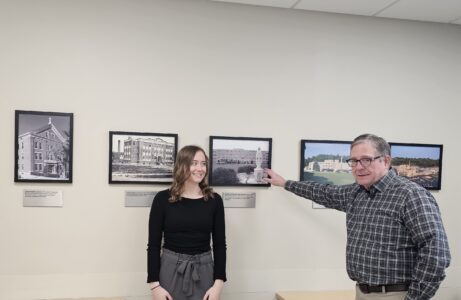
- Dr. Dan Groebner, retired physician and local historian, discusses the timeline wall with Kayla Goblirsch in Café Loretto at New Ulm Medical Center. The display features six photographs showing how the hospital campus has evolved since 1883, including images of St. Alexander Hospital, Loretto Hospital and the current medical center facility. Goblirsch served as a volunteer intern during summer 2025, researching and organizing the historical exhibits under Groebner’s guidance. (Journal photo by Amy Zents)
-
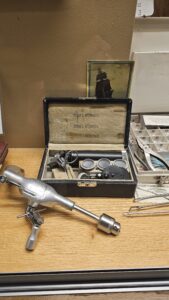
- Historical medical instruments belonging to Dr. Peter J. Kitzberger are displayed at New Ulm Medical Center, including an otoscope and ophthalmoscope used for examining ears and eyes. The artifacts illustrate the evolution of diagnostic tools used by physicians in the early-to-mid 20th century and are part of the medical center’s historical exhibits honoring healthcare providers who served the community. (Journal photo by Amy Zents)
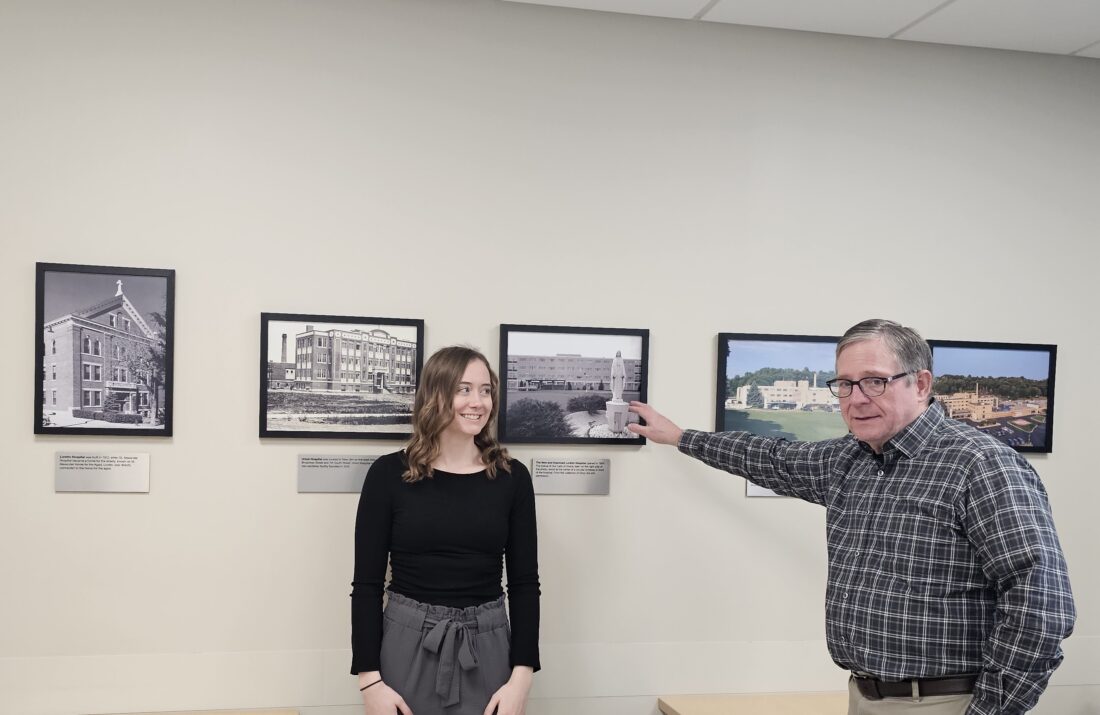
Dr. Dan Groebner, retired physician and local historian, discusses the timeline wall with Kayla Goblirsch in Café Loretto at New Ulm Medical Center. The display features six photographs showing how the hospital campus has evolved since 1883, including images of St. Alexander Hospital, Loretto Hospital and the current medical center facility. Goblirsch served as a volunteer intern during summer 2025, researching and organizing the historical exhibits under Groebner’s guidance. (Journal photo by Amy Zents)
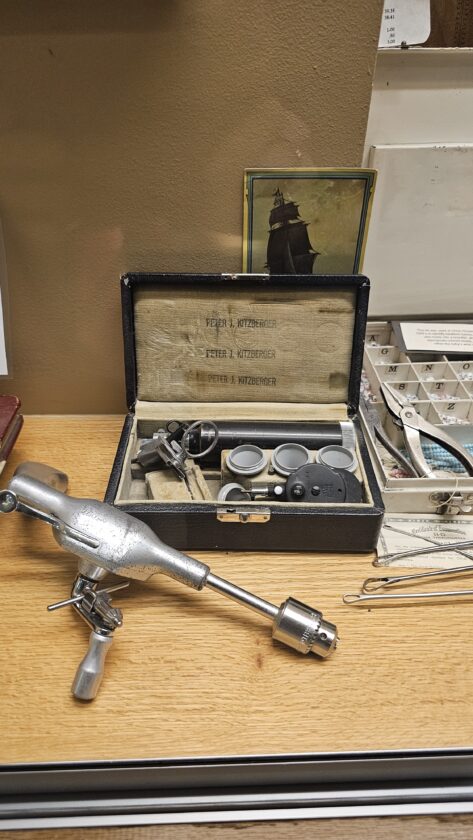
Historical medical instruments belonging to Dr. Peter J. Kitzberger are displayed at New Ulm Medical Center, including an otoscope and ophthalmoscope used for examining ears and eyes. The artifacts illustrate the evolution of diagnostic tools used by physicians in the early-to-mid 20th century and are part of the medical center’s historical exhibits honoring healthcare providers who served the community. (Journal photo by Amy Zents)
Local News
New Ulm Police monitoring ICE activity
Federal Immigration officers have ramped up what was already considered a significant presence in Minneapolis amid ...
No support for Sleepy Eye splash pad during city council meeting
Sheriff’s office restricts vehicle traffic on SE Lake
Historical exhibits highlight NU Medical Center legacy
‘Meet Your Local Elected Officials’ series launched