Minn. Seedswomen traveling exhibit on display at NU Library
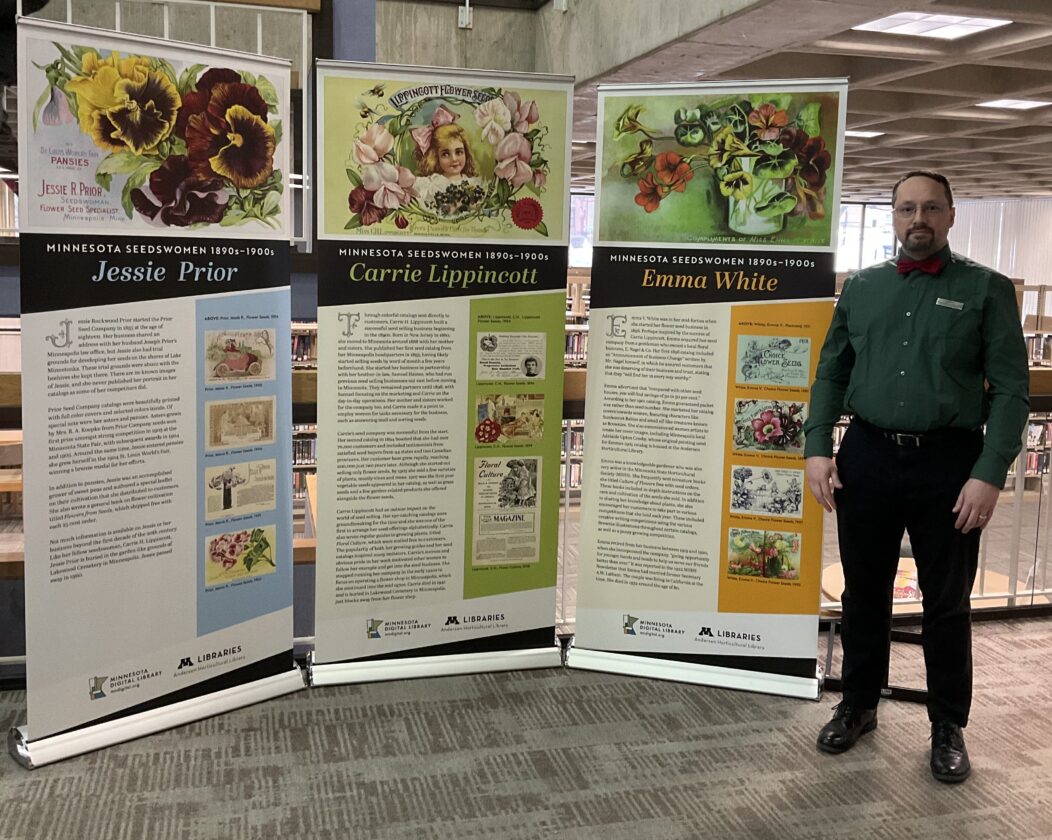
New Ulm Public Library programming and technology services librarian LeRoy Harris stands with the Minnesota Seedwomen display located on the main floor of the library. The traveling display will be at the library through Jan. 26.
NEW ULM — The Minnesota Seedswomen traveling exhibit is on display at the New Ulm Public Library through Jan. 26, highlighting the work of three Minneapolis entrepreneurs who operated seed catalog businesses in the late 19th and early 20th centuries.
The exhibit is part of a statewide traveling program designed to bring historical materials to libraries, museums and cultural institutions. The program provides educational displays that can be shown in public spaces without requiring extensive installation or specialized equipment. By presenting the catalogs, the exhibit highlights the role of women entrepreneurs and their impact on Minnesota’s business and cultural history.
The exhibit was developed by the Minnesota Historical Society and the University of Minnesota Libraries and focuses on Carrie H. Lippincott, Jessie R. Prior and Emma V. White.
The women sold flower seeds through mail order catalogs that were distributed nationally, contributing to Minnesota’s role in horticultural commerce during that period. At a time when business ownership by women was limited, the three entrepreneurs established and operated seed companies that marketed directly to consumers. Their catalogs emphasized flower seeds intended for home gardens and domestic use, reflecting broader trends in consumer culture and home gardening at the turn of the century.
Lippincott began selling seeds in the 1880s and issued her first catalog in 1891. Her business specialized exclusively in flower seeds. The catalogs featured illustrated covers and descriptive text designed to appeal to customers through mail order sales. Lippincott identified herself by name in her catalogs and operated the company independently.
Prior and White began issuing seed catalogs in the 1890s. Their publications included illustrated artwork reproduced through lithographic printing, a common commercial technique at the time. Like Lippincott, both women focused on flower seeds rather than agricultural crops, marketing their products to household gardeners across the United States.
The exhibit presents the catalogs as historical documents that provide insight into early consumer advertising, printing practices and women’s participation in commerce. The materials also illustrate how seed sellers used visual design and written descriptions to compete in a growing national market for mail order goods.
Original copies of the catalogs are preserved in the Andersen Horticultural Library at the University of Minnesota, which maintains a large collection of seed and nursery catalogs dating back to the 19th century. Selected images and information from those materials were adapted for the traveling exhibit format.
The display consists of freestanding banners featuring reproductions of catalog covers, seed packet artwork and biographical information about each entrepreneur. Text panels explain the historical context of the businesses and outline the role of seed catalogs in expanding access to ornamental plants for home gardeners.
LeRoy Harris, programming and technology services librarian at the New Ulm Public Library, said the exhibit draws attention to a lesser-known part of the state’s business history.
“It’s a piece of Minnesota history that many people maybe aren’t aware of,” Harris said.
In addition to showcasing individual entrepreneurs, the exhibit places the catalogs within the broader context of social and economic change during the late 19th century. Mail order commerce allowed small businesses to reach customers beyond local markets, while advances in printing technology made illustrated catalogs more affordable to produce.
The exhibit also addresses the role of women as both business owners and consumers during this period. By selling directly to customers through catalogs, the seedswomen participated in a growing national marketplace and expanded opportunities for women in commercial enterprise.
Visitors to the New Ulm Public Library can view the exhibit during regular library hours through Jan. 26. The display is located in a public area of the library.
Local News
Minn. Seedswomen traveling exhibit on display at NU Library

Celtic and Lutheran music come together

New Armory opens

Hanska library receives $7,500 Taylor grant
New Guard Armory grand opening set for Monday
NEW ULM — The Minnesota National Guard hosts a grand opening and tour of the New Ulm armory at 10 a.m., Monday, ...