
‘Question everything’
Fraud prevention workshop brings banks, social services, law enforcement together
-

- From left to right: Molly Skipper, lead adult protection investigator with Brown County Human Services; Erin Kissner of Brown County Human Services; and Candas Schouvieller, administrator of Oak Hills Living Center, speak during the session.
-
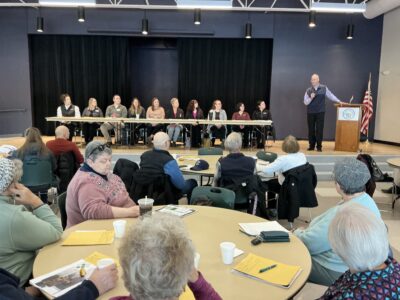
- Representatives from local financial institutions participate in a fraud prevention panel discussion as community members gather to learn about protecting themselves from scams. The event brought together experts from multiple banks to address the growing threat of financial fraud.
-
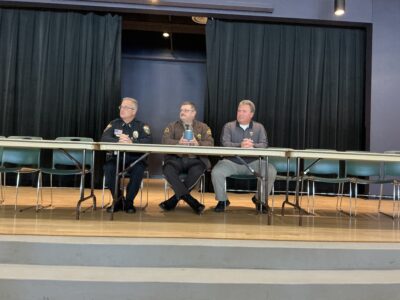
- From left to right: New Ulm Police Chief Dave Borchert, Brown County Sheriff’s Office Chief Deputy Andrew Konechne, and New Ulm Police Department Senior Investigator Chris Moellenhoff participate in a panel discussion. Chief Borchert also serves as Commissioner for District 1 on the Brown County Board of Commissioners.
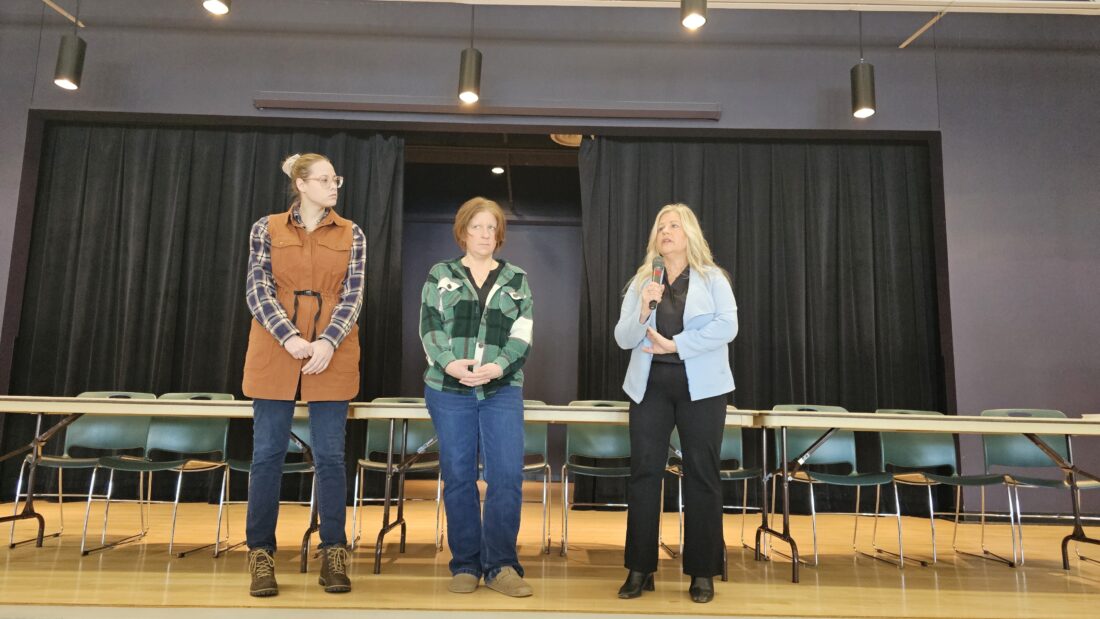
From left to right: Molly Skipper, lead adult protection investigator with Brown County Human Services; Erin Kissner of Brown County Human Services; and Candas Schouvieller, administrator of Oak Hills Living Center, speak during the session.
NEW ULM — Six financial institutions, Brown County Human Services, Oak Hills Living Center and local law enforcement gathered Thursday for a fraud-prevention workshop in New Ulm. The event followed a May session at St. Paul Lutheran Church and focused on scams targeting residents.
Moderator Mark Santelman opened with a phishing email example and urged vigilance. “Question everything,” he said, comparing online safety to winter gear: “Put on the full armor — coat, hat, gloves, boots.”
Renee Thordson of Alliance Bank said prevention is critical.
“The punishment for fraud and recovery of stolen funds is so rare, prevention is the only viable course of action,” she said.
Crystal Alpen and Emily Laffrenzen of Citizens Bank Minnesota advised using chip-enabled cards, setting transaction alerts and lowering daily limits.
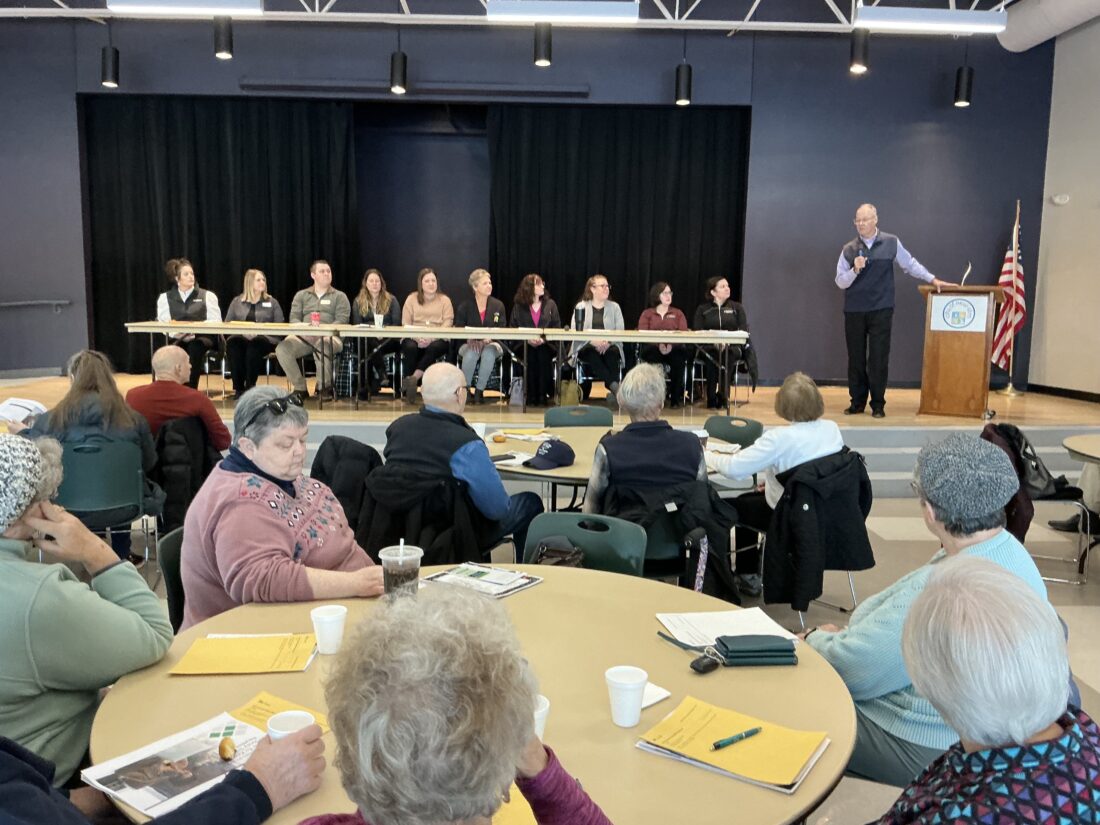
Representatives from local financial institutions participate in a fraud prevention panel discussion as community members gather to learn about protecting themselves from scams. The event brought together experts from multiple banks to address the growing threat of financial fraud.
Laffrenzen said travelers should carry multiple forms of payment and use mobile banking to turn cards on and off. She warned of fraudulent calls from people claiming to represent bank fraud centers.
“When asked what bank, they said, ‘We cover multiple banks.’ They’re just fishing for your information,” Laffrenzen said. She advised hanging up and calling the number on the back of the card instead.
Jean Schroeder and Melissa Braulick of Frandsen Bank said urgency is a warning sign.
“If someone pressures you to act immediately, it’s a red flag,” Schroeder said.
Braulick said scammers may direct victims to withdraw cash or use cryptocurrency kiosks while keeping them on the phone. Representatives noted that scammers often instruct victims to remain on the phone while entering banks and may claim someone is watching from outside. Braulick described a client who nearly lost $20,000 at a cryptocurrency machine before a gas station employee in Mankato intervened.
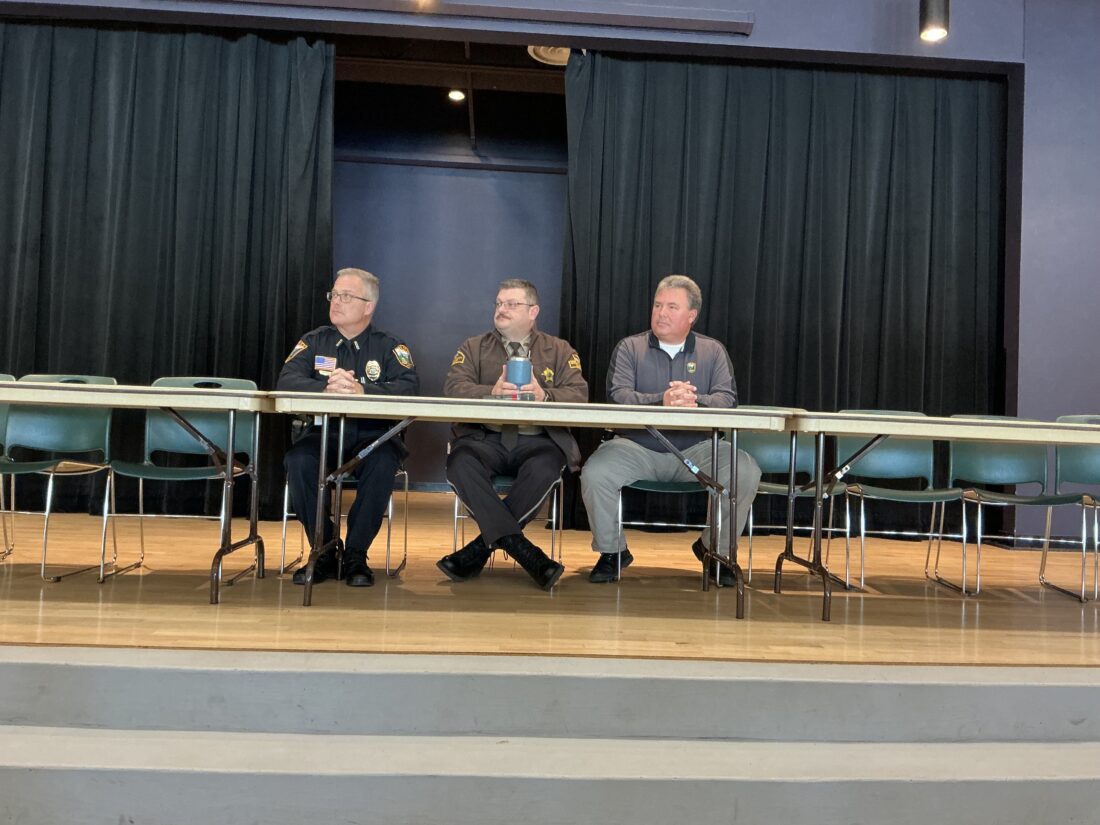
From left to right: New Ulm Police Chief Dave Borchert, Brown County Sheriff’s Office Chief Deputy Andrew Konechne, and New Ulm Police Department Senior Investigator Chris Moellenhoff participate in a panel discussion. Chief Borchert also serves as Commissioner for District 1 on the Brown County Board of Commissioners.
“The guy at the front said, ‘Go home. That’s a scam,'” Braulick said.
Chris Jensen of SouthPoint Financial Credit Union described romance scams.
“Fraudsters build emotional trust before they strike,” Jensen said.
Rebecca Hulke and Kari Steele of United Prairie Bank explained check-washing.
Steele said, “If a criminal gets your check, they can change everything on it.” Hulke recommended fraud-resistant pens and monitoring statements carefully.
Bridget Whitney and Stacy Walter of Bank Midwest outlined imposter scams, including calls from individuals pretending to be jailed relatives or tech company representatives. Whitney described computer virus scams in which screens freeze and display a support number.
“The person on the other line claims they’re from Microsoft. Well, they’re imposters of Microsoft,” she said.
Walter recounted a case in which a New Ulm couple lost hundreds of thousands of dollars after mailing cash wrapped in tinfoil, believing their bank was under investigation.
Whitney identified red flags including urgency, requests for personal information and payment demands.
“When anybody asks for a payment to be a gift card, that’s a huge red flag. Gift cards are made for gifts,” she said.
Walter described a recent case in which a client lost nearly $6,000 in gift cards purchased with a credit card. The scammers instructed the victim to tell store employees the cards were for his daughter.
“Once that information is given out on the gift card, there is no way of stopping it,” Walter said.
Whitney said scammers operate from organized fraud compounds, particularly in India, where large operations use scripts to target victims. “They’re in a huge room. They have scripts that they go off of,” she said. She noted these operations continue because they generate revenue for those countries and added that scammers “want to trigger fear so you won’t think.”
Representatives emphasized that banks will help anyone with fraud concerns, even noncustomers.
“Each and every one of them are committed to that,” Santelman said. “They would rather sit at their desk, nonstop, with all of us walking in and saying, ‘I think this is a scam. Can you help me?’ rather than have you at their desk crying because you’ve been scammed.”
Audience member Jim Bartels advised mailing checks at the post office rather than leaving them in mailboxes. Representatives reminded residents that checks contain routing numbers, account numbers and addresses, making them valuable targets for criminals.
Panel members discussed account management for aging residents. Santelman noted that power of attorney ceases upon death and encouraged residents to designate joint account holders or beneficiaries. Whitney said residents should bring their designated representatives to the bank.
“Let them meet your banker. Say it right in front of that adult child to the banker, ‘This is my personal representative when I die,'” she said.
Whitney advised adding beneficiaries to accounts to allow family members quicker access to funds without probate.
“It makes it so much easier for the family members to access the funds quicker,” she said.
Molly Skipper of Brown County Human Services said fraud affects adults with disabilities, mental health conditions or memory impairments. “Fraud can leave people unable to pay their bills or meet basic needs,” she said.
Erin Kissner and Candas Schouvieller of Oak Hills Living Center said care facilities help residents recognize and respond to fraud.
New Ulm Police Chief Dave Borchert, also a county commissioner, said losses reach hundreds of thousands of dollars monthly in Brown County.
“Most of that money leaves the country, which makes recovery nearly impossible,” he said.
Chief Deputy Andrew Konechne and Senior Investigator Chris Moellenhoff said criminals impersonate banks, government agencies and law enforcement. Moellenhoff warned, “Criminals can capture just 3.4 seconds of your voice and use it to impersonate you.”
Law enforcement officials discussed how scammers harvest information from public sources. Borchert noted that Brown County property records, available online, reveal ownership details, sale prices and taxpayer addresses. He added that social media platforms provide criminals with additional information.
“People put an enormous amount of information about themselves on Facebook,” Borchert said.
Moellenhoff highlighted obituaries as another source. He noted that criminals use obituary details for grandparent scams and to identify when homes might be unoccupied during funerals. Some families now avoid listing detailed survivor information to reduce this risk.
Moellenhoff encouraged residents to search for themselves online. “Have you ever Googled yourself? It’s amazing how much information is out there,” he said. He warned that scammers often call with partial information and ask victims to confirm details such as dates of birth or Social Security numbers.
Borchert said criminals frequently impersonate law enforcement to instill fear. “What they’ll do is they’ll say, ‘We have a warrant for your arrest.’ No law enforcement agency is doing that,” he said. He recounted instances in which scammers used his name to contact residents.
Attendees discussed phone scams labeled as “scam likely” by carriers. Moellenhoff explained that phone companies flag numbers after multiple users block them. He warned against speaking immediately when answering suspicious calls, noting that voice snippets can be used to create fraudulent recordings.
Thordson said cooperation among competing banks is unusual.
“Most communities would not do this,” Thordson said. “We are all sitting here in direct competition with each other, coming to an agreement that this is something we can tackle together to protect our community.”
Representatives urged residents to monitor accounts daily through online banking, remain cautious and report suspicious activity to law enforcement or their financial institutions.
Local News

‘Helping good people here’
Police logs
New Ulm Police • Stopped a vehicle for suspicious activity at Broadway and 6th Street North at 4:15 p.m. ...
‘Question everything’

GFW school move set for Feb. 12-13
Brown County board continues to work on 2026 tax levy
Homeowners, renters encouraged to apply for EAP funds
NEW ULM — Eligible renters and homeowners are encouraged to apply for Federal Energy Assistance Program (EAP) ...