
George’s Ballroom hits the bricks
Trending
NEW ULM -- With great sadness, the Heritage Preservation Commission (HPC) recommended the demolition of George's Ballroom, Monday.
The commission received a report on the need for demolition from several individuals on a committee formed by Brown County to review the issue.
Brown County Auditor-Treasurer Jean Prochniak gave an overview of the ballroom's legal history and status. She said the state historic preservation society recommended bringing the decision to demolish the building before the local preservation committee before bringing it to the state for approval.
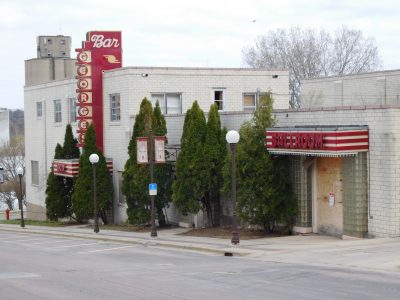
Prochniak said George's Ballroom was built in 1947 with a ballroom, bowling alley and bar. It had the longest bar in Minnesota at that time. The ballroom had several decades of success but closed regular operation in the 1960s. It remained opened on sporadic scheduling through 1991. By the mid-1990s, the entire complex sat idle. The owner passed away in 1995. The ballroom began to fall into disrepair due to vacancy.
The state of Minnesota acquired the property in 2002 through tax forfeiture. It was sold at auction for $1,000. This was done in the hope a buyer would put money into it and rehabilitate the building. Instead, the building continued to deteriorate and the property forfeited again in 2019.
On Sept. 24, 2019, the Brown County board authorized the auditor-treasurer to begin the process to demolish the building. In November 2019, the city of New Ulm filed to withhold the property for sale because a developer expressed interest. The county withheld the property until May 2020 but the developer determined the cost of rehabilitation of the ballroom was greater than estimated.
Prochniak said despite the boarded-up entrances, the iconic sign and art deco architecture loomed large over downtown New Ulm. However, as it continued to deteriorate, the building became a controversial symbol within the city.
She said some residents want to see the building restored to its former glory out of a sense of nostalgia. Others cite the economic and environmental costs of keeping this building. Prochniak said it was because of the costs that the demolition topic was coming before the commission.
Prochniak said they recognized that the residents were upset about losing the building and the history that went with it. In response, the county formed a committee with developers, historians, demolition experts and other interested persons to review all alternatives. However, after reviewing the presentation the committee agreed there were no opportunities to salvage the building.
The HPC was shown drone footage of George's Ballroom showing the roof was in total disrepair. The drone could not be taken inside the building due to exposed wiring.
Prochniak said many people were concerned about the mural on the walls of George's but said the murals no longer exist. The murals were pealing a decade ago and are likely gone now.
Entering the building is considered a safety hazard in terms of the disrepair as well as toxic elements inside including mold.
Police Chief David Borchert also submitted a letter attesting to the danger posed by the building. Juvenile offenders have been found on the property. The roof has holes in it.
Terry Sveine gave a presentation to the commissioners on George's reuse study conducted in 2003.
Sveine said he grew up in New Ulm and realized George's Ballroom was a popular place to be. When he moved back to New Ulm in 1995 he was frustrated with how it was allowed to deteriorate. After it defaulted on taxes and went to the county in 2002, he formed the "Save George's Ballroom" committee. The efforts were successful. A historical architect was hired in 2003 to document and create a reuse study.
In 2003, the demolition cost was $1 million because of the custom-made interlocking stone. The rehab cost was $3 million in 2003. Sveine said based on recent discussion, the rehab cost is now $4 million or $5 million. This is only the start of the problem because there is no viable use for the building.
"There is no way in the world we're going to dance three, four, or seven times a week," Sveine said. "You rehab it and now what?"
A rough estimate indicated at $30,000 a month cash flow was needed to pay for the building. Sveine asked what could be put in the old building that would bring in that kind of money.
"The time for what it was is gone," Sveine said. "There is no interest in doing something else with it."
Sveine suggested memorializing the building by saving the iconic building sign and putting it on a corner pole with historic markers to acknowledge the building's existence.
New Ulm building official Ellwood Zabel said the roof of the building needs repair. It still has the original roof from 1947. The supporting structure for the roof is also needed. The utilities were turned off in the building in 2009. The interior is deteriorating at a fast rate. Mold and asbestos will also need to be abated before demolition is possible.
Kathleen Backer with the Brown County Historical Society said the society did look into preserving the building, but there are no investors able to rehab the building. This is no longer a feasible option. The historic society is now shifting to documenting the history of the building. This includes finding the original documents connected to the building including blueprints and photographs.
Backer acknowledges that much of the historic physical features inside the building are already gone. The building itself is too toxic for a person to enter for current documentation. She did support the idea of memorializing the building in some way. Preserving the marquee was an option, but the historical society board of directors was supporting razing the building.
Since the building is in a historic district, the historical society board encourages those razing the building to take some historic considerations into account.
"It is with a heavy heart that this recommendation will go through to my board to support the demolition of the building," Backer said.
HPC agreed demolition was the only real option moving forward. Commission chair Deb Zahn supported saving the marquee and memorializing the building. She suggested the marquee come down early to better preserve it before further deterioration occurred.
David Christian thanked the demolition review committee for their recommendation. He was glad no one suggested the city try to save the building again.
"It is terrible, but it is time to come down before it comes down itself," Christian said.
Commissioner John Schladweiler said it was sad to see the building go. He compared it to putting down an old dog. It is a sad thing to do but is probably the best thing for it.
Commissioner Daniel Backer was curious if there was a way to save interior artifacts from the building.
Zabel was uncertain what was salvageable at this time. The mold had grown into many items preventing a clean-up.
Christian was uncertain if the building even had a cornerstone.
Commissioner Zahn said George's daughter sold off many items from the building years ago. She believed some of the artifacts might already be in private collections around town and could be donated.
Prochniak said some valuables were likely removed from the building the first time it went up for tax forfeiture.
Christian made the official motion to proceed with demolition as recommended by Brown County. The motion was unanimously approved.
Zahn announced the passage of the motion, noting the commission approved it with great sadness.
Those in attendance at the meeting thanked the commission for the decision, but also acknowledged it was a sad occasion.
This recommendation for demolition will be sent to the state for further approval. Prochniak said after receiving the state's approval, a request bid will be submitted. She anticipated it would take a year for demolition to begin.