Former Wetterling classmate talks of Internet, phone safety
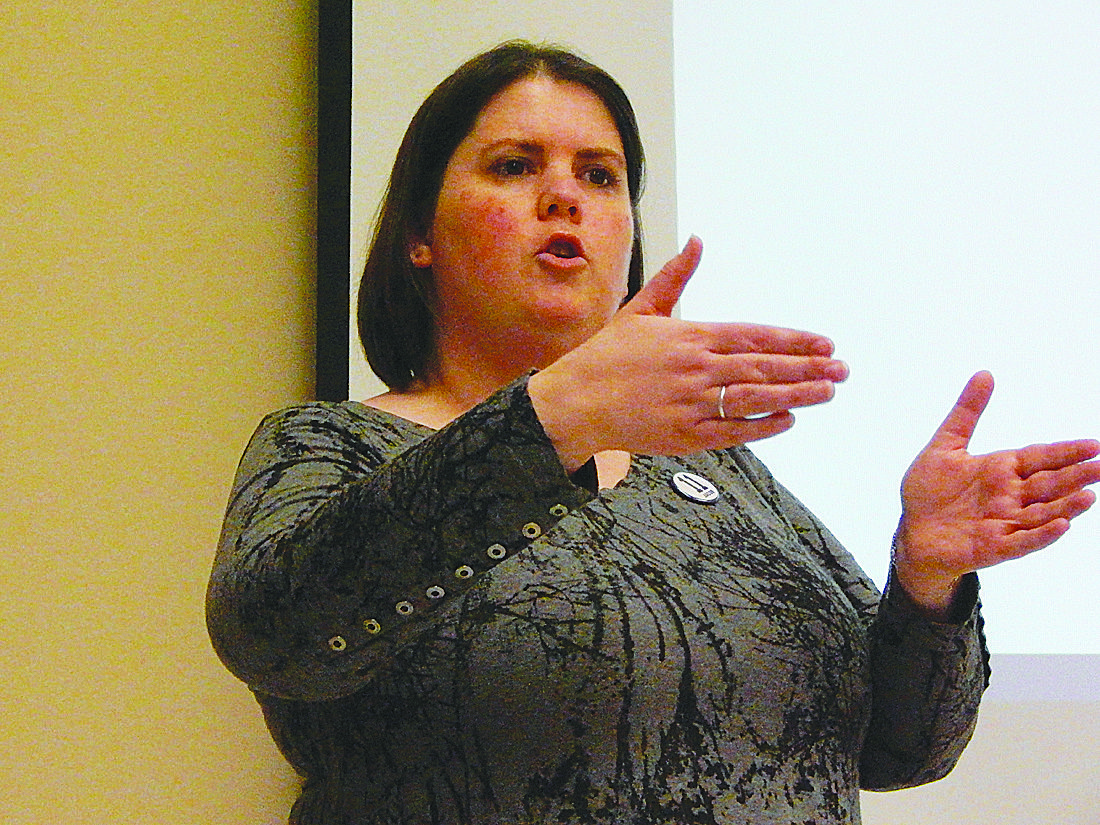
Staff photo by Fritz Busch Alison Feigh, Jacob Wetterling Resource Center Program Manager and a former classmate of his, talks about Internet and cell phone safety at Sleepy Eye Public School Wednesday night.
SLEEPY EYE — A former junior high classmate of Jacob Wetterling said her work as Jacob Wetterling Resource Center Program Manager helps her deal his kidnapping when she was in seventh grade, and his subsequent death.
Alison Feigh, who trains locally and nationally about child abduction and child abuse prevention, told parents to be empowered for their teens at a workshop on Internet and cell phone safety at Sleepy Eye High School Wednesday night.
“Personal safety should not be on the shoulders of a 12-year-old,” Feigh said. “We have amazing technology tools today, but they can be misused… Fifty percent of teens feel they’re addicted to mobile devices.”
She said one way parents can create a more balanced life for their children is by turning off the wifi device at night.
Feigh talked about the importance of parents turning teen mistakes into learning opportunities by ensuring kids deal with the consequences of their mistakes.
“Empower teens by teaching them to trust their gut (feelings), expect respect, use the buddy system, know five trusted adults, set boundaries, protect your online footprint, develop a code word you can use with your parent or guardian that means you need help or need to be picked up, no questions asked, in that moment; and that secrets can lead down a dangerous path,” Feigh said.
She said offenders often target kids without safety nets.
“Offenders have ways of targeting vulnerable kids by often finding 12 to 14-year olds that mention sex in any fashion online and appear needy,” Feigh said. “Your kids need to know it’s ok to say ‘no’ when someone asks them to break the rules. Pay attention to anyone who likes your kids more than you do.”
She urged parents to know their children’s friends and communicate with them.
Feigh urged parents to not allow their kids to put anything online they wouldn’t want on a billboard.
“Change your password often, realize that friendships sometimes don’t last forever and scan kid’s cell phone use,” Feigh said. “Be careful of apps targeting kids chatting with adults one on one, omit hateful language, full birthdays, personal schedules, addresses, phone numbers and inappropriate photos.”
She displayed a newspaper story of an Eagan man who exploited at least 178 high school boys in multiple states using extortion if they didn’t submit nude photos to him.
“Beware of Twitter, Instagram, Snapchat, Google+, Kik messenger and others like it,” Feigh said. “Electronic communication is not anonymous. It can impact your future. Be careful online when you are mad or upset. Keep emotions offline. Have a strong sense of self. Get out of a group if it doesn’t serve you well. Nude photos of anyone under 18 can be considered a felony and pornography.”
Although offenders don’t see it that way, Feigh said people are more than body parts. They have hearts, souls and dreams.
For more information, visit www.jwrc.org
Fritz Busch can be e-mailed at fbusch@nujournal.com.
Local News
Wabasso water project delayed
WABASSO — A water treatment project in the city of Wabasso is temporarily on pause due to “unforeseen ...

NU native “Swede” Wagner joins MN Music Hall of Fame

Wabasso wrestling future bright, 6th-grade team wins state

Aqua‑Bunny makes big splash

No one carries their cross alone