Schoper assists farmers with challenges
Farm advocates provide lender negotiation, crisis counseling, legal, social services
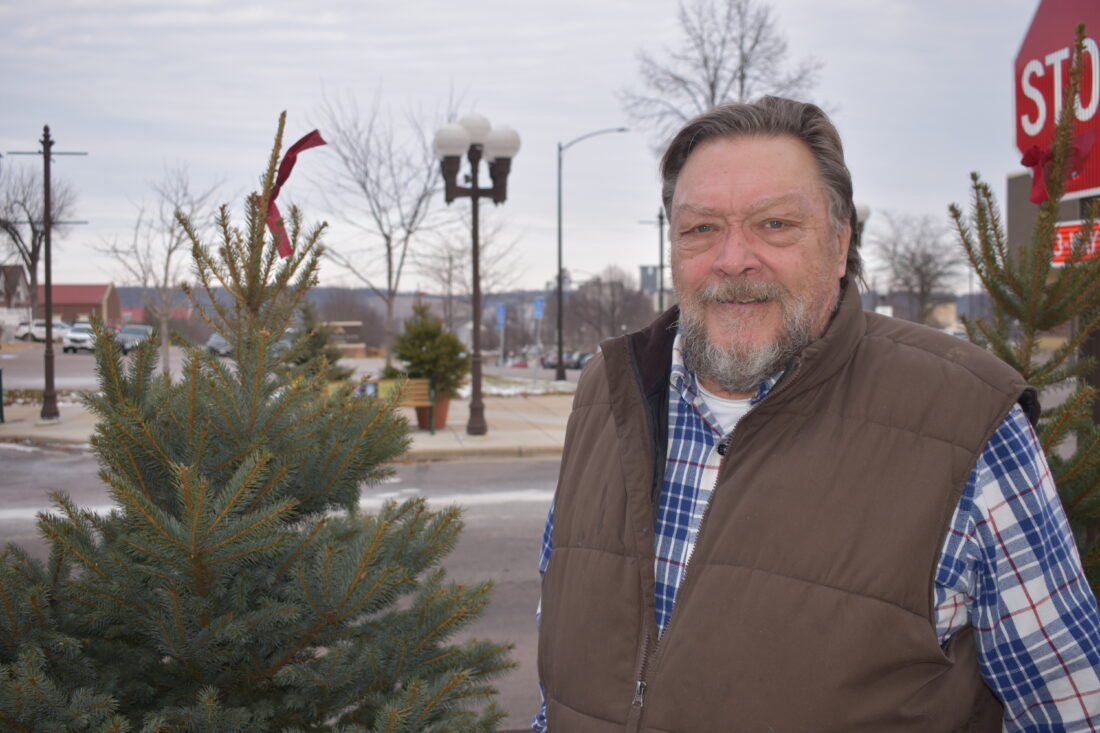
Staff photo by Fritz Busch Retired University of Minnesota Agricultural Extension Educator and Farm Business Management instructor Wayne Schoper of New Ulm continues to work in agriculture. He now has a new title — Minnesota Department of Agriculture Farm Advocate.
NEW ULM — Wayne Schoper retired after 25 years as a University of Minnesota Agricultural Extension Educator not long ago, but he’s not done working with farmers yet.
Last March, he became a Minnesota Department of Agriculture Farm Advocate.
That should be no surprise to anyone who knows Wayne.
“The Farm Advocate Program was born during the farm crisis of the mid 1980s,” said Schoper. “I was hired by the University of Minnesota in 1985. Part of my job as an extension educator was to help prepare farmers for mediation after they were in impossible situations, behind in payments with very high Interest rates. I helped them gather financial documents like cash flow balance sheets and similar things.”
Schoper said some of those same things were part of his job as a farm business management instructor at South Central College in North Mankato after his time as an extension educator.
“I worked with about 60 farmers near Sleepy Eye, Springfield and Wanda,” as an instructor. “In recent months, I worked as a mediator, helping farmers put together a current balance sheet with all their assets, debts and whatever else they have to see if they can make cash flow and get loans.”
Schoper said the recent farm economy has been very challenging.
“Tariffs really tore us apart, especially for soybean prices,” he said. “We’ve seen a little bit of a rebound, but it’s not enough. It’s really tough going out there right now. There’s not enough money for a lot of farmers, especially younger ones. Some farmers have enough equity (assets without debt) to handle it.”
Schoper said he finds the 2025 corn and bean seasons around here “really ironic.”
“We had near-record yields for corn and we can’t make money. It depends what you may pay for land rent and costs like utilities, but basically it costs more than $900 to plant an acre of corn on rented land,” he said. “There isn’t enough income to make a profit. Cost production is maybe about $4.20 a bushel while cash corn is about $3.60 to $3.70. Ethanol corn may be close to $4.00.”
Schoper said some guys can make a little money on soybeans.
“Farmers have markets and hopefully make enough money to support the family and pay bills. We showed losses in 2024 and will show losses this year too,” he said.
Schoper said federal Farmer Bridge Assistance program payments will provide economic assistance to producers of certain crops to offset low prices and poor profit margins will help, paying about $40 an acre, maybe 20 cents a bushel, but fall short on what is needed.
“Farmers would rather have a good price than have to rely on government payments and some crop insurance,” Schoper said. “We had great years in 2021, 2022 and 2023, but there’s been a sharp break since then. It’s not as bad as it was in the 1980s and some of the 1990s, it’s not a crisis, but were definitely trending that way.”
He said going into debt with high interest rates on loans that carry over year to year can create mental health issues for farmers, especially younger ones.
“Times are lot different than they were years ago. It’s so expensive now,” Schoper said. “We could see lots of (loan) defaults in 2026. Farmers can’t make payments. My advice to them is talk to their lender. Many times, they will work with farmers if they come up with a plan. It may mean locking into a loan for 20 or 30 years. Mechanical repairs are going up too. My question is, when will it ever come down? Landlords are resistant to lowering land rents because their taxes just went up.”
He said he’s working with a Stark Township dairy farmer whose three children don’t want to take over the farm.
“Their son is interested in farming, but they saw what their folks went through dairy farming and don’t want to do it,” he said. “Milk prices are below production costs. Some people may not drink milk now. Some people think milk fat is bad for you. Personally, I love it. But you don’t eat the whole ice cream carton at once. I like good, sharp cheddar cheese on something is delicious.”
Schoper said China is stepping back into the U.S. market now, which should help farmers a bit.
“The world supply of corn and soybeans is pretty good but the U.S. has the best quality soybeans in the world with protein that China really likes for pork production,” he said.
Schoper teaches agricultural classes an hour a day, three days a week at South Central College. He does farm advocate work and helps farmers with taxes, the other two days a week.
There is no charge for Minnesota Department of Agriculture Farm Advocates that are trained and experienced in agricultural lending practices, mediation, lender negotiation, farm programs, crisis counseling, disaster programs and recognizing the need for legal and/or social services.
Farm Advocates besides Schoper include Steve Zenk, Danube; Brigit Lozinski, Slayton; and Laura Cullip, Hutchinson. For more information including contact data, visit https://www.mda,state.mn.us/about/commissionersoffice/farmadvocates.
Local News

Luminaries provide ‘special night’ during Christmas

Schoper assists farmers with challenges

The journey continues

‘More and more guys want to get out now and fish’
Brown County commissioners boost salary, per diem rates
NEW ULM — Brown County Commissioners unanimously approved a 2026 salary and per diem hike for commissioners ...