
CAR OF PHOSPHATE FOR BROWN COUNTY
First Experiment AlongThis Line
Inaugurated in 1924
When Test Plots Were Carried Out.
——–
FARMERS’ INSTITUTE
AT HANSKA TUESDAY
——–
The New County Agent Ed. Lenzmeier Will
Attend. – Olson and
Dickinson Will Be There.
——–
The Farm bureau office will have a carload of phosphate fertilizer shipped into Brown county this spring. The use of phosphate fertilizer is not an entirely new idea in Brown county. The first experimental work in this county along that line was inaugurated in 1924 when 59 test plots of four square rods each were carried out. The results of the 1924 tests were high-y satisfactory. In a few cases, where land was extremely fertile a heavy stand of clover and alfalfa was noted on both the treated and untreated plots. On land that was a little low in fertility the treated plots, however showed up far grow thier and heavier than the untreated.
Treated in 1925
Plots were again treated in 1925. Last year happened to be an unusually dry year, Since the availability of the phosphate to the plant is dependent on moisture to put it into solution the 1925 results were not gratifying. Still many people reported excellent results last year. The second year results with corn and small grains on the land should be good next year since so little of phosphate was made available during the dry 1925 season. Last year the results of tests in Watonwan county however were also good. This was the first year of the work in Watonwan county and a considerable yield increase was voted.
If you decide to make a test on your own farm remember the results may not come the first year. Be prepared to watch for yield increases the second and third year.
The brand and grade that will be shipped here will be the “Anaconda Treble Acid Phosphate.” This brand contains 44 per cent of available phosphoric acid and will come to this county in 125-pound bags. The price laid down will be $52.80 per ton. The cost of a 125-pound bag then will be $3.30.
Recommended Phosphate
Experiment stations recommend that the phosphate be applied at the rate of 100-pounds per acre. Yet some unusual-y good results have been obtained with as little as 50 pounds per acre.
Phosphate fertilizers are sold in several forms. Raw rock phosphate is mined In Tennessee. This form must be shipped a long ways and is rather unavailable after taking three to four years, before it is broken up enough to bring results. Ordinary acid phosphate is more available but does not have nearly so high a content of phosphoric acid as the treble phosphate.
The car will probably be shipped to Hanska since most of the orders so far have come from the Hanska territory. If interested in trying out some of these phosphate fertilizers get in touch with the county agent’s office at Sleepy Eye.
Farmers’ Institute
On Tuesday, February 23, a Farmers’ Instituate will be held at Hanska. The place selected for the meeting will be the basement of the State Bank building.
There will be two sessions conducted at Hanska. The first one will begin at 10:00 a. m. and run till noon. Following an hour and a half intermission the meet-ing will again be in session till 4:00 o’clock.
The “high lights” at this meeting will be Andrew J. Olson and W. A. Dickinson. With their experience in various activities they should be able to put forth an interesting program.
Mr. Olson is a Renville county farmer. On his farm Mr. Olson centers his efforts around the feeding of hogs and cattle. He is a graduate of the Minnesota College of Agriculture and for the past several years has been vice president of the Minnesota Farm Bureau federation.
Mr. Dickinson is a successful dairy farmer of Kanabec. His knowledge of breeding and feeding of dairy cattle has never been questioned. He is also prepared to give out information of the best kind of crop production suited to dairy farms. Mr. Dickinson is also a graduate of the Minnesota College of Agriculture. Since leaving there he has been agricultural superintendent for the Duluth and Iron Range railroad for three years, county agent in Iowa and Minnesota and at present is engaged in farming.
Remember the date and time and above all bring along your problems and present them to the institute men.
Brown County Journal,
Feb. 19, 1926
————————
History
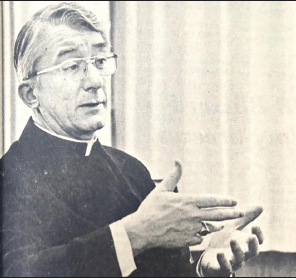
‘We have responsibility for each other’
AUTHORITY TO SELL PROPERTY IS ASKED
Trustee Fred. Pfaender Petitions Court to Dispose of Entire Creamery Holdings. ———— REFEREE HEARING ...
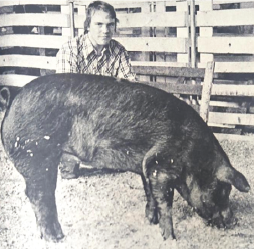
High school students win top Polkatown hog honors
COUNTY JAIL NOW HOME FOR ELEVEN COUNTY RESIDENTS
All Serving From Thirty To Ninety Days For Various Offenses. ———— HERMAN KRETSCH SHOT SON WHILE ON ...
CAR OF PHOSPHATE FOR BROWN COUNTY
First Experiment AlongThis Line Inaugurated in 1924 When Test Plots Were Carried ...
STYLE SHOW OPENS TUESDAY, MARCH 2
Three-Day Spring Fashion Revenue, Staged at Turner Theatre, Being Arranged. ———— DELIGHTFUL PROGRAM ...