
Birds matter to local group
Trending
NEW ULM -- With more cooperative weather than there was for the original Christmas Bird Count scheduled earlier in the month, the annual Audubon Society Christmas Bird Count took place in a 15-mile-wide circle from Center and Broadway Saturday.
About a dozen participants met at the Hy-Vee Foods deli at 8 a.m. and discussed bird count details before disbursing to a number of locations including Flandrau State Park, Clear Lake, St. George, Essig, New Ulm, Sleepy Eye, Courtland, Searles, Klossner, and the western end of Swan Lake.
Bird counters included a retired Minnesota Department of Natural Resources (DNR) employee and a Martin Luther College (MLC) science teacher.
"The river valleys and lakes are great attractions to many birds," said MLC science teacher Mark Tacke. "Many people including scientists and citizens come out to observe and count birds at feeders or other places. Bald Eagles have made a comeback around here in the past 15 years."
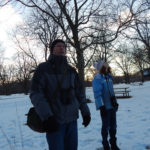
Bob Beck and Mary Schroeder of New Ulm began their bird count at Flandrau State Park. They noticed a number of birds as they drove into the park, parked their vehicle and began walking near the Cottonwood River. A flock of morning doves flew past them over the river.
"We often see and hear woodpeckers, red-tailed hawks, morning doves, junkos, bald eagles and sparrows here," Beck said.
Elaine Poulson and her husband Richard organized the first New Ulm area Christmas Bird Count in 1986 and have been doing so since that time.
Since 1967, the average population of the common birds in steepest decline has fallen by 68 percent. Some species have fallen by 80 percent, according to the Audubon Society. All 20 birds on the National Common Birds in Decline list lost at least half their population in the last 4 decades.
Findings point to a growing impact from many environmental impacts birds face including habitat loss from development, deforestation, land conversion to agriculture, industrialization, urban sprawl, and climate change.
Citizen action can improve bird population, according to the Audubon Society. Local bird count results will be forwarded to the Audubon Society for recording.
"Birds are important because they keep systems in balance: they pollinate plants, disperse seeds, scavenge carcasses and recycle nutrients back into the earth," said Melanie Driscoll, Director of Bird Conservation for the Gulf of Mexico and Mississippi Flyway. "Birds also feed our spirits, making for us the passage of the seasons, moving us to create art, poetry. They remind us that we are not only on, but of this earth."
Birds are biological barometers for weather predictions, documenting climate change, monitoring habitat health, urban noise and are man's next best friend," said Smithsonian Institute Forensic Ornithologist Carla Dove.
Birders, scientists, enthusiasts and students are among 71,000 observers in the annual Christmas Bird Count (CBC), one of the largest, longest-running citizen science events in the country that began in 1905. Christmas Bird Counts have since expanded to include Canada, Mexico, Columbia, and Costa Rica.
Local bird count results will be released soon.
For more information, visit www.audubon.org/
Fritz Busch can be e-mailed at fbusch@nujournal.com.