
Trending
Back in the late '90s, I would meet occasionally with the project manager of the construction of the new Science Museum of Minnesota in downtown St. Paul. She occupied a cramped cubicle just outside the president's office. Every time I met with her, my eyes were drawn over her right shoulder to an image of Daffy Duck, captioned, "Would those who say it can't be done please get out of the way of those getting it done."
Since taking office, President Donald Trump has steadfastly expressed disdain for renewable energy, and his administration has been busy shutting down the research and development of renewable energy projects across the U.S.
Trump and Israel then started a war with Iran that resulted in the cutting off of roughly 20% of global oil and gas supplies.
The resulting energy shortages and price spikes have had repercussions for all 8.3 billion people on Earth and have left China as the world's dominant supplier of a global renewables boom supercharged by Trump's war of choice.
Countries in East Asia, South Asia, Africa and Europe -- heavily dependent on energy imports from the Persian Gulf -- are dramatically ramping up their investments in renewables.
In Vietnam, what was going to be the country's largest liquefied natural gas plant now will be a wind, battery storage and solar facility. South Korea recently decided to fast-track the deployment of 100 gigawatts of renewables -- enough to power at least 75 million homes -- by 2030.
The flow of solar components to India jumped nearly 150% and those to Africa by 176% between February and March. In Europe, demand for rooftop solar is surging. Overall, 50 countries set records for Chinese solar imports in March.
The Trump administration -- whose war is showing the rest of the world the vulnerability of long-term dependence on oil and gas -- has convinced itself that the intermittency of wind and solar is an insurmountable problem, thus leaving the field wide open to those addressing these challenges and bringing solutions to market.
Battery and other energy storage solutions are advancing so rapidly and costs are plummeting so swiftly that those who follow these trends are scrambling to stay abreast of just how quickly these technologies are accelerating.
China has a daunting lead in clean energy technology, but the U.S. still is home to many of the world's best research universities. Seven of the top 10 ranked higher education institutions in the world are still in the U.S., despite the Trump administration's efforts to throttle federal funds for academic research and to discourage the world's best and the brightest from pursuing their studies here.
Energy makes all things possible. It is essential for meeting physiological needs like food, water and shelter and for powering our digital world. Electricity is humanity's most versatile form of energy and will be the 21st century's energy source of choice.
It is astonishing and bewildering that a president who considers himself the epitome of business savvy is deliberately kneecapping the ability of the U.S. to compete in the energy technologies and enterprises fundamental to surviving and thriving in the 21st century.
Minnesota has a robust ecosystem of businesses and entrepreneurs working together to bring energy innovations to market faster through strategic partnerships, pilot projects and seed funding to demonstrate their viability in the real world. Minnesota's clean energy economy -- including energy efficiency, renewable energy, clean grid and advanced transportation -- supports over 63,000 jobs with a growth rate more than twice as fast as the state's overall workforce.
For instance, Xcel Energy recently signed an Electric Service Agreement with Google for its proposed new data center in Pine Island, Minnesota. The agreement forces Google to fund 100% of electric grid updates and entirely new renewable electricity generation to protect existing residential ratepayers.
The agreement, in particular, outlines the deployment of 1,400 megawatts of wind, 200 MW of solar and 300 MW of battery storage on Xcel's Upper Midwest grid. The batteries will be built by Form Energy in West Virginia and will rely not on rare earths but on one of the most common elements on Earth and one that is especially abundant in northeast Minnesota: iron.
Imagine what Minnesota and the rest of the U.S. could accomplish if those who say that the clean energy economy can't be done would get out of the way of those getting it done.
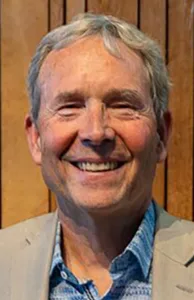
-- This op-ed was published by the Minnesota Reformer. After a 40-year career developing environmental projects for the Science Museum of Minnesota, Patrick Hamilton retired in 2024 and now holds the honorary title of Fellow.