
Brown County to begin recount Dec. 3
Following Finstad’s request
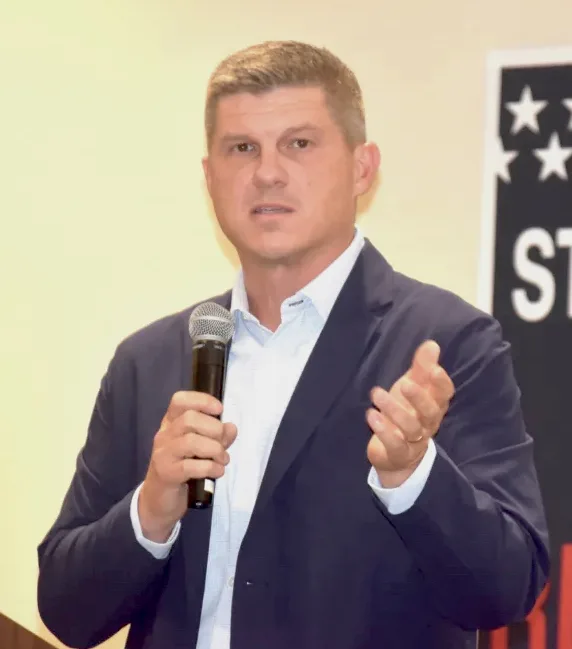
Brad Finstad began serving Minnesota's first congressional district in 2022. File photo
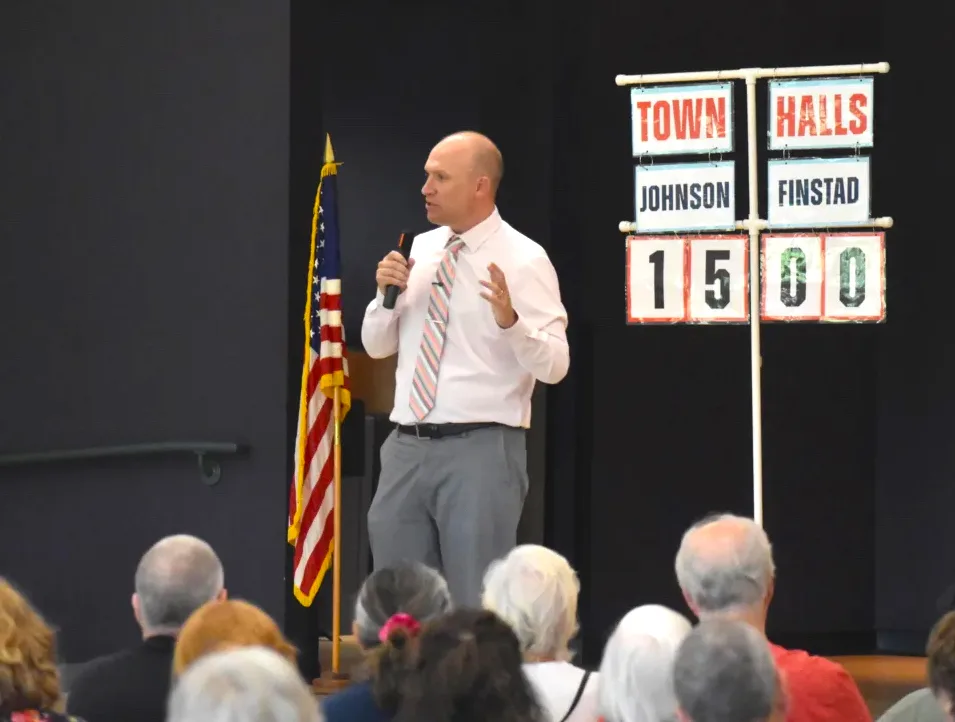
Jake Johnson, a former Rochester math teacher, received 324 more votes than Brad Finstad during the general election. File photo
Brad Finstad began serving Minnesota's first congressional district in 2022. File photo
Jake Johnson, a former Rochester math teacher, received 324 more votes than Brad Finstad during the general election. File photo
Trending
Secretary of State Steve Simon certified the 2026 General Elections results, where a record breaking 2,851,615 Minnesota casted votes, with a canvass on Thursday.
Despite the canvassing, a recount is still on the way. Congressional District 1 GOP candidate Brad Finstad requested a recount for the race against DFL Candidate Jake Johnson, who won the election by 324 votes.
The 0.1% vote separation fits within the 0.25% difference required for a publicly funded recount.
Recounts for the 21 counties in District 1 will begin November 30. Brown County will begin their recount on December 3. On December 8, the State Canvassing Board will review results of the recounts.
Auditor-treasurer Kelly Hotovec said that since Brown County is split between congressional district 1 and district 7, only ballots in district 1 will be recounted for the Finstad-Johnson race.
The recount process consists of up to four teams of at least two people per team physically counting election results. Ballots will be sorted into three piles, one pile for Finstad, one pile for Johnson and one pile for all other ballots.
Ballots may also be challenged by candidates or their representatives if there appears to be an overvote, undervote, identifying mark written outside of the voting circle or write-in space or if there is a question of voter intent.
Hotovec said that under Minnesota law, a ballot or vote must not be rejected if it is possible to determine voter intent.
When the ballots go through the machine, voter intent is not taken into account. During a recount, which is done by hand, those counting the ballots determine whether voter intent can be determined.
For example, if a candidate name is written in the location of that race but a mark is not made in the oval, the candidate name written will still be counted. The same is true if the candidate name is in the write-in space.