
New Ulm Pollinator Park expands native habitat
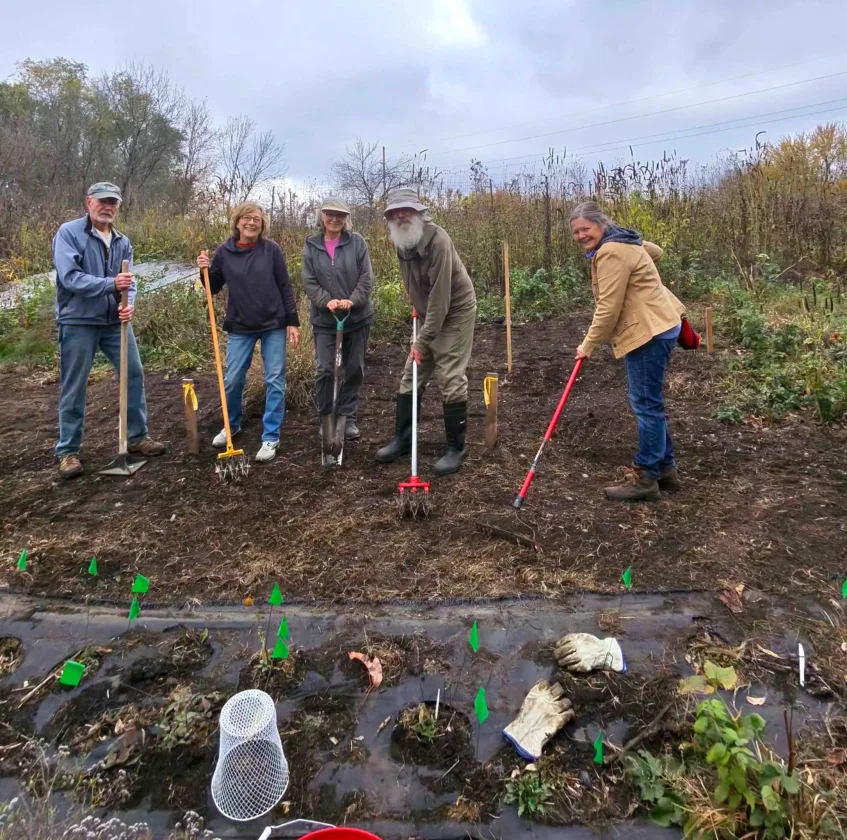
Pictured from left to right are volunteers Robert Beck, Deb Steinberg, Julie Gartner, Joe Gartner, and Kristi Lindquist, who recently planted half an acre of prairie wildflowers at the New Ulm Pollinator Park. Photo by Amy Zents
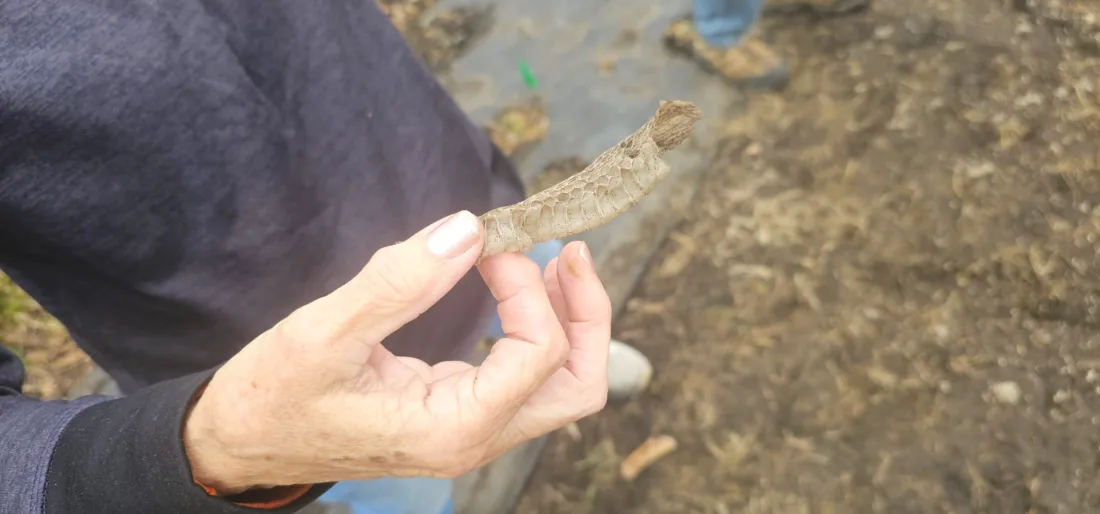
Deb Steinberg holds a shed garter snake skin found during recent maintenance work at the New Ulm Pollinator Park. Photo by Amy Zents
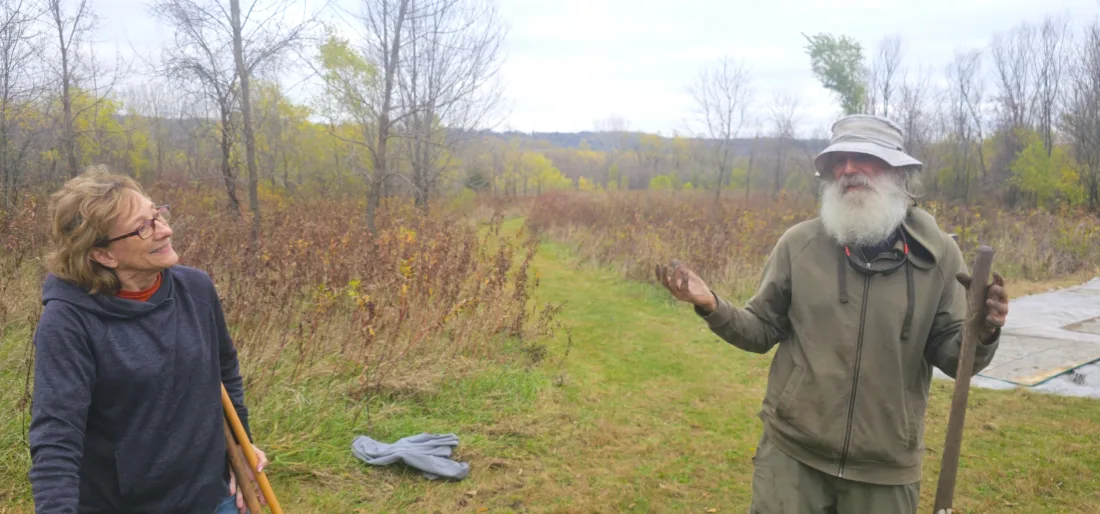
Deb Steinberg and Joe Gartner talk about the Pollinator Park's importance to our community. Photo by Amy Zents
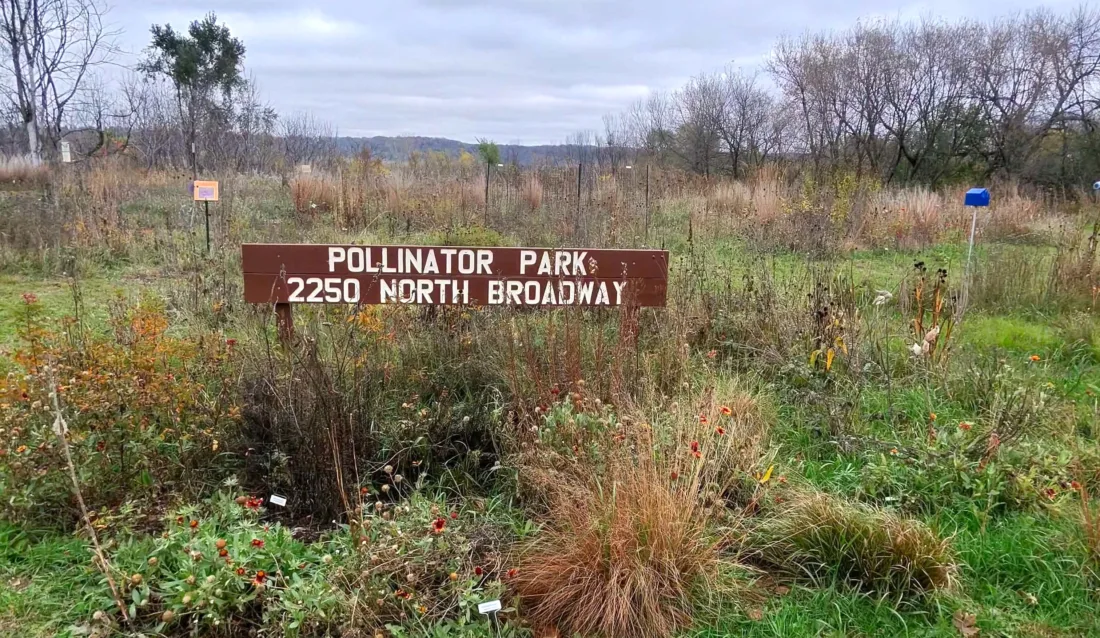
The sign at the New Ulm Pollinator Park provides information about the site's location. Photo by Amy Zents
Pictured from left to right are volunteers Robert Beck, Deb Steinberg, Julie Gartner, Joe Gartner, and Kristi Lindquist, who recently planted half an acre of prairie wildflowers at the New Ulm Pollinator Park. Photo by Amy Zents
Deb Steinberg holds a shed garter snake skin found during recent maintenance work at the New Ulm Pollinator Park. Photo by Amy Zents
Deb Steinberg and Joe Gartner talk about the Pollinator Park's importance to our community. Photo by Amy Zents
The sign at the New Ulm Pollinator Park provides information about the site's location. Photo by Amy Zents
Trending
NEW ULM -- A small group of dedicated volunteers planted half an acre of prairie wildflowers at the New Ulm Pollinator Park this week, expanding the 22-acre site's native habitat.
The project, which manages city land for ecological health and public use, relies on a dedicated group to restore native ecosystems. Robert Beck, Deb Steinberg, Julie Gartner, Joe Gartner, and Kristi Lindquist completed the planting to expand the park's existing prairie sections.
The work at the Pollinator Park follows a specific planting strategy. The group focuses on small, manageable areas, reintroducing 25 to 60 species of wildflowers per plot.
By limiting the inclusion of native grasses, which can dominate and crowd out other flora, the gardeners maintain a diverse mix of plants.
During the 2026 season, the group seeded approximately half an acre of new prairie.
The current seed mix includes 30 species of prairie wildflowers, selected to remain under three feet in height. This differs from the 2024 and 2025 plantings, which included varieties reaching six feet. The current mix features Purple Prairie Clover, Leadplant, White Prairie Clover, Black-eyed Susan, Blanketflower, and Butterfly Milkweed.
The park also contains Tall Coneflower, Pale Purple Coneflower, Blazing Stars, Goldenrods, Canadian Anemone, Hyssops, and Asters.
Fall is the time to sow prairie wildflower seeds. Most native species require winter stratification and exposure to freezing temperatures in order to prepare for spring germination.
Prairie grass seed is planted in the spring. Started plants can be added from May through October, though summer plantings require watering.
“Plant them and they will come,” Joe Gartner said.
The area seeded in October will require two to three years to reach full bloom.
Pollinator Park includes trails that connect to the city bike path.
The project is community-driven, with donations funding projects like purchasing started plants. The park began 11 years ago on less than an acre of city land. Steinberg said the project started when she sought a location for a preschool class to release butterflies.
Since then, it has expanded through local labor. Joe and Julie Gartner joined the effort several years after the park was established and have focused on planting and weed removal.
The group manages the land to preserve pollinators and provide a space for families to walk and observe nature. Daily, residents walk their dogs along the paths.
The site presents specific maintenance challenges. Some areas contain dry, disturbed soil with remnants of past dumping, including concrete and glass.
Joe Gartner said the prairie is recovering despite these conditions.
The group also manages wildlife interactions. Deer and rabbits have damaged milkweed plantings in the past. To protect vulnerable plants, the gardeners use fencing and cages. The group also removes noxious weeds to ensure the native species can establish themselves.
The park includes prairie, woodland, and wetland habitats. Steinberg said they have identified patches of swamp milkweed and common milkweed near the river.
Steinberg said the gardeners have observed eagles, pheasants, and songbirds on the property.
The group has established a routine for the winter months. To protect interpretive signs and the little library from sun damage and weather, the gardeners remove these items for the winter.
This practice extends the life of the park's infrastructure. The group also monitors the site for vandalism.
Attendance varies during the seed planting, with six people participating in the most recent planting.
Joe Gartner said the group typically sees higher turnout in the spring. He added that while hilly terrain and work schedules can limit participation, the current group has been consistent in their efforts. He views the park as a long-term legacy.
By speaking to groups and providing tours, the gardeners have increased awareness of the park's mission.
Steinberg said the park provides a quiet space for visitors to experience nature, which she believes is increasingly important.
Joe Gartner said the park's success depends on continued stewardship and encourages residents to plant prairie species in their own yards to support pollinators.
“We are committed to the project and plan to continue our efforts in the coming years,” Joe Gartner said. He added that the project demonstrates how small, community-led initiatives can have a measurable impact on the local environment.
Steinberg said the group is grateful for the support they have received from the city and the community, and they hope the park will continue to serve as an educational resource for schools and community groups.
The group offers tours and speaks to community organizations. For information on helping, donating, or scheduling a tour, contact Joe Gartner at 507-276-8326.