
Oktoberfest by the numbers
Downtown celebration brings in $417,000
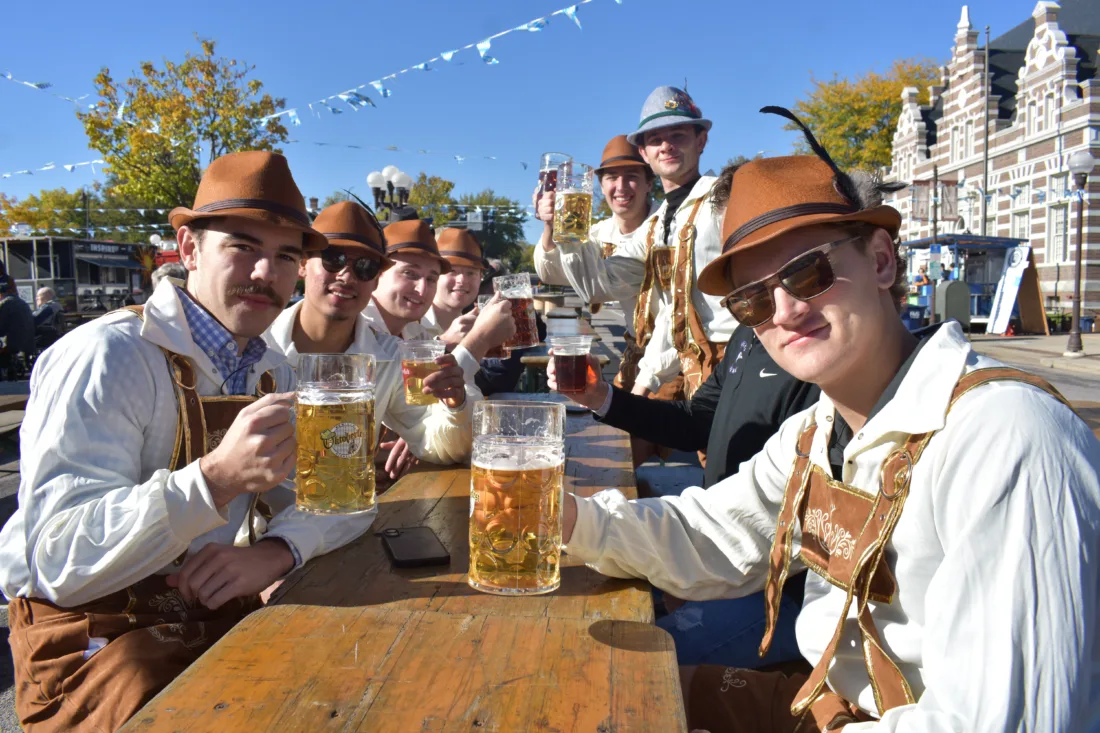
A group of college students visit New Ulm for the first time during the Oct. 3, downtown Oktoberfest celebration. Data analysis shows New Ulm received $417,373 in direct visitor spending during the first weekend of Oktoberfest. Photo by Clay Schuldt
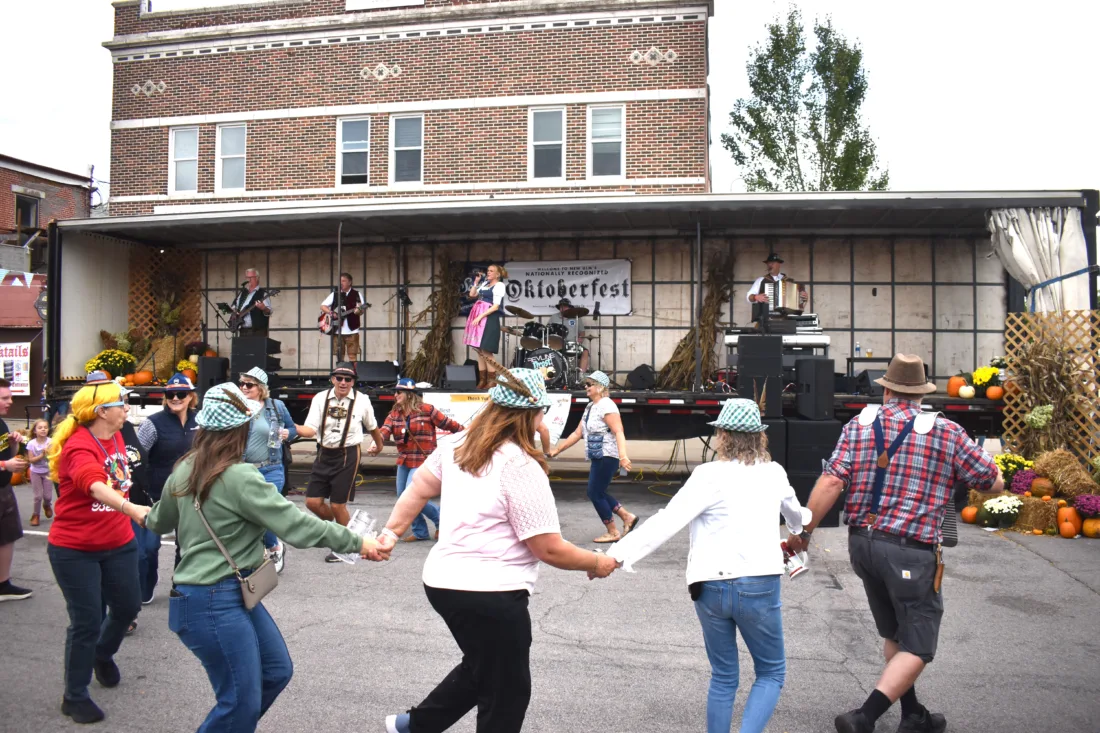
Oktoberfest attendees dance to the German band “Happy Hour Oktoberfest Band” during New Ulm downtown celebration on Oct. 3, 2026. Photo by Dylan Jackson
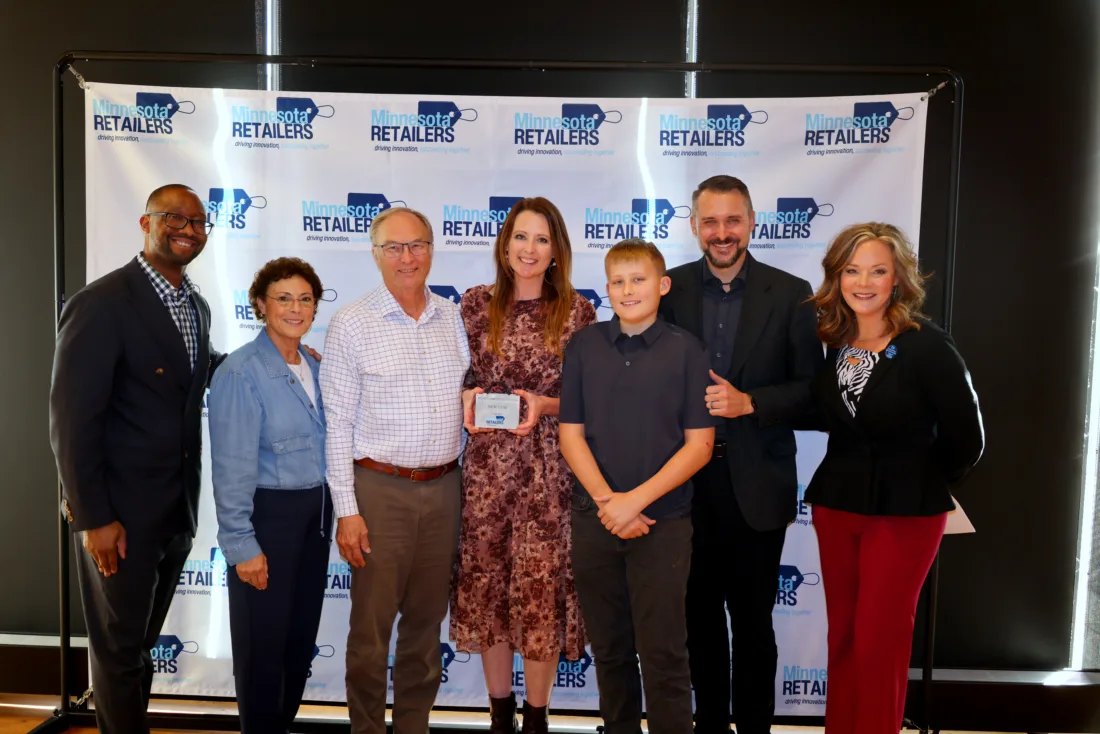
Chamber President Sarah Warmka (center, holding award) and representatives from New Ulm accept the Minnesota Retail Community of the Year 2026-2027 award from the Minnesota Retailers Association at Retail Rally last week. New Ulm was recognized for its collaboration and commitment to supporting local businesses. From left to right: Lonnie McQuirter, Hillary Feder, Rep Paul Torkelson, Sarah Warmka, Jackson Warmka, Eric Warmka and Marisa Wilson. (Chamber submitted photo)
A group of college students visit New Ulm for the first time during the Oct. 3, downtown Oktoberfest celebration. Data analysis shows New Ulm received $417,373 in direct visitor spending during the first weekend of Oktoberfest. Photo by Clay Schuldt
Oktoberfest attendees dance to the German band “Happy Hour Oktoberfest Band” during New Ulm downtown celebration on Oct. 3, 2026. Photo by Dylan Jackson
Chamber President Sarah Warmka (center, holding award) and representatives from New Ulm accept the Minnesota Retail Community of the Year 2026-2027 award from the Minnesota Retailers Association at Retail Rally last week. New Ulm was recognized for its collaboration and commitment to supporting local businesses. From left to right: Lonnie McQuirter, Hillary Feder, Rep Paul Torkelson, Sarah Warmka, Jackson Warmka, Eric Warmka and Marisa Wilson. (Chamber submitted photo)
Trending
NEW ULM -- New Ulm is Minnesota’s 2026-27 Retail Community of the Year.
The honor was awarded as new economic data shows a single downtown Oktoberfest weekend generated $417,373 in direct visitor spending.
The Minnesota Retailers Association presented the statewide recognition at Retail Rally. The annual conference celebrates excellence in retail across Minnesota.
New Ulm Area Chamber of Commerce President Sarah Warmka accepted the award on behalf of the local business community.
The Minnesota Retailers Association established the Retail Community of the Year program to evaluate municipalities based on measurable retail growth, collaborative marketing initiatives, downtown storefront occupancy rates, retail infrastructure investments, and community-wide economic development partnerships.
Retail Rally brings together independent merchants, chamber executives, municipal planners, and economic development professionals from across Minnesota.
Warmka said the statewide honor reflects a multi-year pattern of community-wide collaboration rather than the success of any single store, event, or organization.
“When you walk downtown, you see it everywhere, businesses supporting each other’s events, organizations partnering instead of competing, and community members who choose local first,” Warmka said.
“Retail is about more than a transaction," she said. "It is about creating a place where people want to be, and New Ulm does that.”
That collaborative retail philosophy was on display Oct. 2-3 during Downtown Oktoberfest 2026.
The event gathered regional crowds and spurred economic activity across the commercial district.
According to an economic impact estimate compiled by the New Ulm Economic Development Authority (EDA), Downtown Oktoberfest was associated with $417,373 in direct visitor spending.
The spending came from attendees who traveled 50 miles or more to downtown New Ulm.
The analysis focuses on visitors from outside the immediate region, economic data classified by analysts as “new money”.
The term represents external dollars injected into the local economy that would not have been spent in New Ulm otherwise, distinct from baseline spending that circulates among local residents.
The spending estimate combines Placer.ai distance-based visitor tracking data with standardized spending profiles for festivals and events.
The profiles were developed by University of Minnesota Extension and the University of Minnesota Duluth Bureau of Business and Economic Research (UMD BBER) through their Community Impact Snapshot methodology.
Methodology clarification and technical oversight were provided by Brigid Tuck, Senior Economic Impact Analyst with University of Minnesota Extension on Oct. 13.
For Downtown Oktoberfest, visitor counts and spending metrics demonstrated regional participation across two distinct operational windows.
During the Friday, Oct. 2 window from 3 p.m. to 11 p.m., the downtown study area recorded 524 visitors traveling from 50 to 99 miles away, alongside 480 visitors traveling 100 miles or more.
During the Saturday, Oct. 3 window from 10 a.m. to 11 p.m., attendance reached 2,300 visitors arriving from the 50-99 mile tier and 1,100 visitors traveling from distances of 100-plus miles to participate in the weekend festivities.
To calculate direct economic contributions, the 50-99 mile cohort was assigned a day-visitor spending profile of $53.89 per person per day.
The 100-plus mile visitors were assigned an overnight visitor profile of $167.84 per person per day.
Both spending benchmarks are expressed in inflation-adjusted 2025 dollars, reflecting retail, dining, lodging, and transportation expenditures typical of regional festival attendees.
Applying these metrics yielded $152,185.36 in spending from day visitors and $265,187.20 from overnight-profile visitors for a combined total of $417,372.56 in direct economic impact for the local business sector.
Because spending profiles are calculated per person per day, Friday and Saturday figures were calculated independently and combined.
Attendees present on both days are accounted for in each daily calculation, making the combined total of 4,404 an expression of visitor-days rather than unique individual headcounts.
“This is what a strong retail community does, it gives people a reason to drive, to stay, to spend the day downtown,” Warmka said. “When someone drives 50 or 100 miles for Oktoberfest, they are coming for one event. They eat in our restaurants, shop in our stores, buy gas, and stay the night. … That $417,000 is felt across the community.”
Warmka said the Retail Community of the Year evaluation extends beyond combined sales numbers to examine innovation, storefront investment, and community commitment.
“Retail today is competitive. People can buy anything online. So the question is, why do they choose to come here and shop here?” Warmka said. “They come because our businesses create experiences you cannot get online. They collaborate on events like Oktoberfest, they welcome visitors, they invest in their storefronts.”
The EDA emphasized that the $417,373 figure represents an estimate of direct visitor spending rather than an audit of actual cash register receipts.
Placer.ai tracking monitors device activity within the designated downtown study boundary, which may capture general foot traffic in addition to festival attendees.
The calculations do not include local residents or those from within 50 miles of New Ulm.
The data for the calculation was provided by Heather Bregel of the New Ulm Economic Development Authority.
Bregel utilized Placer.ai visitor tracking data for the designated event parameters, benchmarked against University of Minnesota Extension and UMD BBER Community Impact Snapshot data.
Warmka said the dataset validates a cyclical retention model that New Ulm retailers have cultivated across independent boutiques, specialty retail shops, and hospitality venues.
“Every visitor who discovers New Ulm during Oktoberfest is a potential return customer for Christmas, for a summer weekend, or for Bock Fest,” Warmka said. “That is the power of our retail community. We bring people in with big events, and we keep them coming back because of our local businesses.”
Local economic development officials anticipate that the statewide recognition and the documented visitor spending figures will support upcoming grant applications, tourism marketing initiatives, and downtown infrastructure planning efforts through 2027.
New Ulm will hold the title of Minnesota Retail Community of the Year through 2027.