
The freedom of less
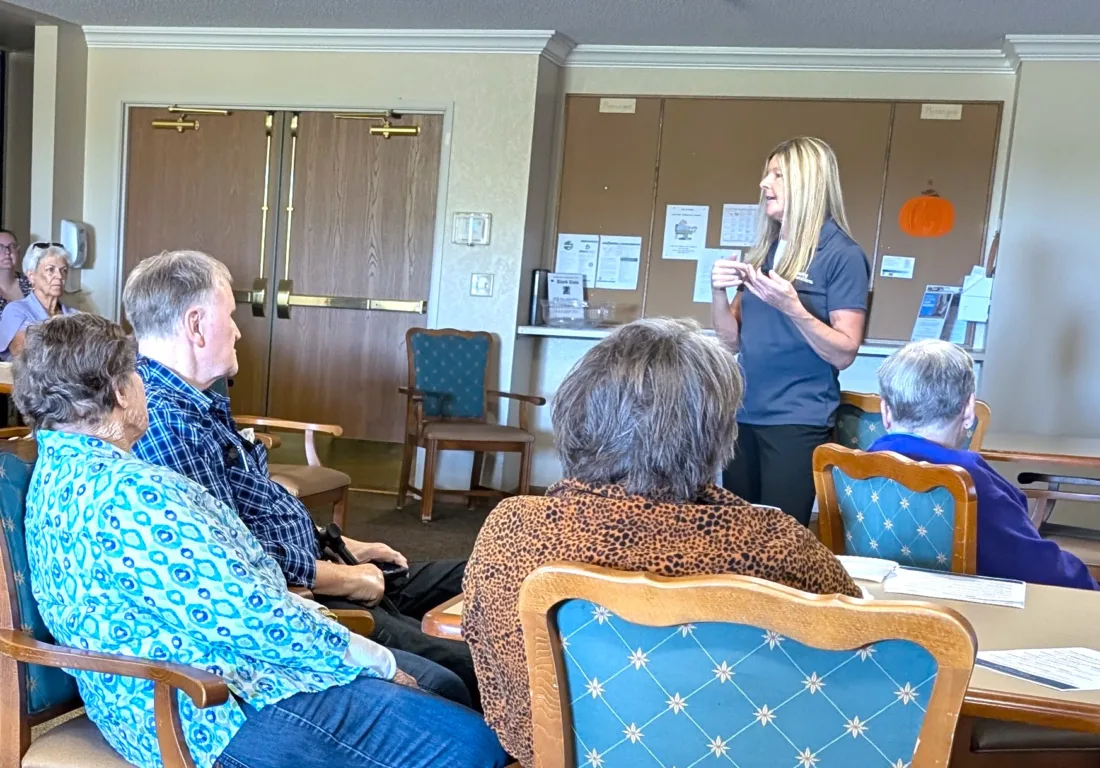
Jill Spence explains steps for decluttering before a move during a workshop Wednesday at Vista Prairie at Ridgeway, 23rd St. North. Photo by Amy Zents
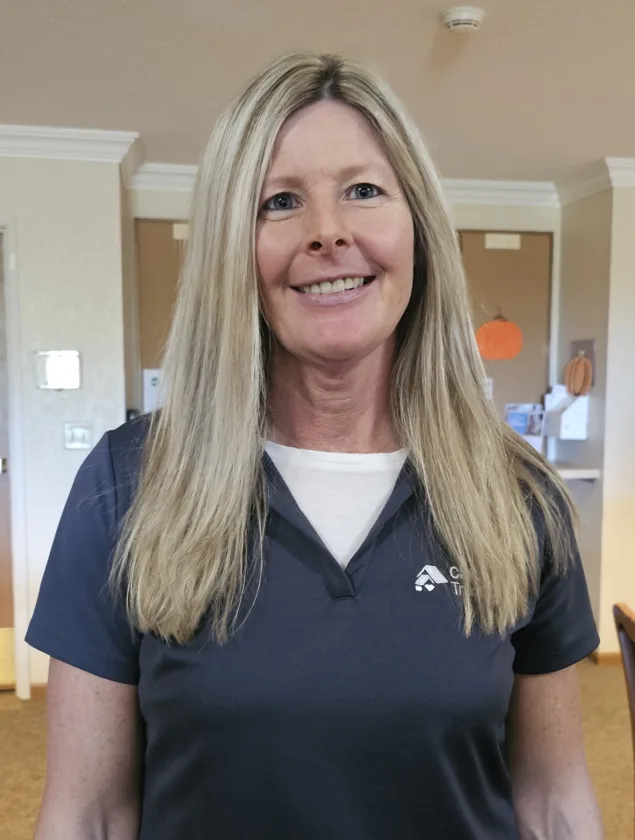
Jill Spence, business development representative for Caring Transitions of Mankato, Leading Choice Home Helpers and Fresh Look, speaks during a downsizing and decluttering workshop Wednesday at Vista Prairie at Ridgeway. Photo by Amy Zents
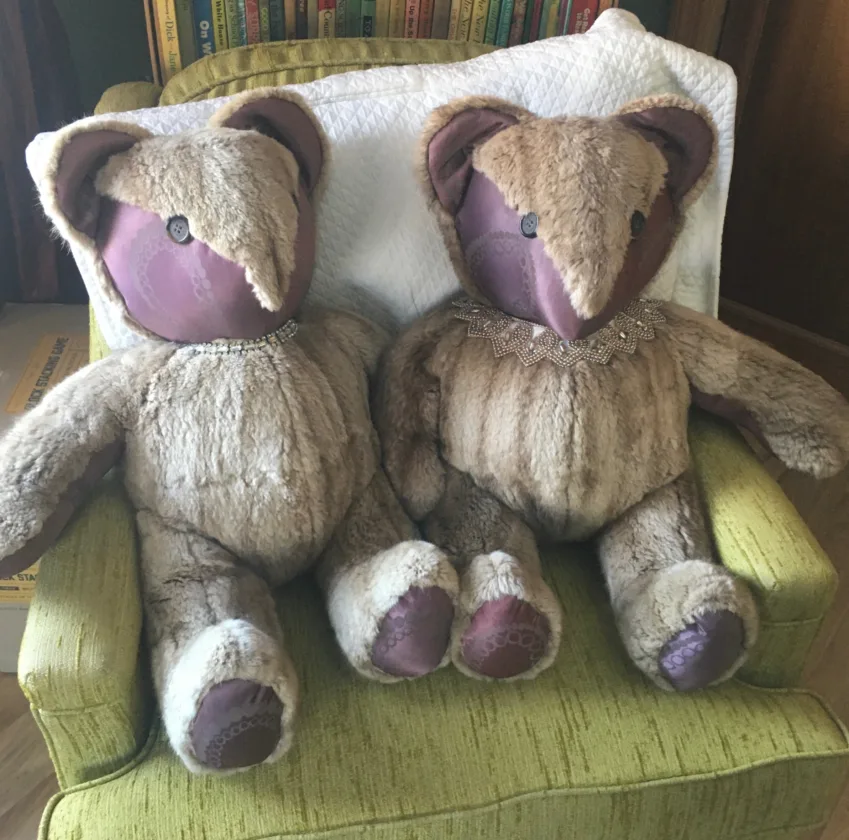
Mary Windschitl showed a photo of two keepsake bears named Mildred and Dolores she had made from her mother's muskrat coat. The bears are an example of repurposing cherished clothing into keepsakes, an idea discussed during the presentation. (Photo by Mary Windschitl)
Jill Spence explains steps for decluttering before a move during a workshop Wednesday at Vista Prairie at Ridgeway, 23rd St. North. Photo by Amy Zents
Jill Spence, business development representative for Caring Transitions of Mankato, Leading Choice Home Helpers and Fresh Look, speaks during a downsizing and decluttering workshop Wednesday at Vista Prairie at Ridgeway. Photo by Amy Zents
Mary Windschitl showed a photo of two keepsake bears named Mildred and Dolores she had made from her mother's muskrat coat. The bears are an example of repurposing cherished clothing into keepsakes, an idea discussed during the presentation. (Photo by Mary Windschitl)
Trending
NEW ULM -- Community members gathered Wednesday afternoon at Vista Prairie at Ridgeway on 23rd for a session focused entirely on decluttering, downsizing and preparing for future moves.
The presentation on household organization was led by Jill Spence, CEO of Fresh Look Cleaning Services and business development representative for Caring Transitions of Mankato and Leading Choice Home Helpers.
Spence shared her personal entry into the industry, explaining that after her mother fell ill at age 73 and spent 14 days in the hospital, she learned she could not return home.
Facing a sudden crisis without prior knowledge of moving companies or available support resources, Spence independently navigated rehab facilities and sorted a lifetime of belongings, saying that the difficult experience inspired her passion for helping others.
"I didn’t know moving companies. I didn’t know who would help," Spence said.
Spence said her primary objective is motivating people to clear out excess possessions before an unexpected crisis forces the issue. She said approximately 80% of adult children do not want most of their parents’ accumulated belongings.
Starting early provides individuals with greater decision-making control, reduced stress, and a safer living environment.
To keep the process manageable, Spence recommended starting small rather than tackling an entire house over a single weekend. She suggested setting a timer for five or 10 minutes to clear a single drawer, shelf, or closet, keeping four designated boxes for keeping, tossing, donating and selling.
Spence explained that residents can easily weave these habits into daily routines, saying that people can sort a small box of clothes or review a stack of papers while sitting down to watch television or waiting for coffee to brew.
She also recommended following a steady rule: whenever a single new item enters the home, another item should go out.
Spence outlined warning signs indicating when a home might be too difficult for a loved one to manage independently, such as blocked pathways, cluttered hallways, and increased tripping hazards.
She stressed that while she remains honest about safety concerns, she never passes judgment on clients.
Common clutter traps include junk drawers, mismatched socks and old charging cords left behind by children who moved out years ago.
Spence distributed practical guides, including a 30-day decluttering challenge and five-minute habits to help residents systematically tackle areas ranging from medicine cabinets and expired spices to unused smartphone apps and digital files.
For paper clutter, Spence said residents only need to retain crucial legal and financial documents, such as birth certificates, Social Security cards, passports, wills, trusts, property deeds, vehicle titles, insurance policies and tax records kept for seven years.
Monthly bank statements and utility bills can be discarded because financial institutions retain those records.
Spence warned against purchasing storage containers prematurely, emphasizing that organization should always follow sorting.
"Decide what stays, then organize," Spence said.
Closets require rigorous evaluation. Spence said a full wardrobe does not indicate items are actually worn. She suggested hanging clothes backward to track usage over three months, asking whether an item fits current lifestyles.
Handling sentimental items presents a major hurdle, prompting Spence to suggest taking digital photographs to preserve memories without physical bulk, or repurposing fabrics into tote bags, quilts, or custom memory bears.
She also said that while fine china and heavy china cabinets are difficult to sell because modern lifestyles have changed, grandchildren are increasingly interested in handmade items like vintage embroidery.
That advice resonated with local resident Mary Windschitl of Courtland.
Windschitl shared photos of two custom memory bears named Mildred and Dolores, which were crafted from her mother’s vintage muskrat coat.
Windschitl explained that her mother originally purchased the garment prior to her marriage, and her father required her to pay off the balance entirely beforehand.
She recounted researching the history online and discovering that muskrat coats were widely manufactured in the 1940s and provided exceptional warmth.
"It wasn’t mink. It was muskrat of all things. I looked it up online. A lot of coats were made out of muskrats in the forties, and they were warm. You do that for Minnesota (weather.)" Windschitl said.
She recalled a chilly winter evening wearing her mother’s muskrat coat.
“I wore it once to walk to my friend’s house, like six blocks away, and it didn’t even feel cold out. I mean, like it was below zero. And I’m like, oh, now I know how animals stay warm.” Windschitl said.
Spence outlined concrete regional resources, detailing how Caring Transitions manages major senior relocations, estate sales, online auctions with bidding starting at one dollar, and packing services that photograph bedroom layouts to recreate identical room arrangements on the first night in a new facility.
She highlighted sister companies Leading Choice Home Helpers and Fresh Look, based out of Sleepy Eye, which provide non-medical daily personal care, cleaning, and home cleanouts.
Additionally, she mentioned Heart to Home in New Ulm, which collects and stores gently used furniture in a warehouse to deliver directly to local individuals who have lost their homes in fires or disasters.
Spence closed her presentation, saying "mall wins create momentum. Once you start and see progress, that’s when you’re going to build the momentum."