
Arne Fogel’s lifetime in music
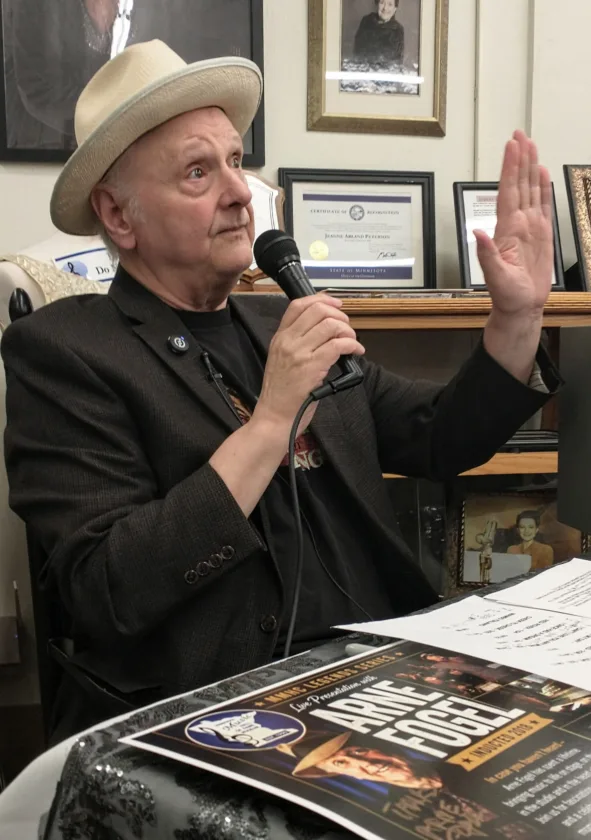
Arne Fogel, 77, gestures while speaking at the Minnesota Music Hall of Fame in New Ulm, Minn., on Saturday. Fogel is a 2018 hall of fame inductee. (Photo by Joel King)
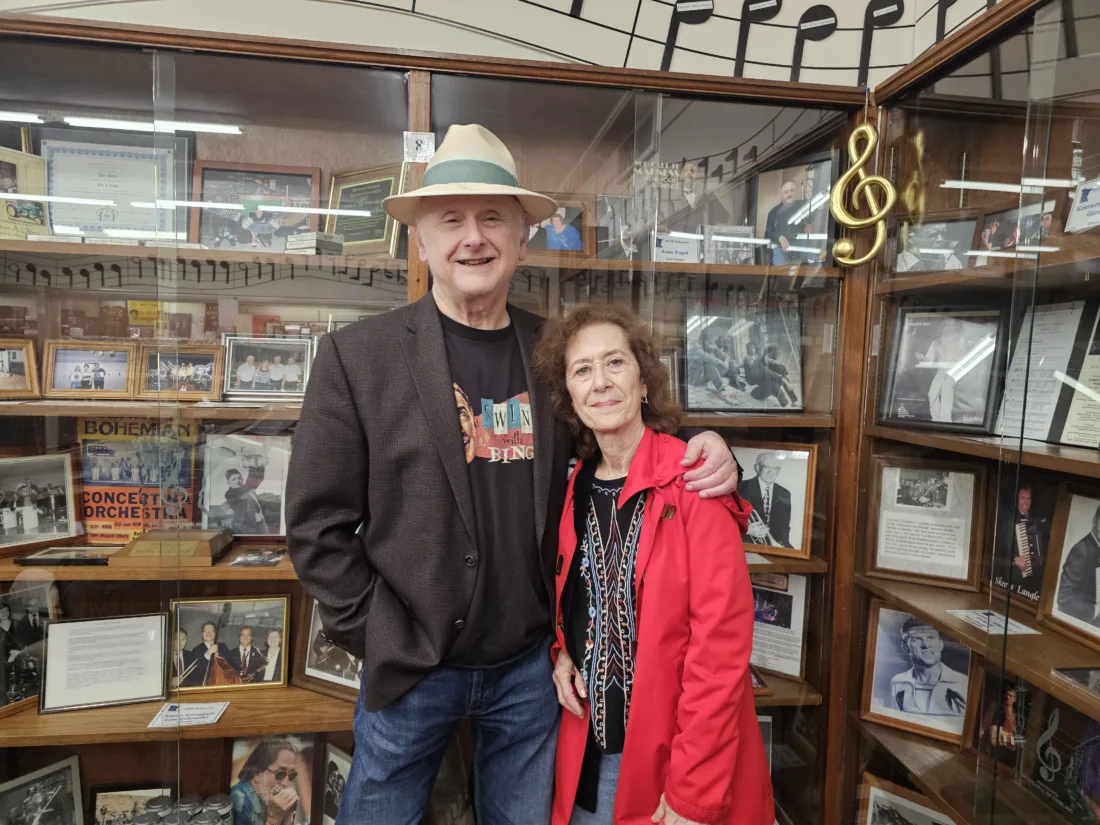
Arne Fogel and his wife, Lori Leder-Fogel, at the Minnesota Music Hall of Fame in New Ulm, Minn., on Saturday. (Amy Zents)
Arne Fogel, 77, gestures while speaking at the Minnesota Music Hall of Fame in New Ulm, Minn., on Saturday. Fogel is a 2018 hall of fame inductee. (Photo by Joel King)
Arne Fogel and his wife, Lori Leder-Fogel, at the Minnesota Music Hall of Fame in New Ulm, Minn., on Saturday. (Amy Zents)
Trending
NEW ULM -- To look back at a career in entertainment that spans more than five decades is a bit like watching a classic vaudeville act of spinning plates.
As Arne Fogel, a 2018 Minnesota Music Hall of Fame inductee, explained to a gathering at the Hall of Fame, his life in show business has always been a matter of balancing multiple creative passions at once.
“Sort of what I’ve led as a professional life is that I’ve been a person to watch all the plates go and couldn’t let go of any one of them because, unfortunately, I like them all,” Fogel, 77, told the audience. “There’s never been a time in my life when I said, ‘Well, now I get to just do radio or now I get to just sing…’ There’s always something that I like to do, so I've got to keep plates spinning at all times.”
Fogel took his seat behind a presentation table set up among the museum’s historic exhibits for a retrospective presentation honoring his contributions as a vocalist, radio broadcaster, jingle writer and commercial actor.
Introduced by hall representative Neal Bond as “one of the true Minnesota versatile artists,” the event offered local music lovers an intimate, up-close look at Fogel’s long career.
Speaking into a handheld microphone alongside his reference notes and a desktop stereo system, Fogel opened his talk with warm appreciation for the Hall and paid special tribute to his wife, Lori Leder-Fogel, who drove him to New Ulm for the showcase.
“I want to thank my extremely gorgeous wife, who literally got me here,” Fogel said. “I don’t want to travel long ways under my own steam, and she volunteered to drive me. So thank you for everything.”
Reflecting on how his unique artistic sensibility developed, Fogel traced his early artistic roots to a textbook left behind by an uncle. Inside the literature book were illustrations, traditionally referred to as “plates,” that captured his young imagination.
“Plate one in this book of American Literature pictured Charlie Chaplin and Mickey Mouse,” Fogel recalled. “And I got it in my head from a very early age the notion that American popular literature is worthy of study, no matter how popular or childish or in the movies, is serious study. And that’s kind of what I’ve devoted my life to ever since.”
Though he initially planned to become a cartoonist, Fogel pivoted toward performing in his early teens.
“I got lazy, and I discovered that I didn’t like to draw backgrounds because of too much work,” he said with a laugh.
Shortly after, watching archival television footage of Fanny Brice singing Fats Waller’s “I’ve Got a Feeling I’m Falling” on the Ziegfeld roof sealed his career path.
“It was like watching the embodiment of a ghost. I felt spiritually drawn to the figure of that woman at that time and it opened a huge door to me, to that spiritual feeling of something that’s old, old film, old music, old records.”
At age 13, attending the movie “The Road to Hong Kong” starring Bing Crosby and Bob Hope sparked a lifelong fascination with Crosby.
“I was hooked,” Fogel said. “I went out, first of all, I bought a copy of the soundtrack to that film. I sold off comic books and I got enough money to buy a mono album.”
Soon after, Fogel caught the record-collecting bug for life:
“I thought to myself, ‘Yeah, that’s what I am. I’m a Crosby collector.’ I thought that was kind of neat.”
During his teenage years, Fogel sang in several local garage bands, including The Griffins, Holes in the Road and The Nashville Cats. By the late 1960s, he walked into Minneapolis’ famed Dove Recording Studios.
“Back in those days, recording studios were like movie studios, they were glamorous,” Fogel said.
He and songwriting partner Steve Longman raised $420 to record their first professional studio track, leading Fogel to connect with local music legends like Dale Menten, Barry Goldberg, Gary Holik and Pete Stanger.
Recalling his very first paid singing job as a harmony vocalist for Eric Martin and The Chimes, Fogel fondly remembered producer Pete Stanger handing him his payment:
“He handed me a five-dollar bill. That was my pay. Boy, was I honored. I was really happy to get that five bucks because that was the first five dollars I actually earned from singing.”
Shortly after, Fogel joined the local bubblegum pop group The Puddle, recording the regional hit “Red Rover.”
“I happened to be hitchhiking that day when I first heard it on the radio,” Fogel said. “I was so excited that I lost it, and I started proclaiming my presence on this record.”
By 1969, Fogel became an integral member of the pop band Batch, originally Pretty Blue Batch, where he transitioned into playing keyboards and arranging three-part harmonies.
Simultaneously, Fogel became a mainstay of the regional commercial jingle scene alongside Dale Menten.
During one studio session, Fogel cut a humorous promotional track titled “Sven Ivan O’Myron Wisnewski” for Northeast State Bank.
“What a pathetic little story. That’s the closest thing to a hit record I ever had in my whole life,” Fogel joked.
The quirky track became a jukebox staple at Mayslack’s in northeast Minneapolis for 20 years and eventually earned Fogel a feature segment on “Entertainment Tonight.”
Fogel’s love for vintage music naturally transitioned into a career in radio broadcasting.
After earning his FCC third-class license, he began hosting shows at KUXL in Golden Valley, eventually creating “The Nostalgia Discography.”
Fogel later produced “Bing’s Basement,” built upon days of archival research conducted at the California home of Bing Crosby alongside film curator Bob DeForest.
Over the years, his broadcasting presence expanded to WWTC, KTWN, Minnesota Public Radio and KBEM.
His career grew to include writing and performing ad agency commercials, acting on-camera in local television spots, such as a memorable Knox Lumber campaign produced by James Productions and performing on Target’s popular “Lifescapes Italian Dinner” album series alongside musicians Chan Poling, Dean Magraw and Peter Ostroushko.
In the 1980s, Fogel performed as part of the vocal trio Lieberman, Fogel & Bey on Garrison Keillor’s “A Prairie Home Companion,” and in 2001, he had the distinct honor of opening for legendary vocalist Rosemary Clooney.
During the event, Fogel showcased his retrospective CD compiling 50 years of unreleased archival recordings, regional commercial tracks and original jazz compositions, including performances alongside his daughter, vocalist Rebecca Fogel, who regularly shares the stage with him at Twin Cities venues like Crooners Supper Club.
Reflecting on his journey while looking back over decades of music, Fogel shared his enduring gratitude with the New Ulm audience:
“I never stop thinking about what I wanted to do when I was in high school, and that I actually got to do it. It’s amazing, a miracle, and I never take it for granted ever, ever.”