
The rural STEM school revolution begins at River Bend
School receives new robotics equipment through MSU partnership
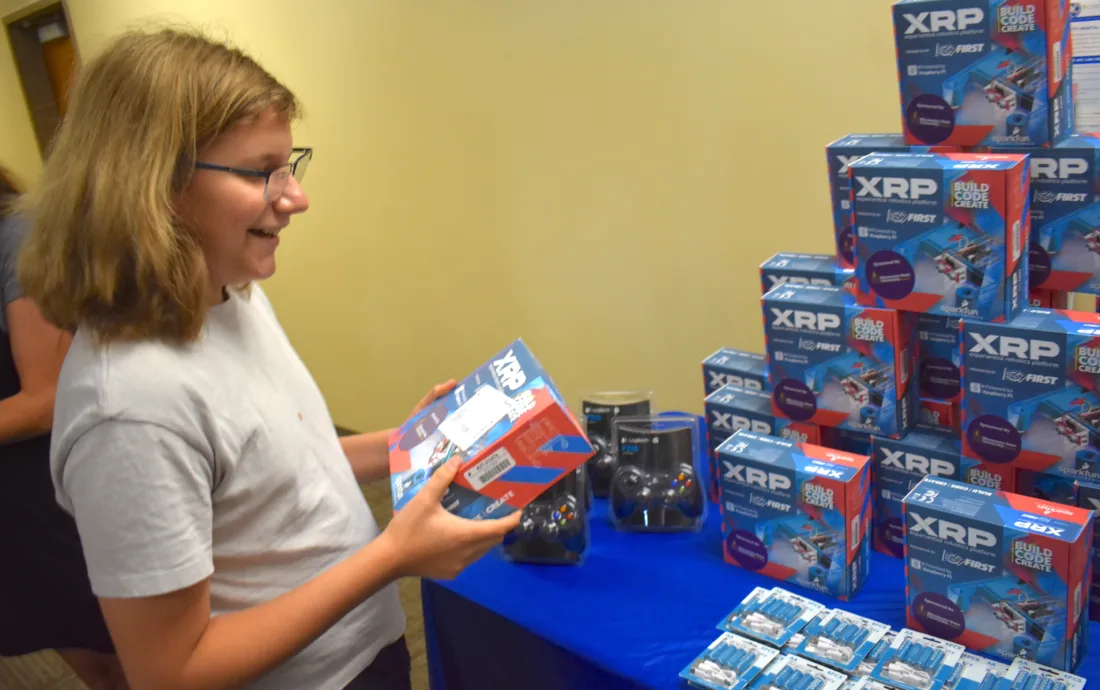
River Bend Education District 9th grader Natalie Haney eagerly examines the new robotic equipment unveiled at the school, Wednesday. Photo by Clay Schuldt
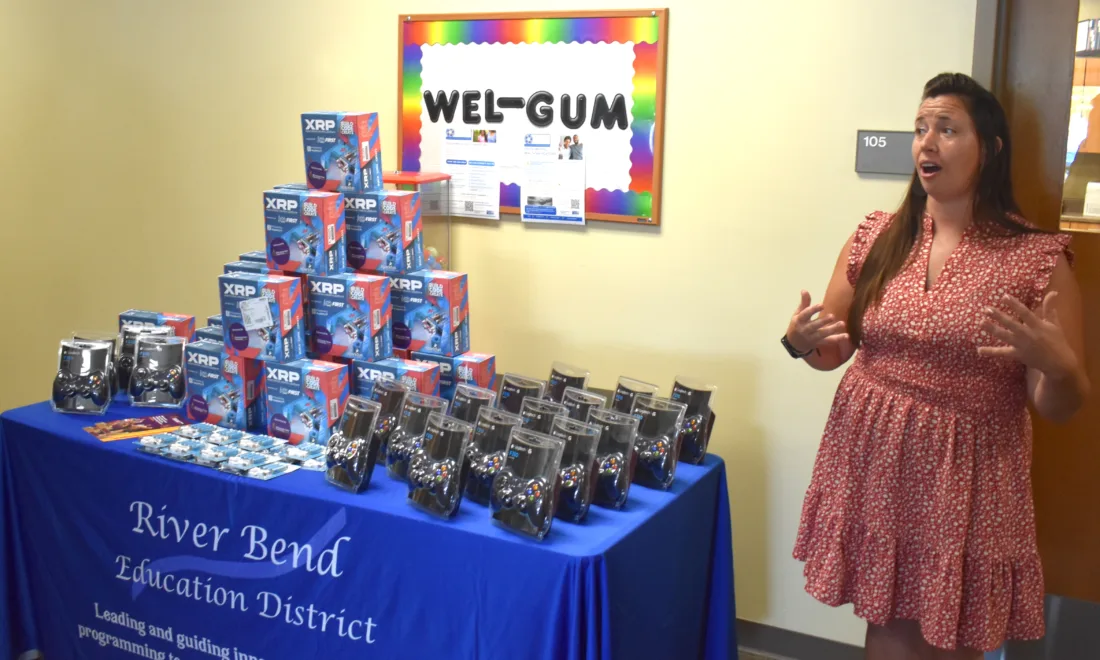
River Bend teacher Jennifer Isaac discusses the different opportunities for the new robotic STEM equipment the school received Wednesday. River Bend received the equipment through its partnership with Minnesota State University (MSU) Mankato. Photo by Clay Schuldt
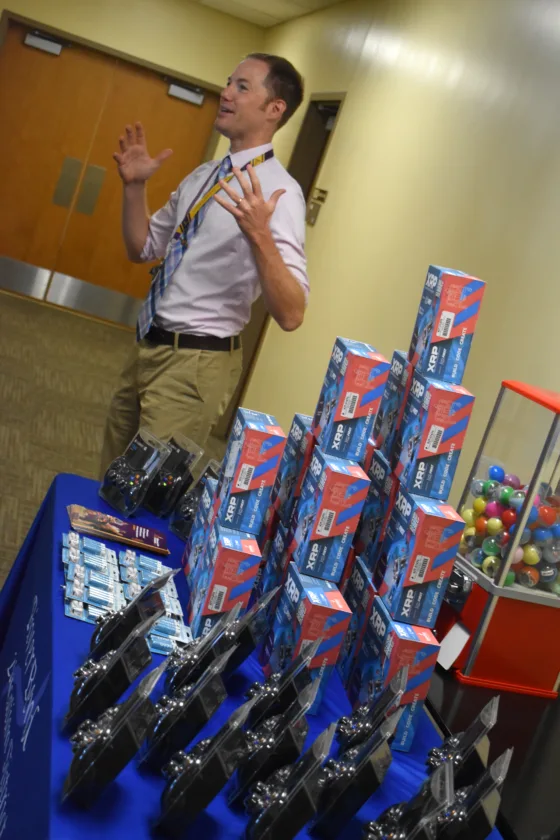
MSU vice president of Student & Industry Success, Travis Thul discusses his goal of using the Minnesota’s Rural Experiential STEM Education Partnership Initiative (RESEPI) program to improve rural access to STEM education. Photo by Clay Schuldt
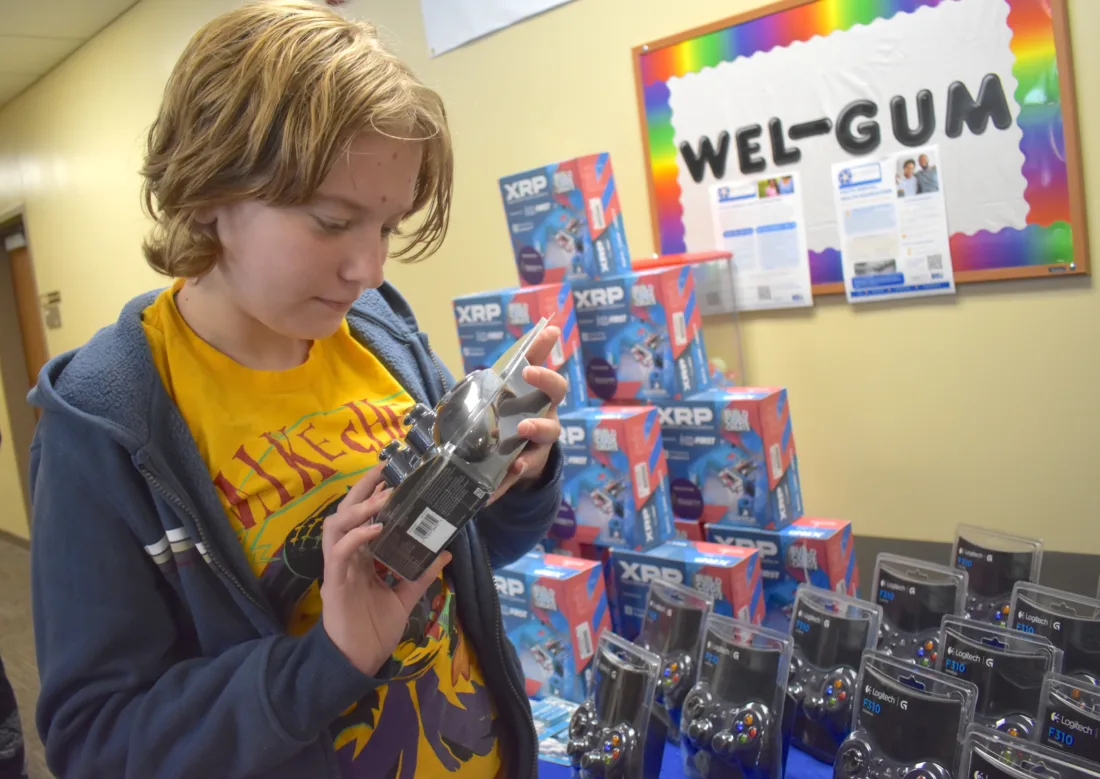
River Bend student Elyses Lentz looks over the school’s new robotic STEM equipment, provided through MSU’s RESEPI program. Lentz said she does not yet know a lot about robotics or computer science, but said it is exciting to have new equipment. Photo by Clay Schuldt
River Bend Education District 9th grader Natalie Haney eagerly examines the new robotic equipment unveiled at the school, Wednesday. Photo by Clay Schuldt
River Bend teacher Jennifer Isaac discusses the different opportunities for the new robotic STEM equipment the school received Wednesday. River Bend received the equipment through its partnership with Minnesota State University (MSU) Mankato. Photo by Clay Schuldt
MSU vice president of Student & Industry Success, Travis Thul discusses his goal of using the Minnesota’s Rural Experiential STEM Education Partnership Initiative (RESEPI) program to improve rural access to STEM education. Photo by Clay Schuldt
River Bend student Elyses Lentz looks over the school’s new robotic STEM equipment, provided through MSU’s RESEPI program. Lentz said she does not yet know a lot about robotics or computer science, but said it is exciting to have new equipment. Photo by Clay Schuldt
Trending
NEW ULM - River Bend Education District 9th grade student Natalie Haney sat on the floor to the school building Wednesday, carefully reading the technical information on the box containing new robotic technology.
The robotics technology was given to River Bend as part of a new program spearheaded by Minnesota State University (MSU) Mankato to revitalize STEM education in rural Minnesota.
MSU vice president of Student & Industry Success, Travis Thul, said this donation of equipment to River Bend was part of a goal to dramatically increase STEM access across rural Minnesota.
The new program is called Minnesota's Rural Experiential STEM Education Partnership Initiative (RESEPI). The program began last year with three Minnesota schools. This year it was expanded to 12 rural Minnesota schools, including River Bend.
Thul said that nationwide, only about 10% of schools have access to robotic STEM education and currently Minnesota ranks last in computer science education.
Thul believes it is unacceptable for Minnesota to be last in any type of education and believes the best way to turn the state around was to focus on the rural areas.
"Rural schools and alternative learning centers like River Bend are some of the least likely places to get resources from the state," he said. "The allocation of resources is not equitable in Minnesota. The rural areas are often the last to get resources, if at all. That's why RESEPI is focusing on rural areas."
River Bend teacher Jennifer Isaac will be teaching the new robotic STEM course. As part of the RESEPI program, she participated in a two-week training course at MSU during the summer. The course was designed to teach the teachers how to use the new robotics equipment in the classroom. After completing the training course, Isaac said the Experiential Robotics Platform (XRP) was shipped to the River Bend school for use the class.
The XRP equipment is an open source robotic programing equipment. The school received 20 XRP units. Each one of the units can be used by up to three students at a time, allowing 60 students to take the robotics class each semester.
"The students are so excited about this," Isaac said. "Many of them already know about robotics; they know the terminology, but they are excited they will have access to the technology at school."
The equipment officially arrived Wednesday for a special unveiling and unboxing ceremony. Several of the River Bend students were able to examine the equipment.
Haney was one of the most interested in the equipment.
"I like it a lot," she said as she pored over the XRP specifications listed on the packaging. "I already know how a lot of this works. I've built robots before. I understand the components."
Haney said she already had sketches in a notebook for what type of robot she wants to build, but she might modify it based on the components available with XRP equipment.
Isaac said this is the reason for the partnership.
"We want to allow our students to see what they can do with robotics," she said. "It could be a pathway into a career in robotics."
Thul said the RESEPI program is a benefit to the school district, but there is also potential benefit to corporations who want to hire people with a STEM background. For that reason, much of the program was sponsored by corporate donors.
One of the larger donors was DigiKey, an electronics components distributor based out of Thief River Falls. Thul said DigiKey helped run the teacher training course at MSU over the summer.
Thul said he is continuing to look for corporate sponsors to help further expand RESEPI. The more sponsors, the more schools can be brought on to the robotics program.
"With community support, we could bring Minnesota from last in science to the top," Thul said.
Another part of this program is the student teacher partnerships available through MSU.
MSU will continue to offer support for River Bend as they grow their STEM program. This could include providing additional three-dimensionally printed robotics components, but also through the deployment of student teachers.
MSU College of Education Dean Mwarumba Mwavita said school districts that partner with MSU on RESEPI will have the support of their student teachers.
"The Idea is to create a pipeline of STEM teachers to rural communities," Mwavita said.
He explained that nationwide there was a shortage of science teachers, especially in rural communities. Through the RESEPI program, they are hoping to bring science undergrads into more rural communities.
It was also emphasized that this program came at no cost to River Bend.
Isaac said the teacher training course and the equipment were provided free of charge. The only requirement was that the school needed to be invested in starting a robotic program.
Isaac said the program was an easy sell for her. She could see students were excited about using technology they previously could not access.
Isaac is also optimistic that this STEM equipment could allow River Bend to some day compete in robotics tournaments with other schools.
"River Bend has no basketball team," she said. "But this robotics program could be our team. This could be our way of showing the community what we are capable of."