
MN Music Hall of Fame shares the origin story of First Avenue
Trending
NEW ULM -- Last Saturday, the Minnesota Music Hall of Fame hosted a virtual presentation tracing the early history of First Avenue, from its 1970 launch as the Depot to its rise as a world-famous landmark.
Historian Jeanne Andersen scripted and narrated "From the Depot to First Avenue."
Andersen, who maintains the Twin Cities Music Highlights archive, could not attend in person due to health issues.
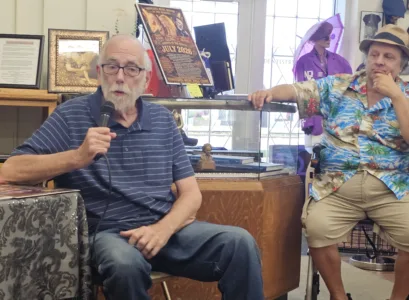
Hall of Fame board member Neal Bond organized the event, introduced the program, produced the video, and led the discussion.
"This is a virtual presentation," Bond told the audience. "This is the first one that we've had virtually, so you guys have experienced a first."
Andersen's research documents Twin Cities music history, focusing on the mid-to-late 1960s scene.
Her presentation used newspaper clippings, old advertisements, interviews, and archival photos to reconstruct the club's short but influential initial run.
The venue opened in 1936 as the Minneapolis Greyhound Bus Depot, serving thousands of travelers over several decades. By the late 1960s, the aging terminal was outdated.
Four visionaries Danny Stevens, Alan Fingerhut, Sharon Fingerhut, and Abby Rosenthal formed “The Committee” to transform the structure into a rock venue.
"Fortunately, four visionaries looked at that aging bus station and imagined something no one else could see," Andersen said.
Crews worked around the clock, with workers still hammering, painting, and laying carpet when the doors opened.
Opening weekend was April 3-4, 1970, headlined by Joe Cocker and the Mad Dogs and Englishmen tour. Over 2,300 fans packed the space, lines wrapped around the block, and the club briefly ran out of alcohol.
Andersen shared a favorite opening-night memory: Alan Fingerhut ordered nearly 2,000 carnations to decorate the space. Audience members began tossing them onto the stage, and Cocker's band threw them back, sparking a massive flower fight.
"More than fifty years later, people I interviewed still remembered that wonderful moment," Andersen said.
She also identified the very first band on the Depot stage. While initial press reported an extremely loud opening act, Andersen's research revealed it was a teenage trio from St. Louis Park named Bear, Beaver & Peacock.
"They may not have become household names, but they'll always have a special place in Minnesota music history as the first band to open one of America's most famous music venues," she said.
Over the following months, the Depot hosted prominent national acts, including the Butterfield Blues Band, Poco, the Kinks, Jethro Tull, Alice Cooper, B.B. King, Ramsey Lewis, Mitch Ryder, the Isley Brothers, Frank Zappa and the Mothers of Invention, and the Flying Burrito Brothers. Featured local talent included Danny's Reasons, Crockett, Grizzly, Willie Murphy, Thundertree, White Lightning, and The Litter.
“Some of the greatest chapters in music history begin with someone willing to dream a little bigger than everyone else,” Andersen said.
Despite high-profile bookings, financial strain mounted. By spring 1971, management experimented with amateur nights, nostalgia themes, and free weekend admission.
It was not enough. On June 14, 1971, the Depot held its final night as a house band played late into the evening for a dancing crowd that refused to leave.
Generosity in the face of the venue’s financial crisis was rare and impactful. Andersen said that Johnny Winter’s manager voluntarily returned part of the band’s payment so the venue could afford to open the following Monday, an act almost unheard of in the concert business.
Although the original Depot lasted only 14 months, its footprint endured. In 1972, the venue reopened as Uncle Sam's, shortened to Sam's in 1980, and officially became First Avenue on Jan. 1, 1982.
A few years later, Prince filmed scenes for Purple Rain at the club, bringing it global prominence.
"Music lovers from around the world visit this famous corner of downtown Minneapolis because of Prince and the movie Purple Rain," Andersen said. "Thousands stop every year to photograph the famous wall of stars. But long before Prince made First Avenue famous around the world, this building had already become one of the most important landmarks in Minnesota music history. Prince didn't create First Avenue. He helped introduce it to the world."
Steve Barich, who helped install the sound and lighting systems in late 1969 and early 1970, shared his memories during the event.
He recalled a call from a friend at Chicago's Electric Theater Company asking if Golden Valley was far from Minneapolis.
"That's funny to us because it's 20 minutes," Barich laughed. "But in Chicago, it takes you two hours."
Barich agreed to help while keeping his duties at Dania Hall on the West Bank. Both Steve and his brother Mike appear in the Mad Dogs and Englishmen concert film.
Reflecting on opening night, Barich recalled, "It would have been a pickpockets' paradise because nobody was paying attention to anything. But the show, it was unbelievable."
John Kass, a longtime volunteer and former downtown Minneapolis record store owner, shared memories of the venue’s disco era, including watching Bo Diddley perform while the multi-colored floor flashed.
Kass also recalled the indoor back garage where musicians parked between sets.
"If you were really, really cool, you could park your car in that garage," Kass said, noting it was a spot where people would get into all kinds of shenanigans between sets.
The presentation included a performance of the song "The Ghost of First Avenue" by the Ghostly Prairie Dogs, referencing long-running stories of unexplained activity in the building.
Upcoming presentations feature live blues from Don Scott; Castaways songwriter Jim Donna discussing "Liar, Liar"; soul singer Wanda Davis; a Texas Bill Strength tribute; and a Labor Day weekend appearance by Jeff Dayton, former musical director for Glen Campbell.
"I said, Jeff, we want you to come down for a meet and greet. He says, Neil if I am coming, I'm playing," Bond said. "So yeah, you're going to hear a concert for that one too."
A $30 annual membership to the Minnesota Music Hall of Fame includes admission to all year-round presentations plus a signed poster.
Andersen invited attendees to explore more history on her website, TwinCitiesMusicHighlights.net.
Membership details and presentation schedules are available through the Hall and Neal Bond's Minnesota Music History Channel.
The Minnesota Music Hall of Fame is located at 27 N. Broadway in New Ulm and is open seasonally from April 1 through October 31.