
‘Good day’ to look at birds
Cardinals seen in Flandrau State Park
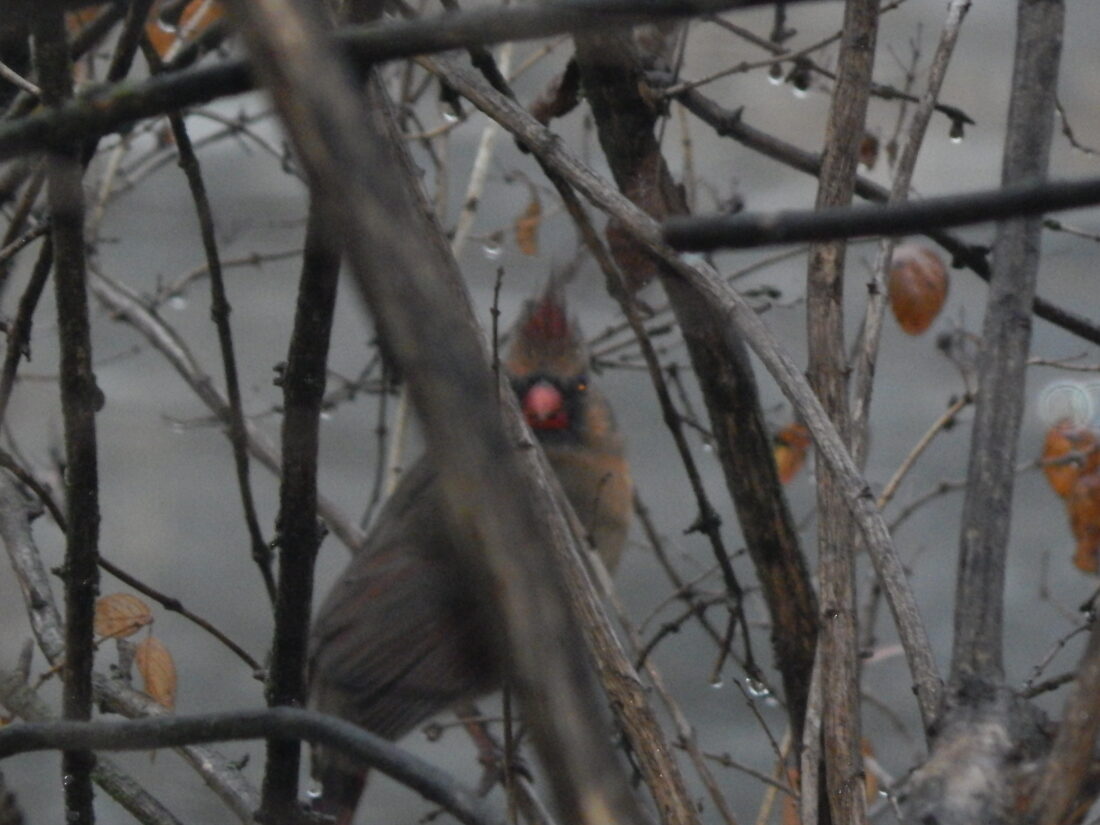
Staff photo by Fritz Busch New Ulm Christmas bird counters Duane Hansel and John Olson found cardinals including this one in brush at Flandrau State Park Saturday. Bird count results will be published later.
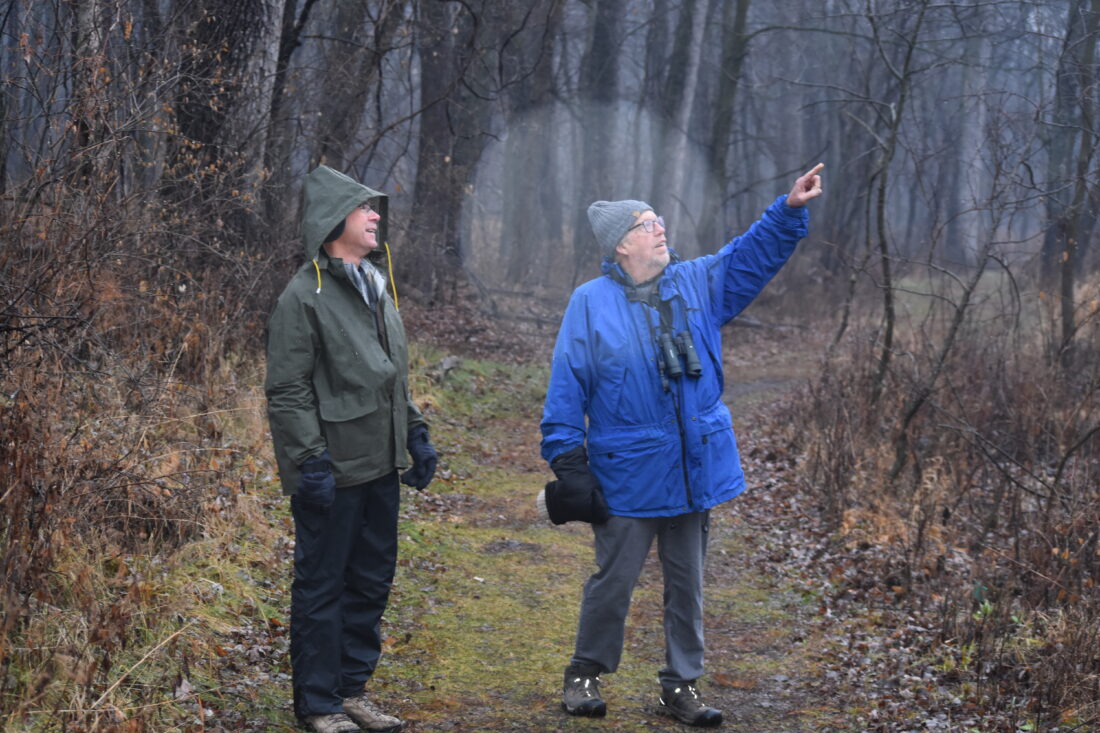
Staff photo by Fritz Busch New Ulm Christmas bird counters Duane Hansel, left, of New Ulm and John Olson of Courtland search for birds on the Oxbow trail at Flandrau State Park Saturday. The men found a pair of cardinals early in their walk.
Staff photo by Fritz Busch New Ulm Christmas bird counters Duane Hansel and John Olson found cardinals including this one in brush at Flandrau State Park Saturday. Bird count results will be published later.
Staff photo by Fritz Busch New Ulm Christmas bird counters Duane Hansel, left, of New Ulm and John Olson of Courtland search for birds on the Oxbow trail at Flandrau State Park Saturday. The men found a pair of cardinals early in their walk.
Trending
NEW ULM -- More than a dozen individuals participated in the New Ulm Christmas bird count in and around New Ulm Saturday.
Weather conditions were more mild than usual with light rain and clouds, which made bird counting a bit more of a challenge because birds were a little tougher to see than they may be when there is snow or bright sunshine.
Bird counters gathered at the Hy-Vee Food Store restaurant prior to venturing out to their pre-determined bird counting coverage area.
New Ulm Christmas bird count compiler Brian Smith of Sleepy Eye and other bird counters talked about why the count is important.
"A study a couple years ago reported that the world's bird population is declining," said Smith.
"I've been birding more than 50 years. Bird populations are significantly less than they were 20 to 30 years ago," said Bob Beck of New Ulm.
"I used to see a lot of birds coming through. Now, it's sporadic. Habitat loss is probably a big reason birds are not reproducing as much. Chemicals like insecticides in particular, kill a lot of the insects that are food for birds," added Beck.
"Any day is a good day to get out and look at birds. Sometimes, the weather creates limitations," he added.
"If there was snow, birds would be on roads more often, looking for food," said Smith.
Bird count routes included the Minnesota and Cottonwood River Valleys, along the New Ulm bike trail, KC and Shag Roads. Other counters watched their bird feeders and kept track of what they saw.
"Keeping track of birds is a national event. We're fortunate to have a number of retired Minnesota Department of Natural Resources (DNR) employees and retired Martin Luther College science teachers," added Smith.
Bird counters have recorded up to 158 species sightings in the New Ulm area.
Beck said he saw and heard kingfishers in Flandrau State Park a few days ago, sightings that he considered rare.
The Audubon society and other organizations use data collected in long-running wildlife census to assess the health of bird populations, and to help guide conservation action.
Data collected by observers over the past century allow Audubon researchers, conservation biologists, wildlife agencies, and other interested individuals to study the long-term health and status of bird populations across North America.
When combined with the North American Breeding Bird Survey, which helps fuel a $75 billion wildlife watching industry, it provides a picture of how the continent's bird populations have changed in time and space.
The long-term perspective is vital for conservationists. It helps create strategy to protect birds and their habitat, and helps identify environmental issues with human implications.
Of the 588 bird species studies in the Audubon's 2014 Climate Change Report, more than half were determined to be in trouble.
For more information, visit www.audubon.org.