
Mixed votes on building variances
Trending
NEW ULM-- The City Council approved one variance and denied two others for a property on North Valley in mixed votes Tuesday.
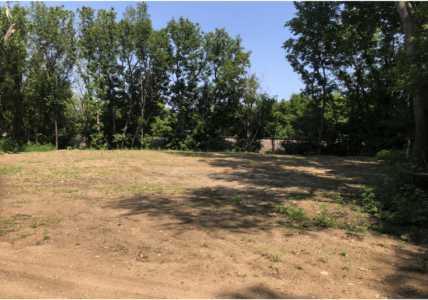
The council heard a request from Fred and Laura Bianchi, who wish to build a storage building at 1106 North Valley Street. To do this, the Bianchi's requested to reduce the front yard setback to 0 feet, increase the size allowed for an accessory building to 1,200 square feet, and increase the maximum height of a detached accessory building to 23 feet.
The Planning Commission previously recommended the front yard setback but denied increasing the size allowed and maximum height due to the requests failing to meet their ten criteria.
Dave Christian started by stating he believed none of the variances should be approved.
"It appears to me like somebody’s just looking [to say] 'I want a high building,'" he said . "High doors to store my big camper or whatnot. Even though it’s by the railroad track, it’s in a residential neighborhood. There’s houses right across the street and a next door neighbor across the block. They can see it. We shouldn’t be putting up 23 foot high steel storage buildings. I mean take it down to South Valley if that’s where you want to do it."
Fred Bianchi then stepped up to the podium and defended his requested variances.
"It was mentioned in the [Planning Commission] meeting that we’ve allowed variances for bigger garages square footage wise and for height," he said. "Two blocks to the south there’s a shed there and it’s well over 16 feet. I don’t know how high but I guarantee it's over 16. You guys do make variances for people."
Christian then clarified the building mentioned was built before the 16 foot rule was put in place, as were most similar buildings.
Councilman Eric Warmka spoke up in defense of Bianchi's variances, believing the property isn't suited for much else.
"I would be in favor of this instead of it being a nightmare unused chunk of land," he said. "[This would be] something usable. The height is what gets me if there’s neighbors opposed. I got out of my truck and looked around and it is hard to see anything in that area. Five months of winter coverage to have to look at a beige shed probably isn’t the worst thing."
Councilman Larry Mack then shared his belief on the variances as the council's representative on the Planning Commission.
"I would be fine with the zero yard front," he said. "The motion was for 1,200 feet. I felt it wasn’t out of line because we’ve already granted two [similar] variances and it’s a challenging property that’s never going to be developed as a residential."
City Attorney Robert Scott was then invited to speak on the matter. He reminded City Council what their responsibilities were, given the Planning Commission had already ruled on the variances based on their criteria.
"When you’re considering a variance application as a city council, you’re acting in your quasi judicial capacity," Scott said. "Your job isn’t to figure out whether this idea is a good idea or if the zoning regulations ought to be different. Your job is to apply the criteria in your ordinance that would allow someone to get a variance or not. The findings of fact support granting the variance from the front lot setback requirement and they dictate the [other] two variance requests for the building size and height variances be denied."
After Scott spoke, the council decided to vote on each variance separately. The council voted to accept the front yard variance with Christian voting no. The size allowance variance was motioned to be denied and passed with Warmka and Mack voting no. The council voted to deny the height increase unanimously.