
Skating Club offers adaptive skating program for kids with disabilities
Trending
NEW ULM -- Figure skating is a challenging and rewarding sport and now thanks to the effort of the New Ulm Figure Skating Club, more students are getting a chance to skate.
This fall, New Ulm Figure Skating Club (NUFSC) launch an adaptive skating program. The program allows kids with physical disabilities, cognitive disabilities, or visual impairments to learn figure skating.
In Minnesota, sporting activities can be limited for individuals with disabilities. Often special equipment or special training is needed that might not be available. Recently, NUFSC decided an inclusive approach to skating was needed in the community. The goal was to create a place on the ice for all ages and abilities. The response has been positive.
Rachel Hoffmann, a registered nurse and NUFSC vice president, and Kara Beranek, who has a doctorate in physical therapy, agreed to help start the program and take charge of organizing it.
One of the first obstacles in starting the adaptive skating program was funding. Adaptive Skating requires extra equipment expenses. Often one of the greatest obstacles to teaching skating is helping students to balance on the ice. Those with disabilities may require extra equipment to assist them in the beginning.
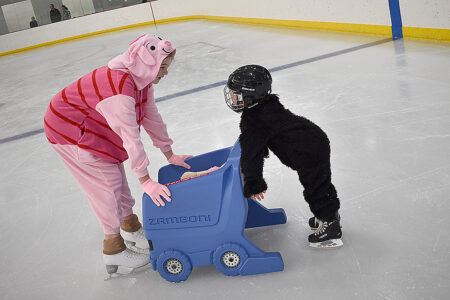
Beranek said there are a variety of walkers and sling devices to help with balance. There is even a Zamboni-style walker for the youngest skaters.
Carolyn Borgen, another club member, helped by applying for grants. These grants help purchase additional equipment for adaptive skating, but the funds also help cover the cost of the program.
Borgen felt it was important to expand this offering to the New Ulm community. Earlier in the year she had visited Winona 1Aand seen sled hockey, a sport created for those with physical disabilities to compete in hockey. She believed New Ulm figure skating could do something similar.
Adaptive skating is a relatively new concept in figure skating. Few skating organizations are offering programs like it. NUFSC is the only group in the region that offers it, which makes it very popular.
Hoffmann said the sign-up for the new program was immediately strong. To start, NUFSC limited the program to eight skaters across a four-week session. This was to ensure each skater received one-on-one support from coaches.
Two of these sessions have been offered, with all slots filled. Sixteen area skaters have taken part in the program already, with more expected to join during the spring sessions.
The high turnout demonstrates there was a need for this type of program.
Parents and skaters have been supportive of the program. For many kids with disabilities, this was the first chance they had to complete.
For Colten Bailey, this was one of their first chance to skate. Bailey wants to play hockey like his siblings, but first, he needs to learn to balance on the ice.
Adaptive skating equipment includes balancing-style walkers. Colten uses a unique Zamboni-style device for balance, and it is helping.
Within a few weeks, his balance has already improved significantly. He can stand on the ice with greater confidence. The goal is to eventually skate without the need for a walker.
The adaptive skating lessons are held on Saturday mornings when most club members are available to assist. Fellow figure skaters, coaches and parents can help get the skaters fitted for skates and other appropriate equipment, but their participation brings the full backing of the NUFSC to the program.
The adaptive skating program is something the entire NUFSC is proud to call its own. For many, it has been a pleasure to see new skaters take part in something that, until recently, would have been impossible for them to try.