
NU man’s royal roots continue to grow
Trending
NEW ULM -- A New Ulm man who began tracing his roots decades ago at the request of his mother, found some intriguing details in his ancestry, some of which took years to develop.
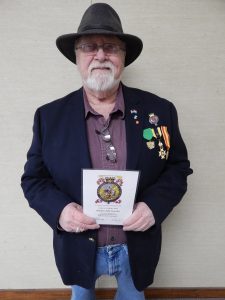
Stephen Vescelus received documentation dated July 1, 2009, from The Friends of St. George's Chapel, Windsor Castle, that he was descended from Sir Hugh Courtenay, Founder Night of the Garter Number 12, an order of chivalry founded by King Edward III of England in 1348.
"It took quite a bit of verification. I received the invitation about 10 years ago but decided to wait. Then I thought, well it's about time. I filled out an application, sent it in and they verified it," Vescelus said. "I visited public libraries in New Ulm and Mankato. I used verification from different sources and sent in a brief lineage chart to Windsor Castle."
The original castle was built in the 11th century. It has been used by the reigning monarch and is the largest inhabited castle in the world, the longest-occupied palace in Europe, and remains a functioning royal home.
Inside the castle is the 15th-century St. George's Chapel, considered by historian John Martin Robinson as "one of the supreme achievements of English Perpendicular Gothic design.
Vescelus received a 10-year Windsor Castle College of St. George membership card and membership certification document dated Jan. 17, 2022.
"I haven't been to Windsor Castle, but I'd like to," he added. "I can stay at the castle for a nominal fee."
Vescelus said his mother started working on a family tree in her later years and asked him to finish it before she died in 1985, according a story written by Serra Muscatello in the Dec. 10, 2006, edition of The Journal.
His New Ulm ties began decades ago, flying home to Illinois from San Francisco after his U.S. Navy discharge.
On the plane, Vescelus met Kaydra "Kay" Helling, who's family lived on a farm near Hanska. Helling was flying home after visiting relatives in California. The couple dated for about a year and a half. Helling lived in Mankato in 1967 when the couple parted.
"I recorded her music. She sang popular and old songs people requested. She was very good at it with a nice soprano voice," Vescelus said. "I nominated her for the Minnesota Music Hall of Fame."
Helling said she began singing as a young child with family members in church.
"My mother played piano by ear," Helling said. "My mother told me to play a song on piano. I played the same song but in a different key. They soon started me on piano lessons."
Helling played piano and sang at supper clubs including the Tropicana near New Ulm and at Michael's Restaurant in Mankato.
"I got an opportunity to audition at a supper club. They hired me right away," Helling said. "Then an agent offered me a job with Artists Corporation of America in Wisconsin."
Helling traveled a lot, singing and playing piano at hotel lounges and supper clubs including the Admiral Semmes Hotel in Mobile, Alabama.
"I got lots of requests for 'Moon River.' I played honky tonk music, Broadway hits and old war songs too," she said. "I never wanted to be famous. I just loved music. I felt very blessed being able to play piano and sing."
Decades later, Helling and Vescelus rekindled their relationship. Vescelus moved from Illinois to New Ulm in January 1999.
Earlier studying his family history with books and microfilm, the internet really put his research into high gear.
In the fall of 1999, Vescelus began tracking "Fiennes," a family name on his father's side. He tracked it back to Sir Gregory Fiennes of England, who's father was a baron, a rank or title of honor in various European countries.
The search led him to many other names including Neville and Stafford that led to royal families.
For nearly seven years, Vescelus spend several hours a day researching his family lineage because he found it very enjoyable.
Many of the names in more than 70 generations he researched connected his family to royalty such as emperors, empresses, kings, queens, princes, princesses, counts, countesses, tsars, barons, dukes and duchesses in in the Holy Roman Empire and nearly every European and Asian nation.
Names on his mother's side of the family connected him to ancient England.
People he found he was related to included kings of England and France.
Vescelus used the Latter Day Saints (LDS) research library in Mankato, the German-Bohemian Heritage Society research library in New Ulm and the New Ulm Public Library. He cross-referenced information with books, microfilm, internet and handed-down family records to create hand-drawn and lettered family genealogy charts.
"It's just unbelievable the amount of people you find doing this," said Vescelus. "People come from all walks of life came to America."
He encourages others to research their family history, a task he said was made much easier to accomplish with the internet.
(Fritz Busch can be emailed at fbusch@
nujournal.com).