
Sleepy Eye’s hub for history
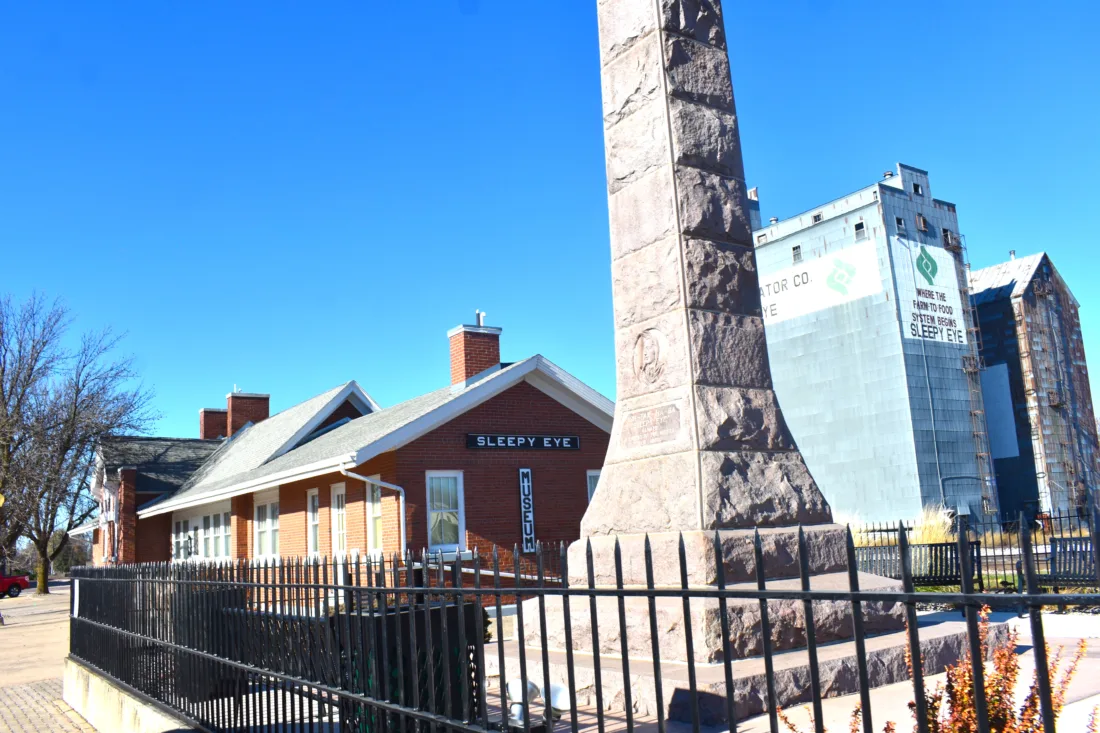
The Sleepy Eye Museum is located in a former railroad depot, which was added to the Register of Historic Places in 1992. Directly outside the museum is a monument dedicated to Chief Sleepy Eye, for whom the community was named. Photo by Clay Schuldt
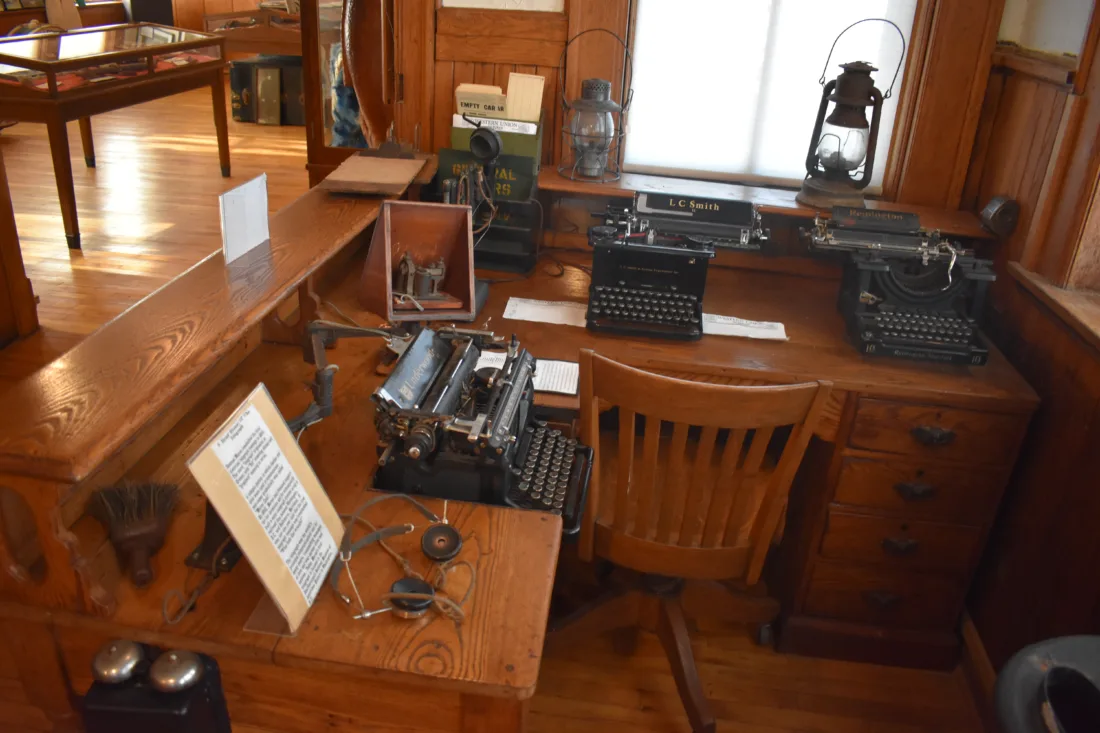
Before it was Sleepy Eye’s Museum, it was a railroad depot, complete with a telegraph station. The Sleepy Eye Historical Society decided to keep the station in place as a permanent display. Photo by Clay Schuldt
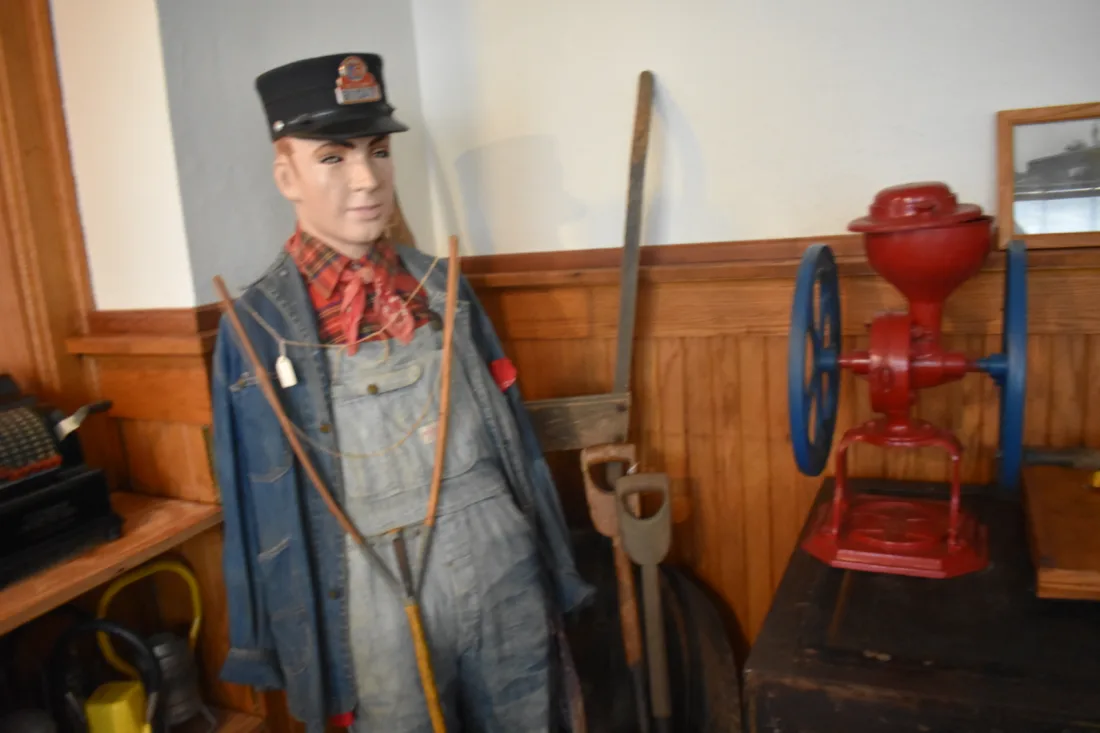
A mannequin in a railroad uniform stands on display in the Sleepy Eye Museum. Photo by Clay Schuldt
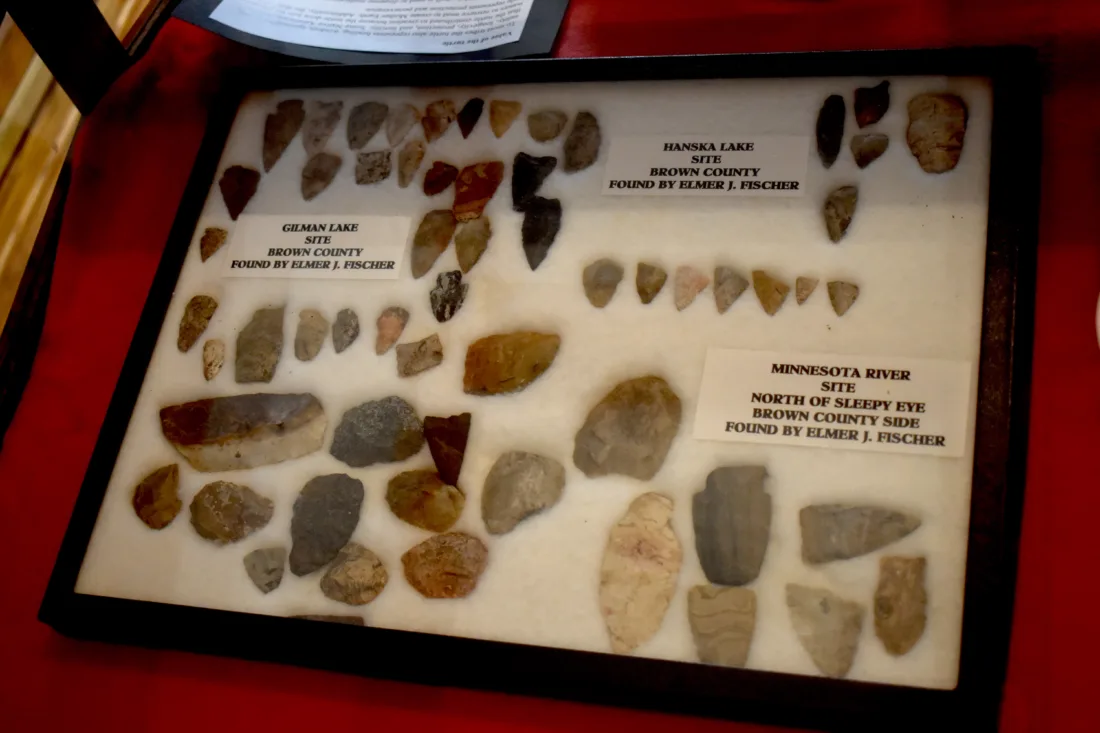
A collection of Native American artifacts found in and around Sleepy Eye. The collection is on permanent display in the Sleepy Eye Museum. Photo by Clay Schuldt
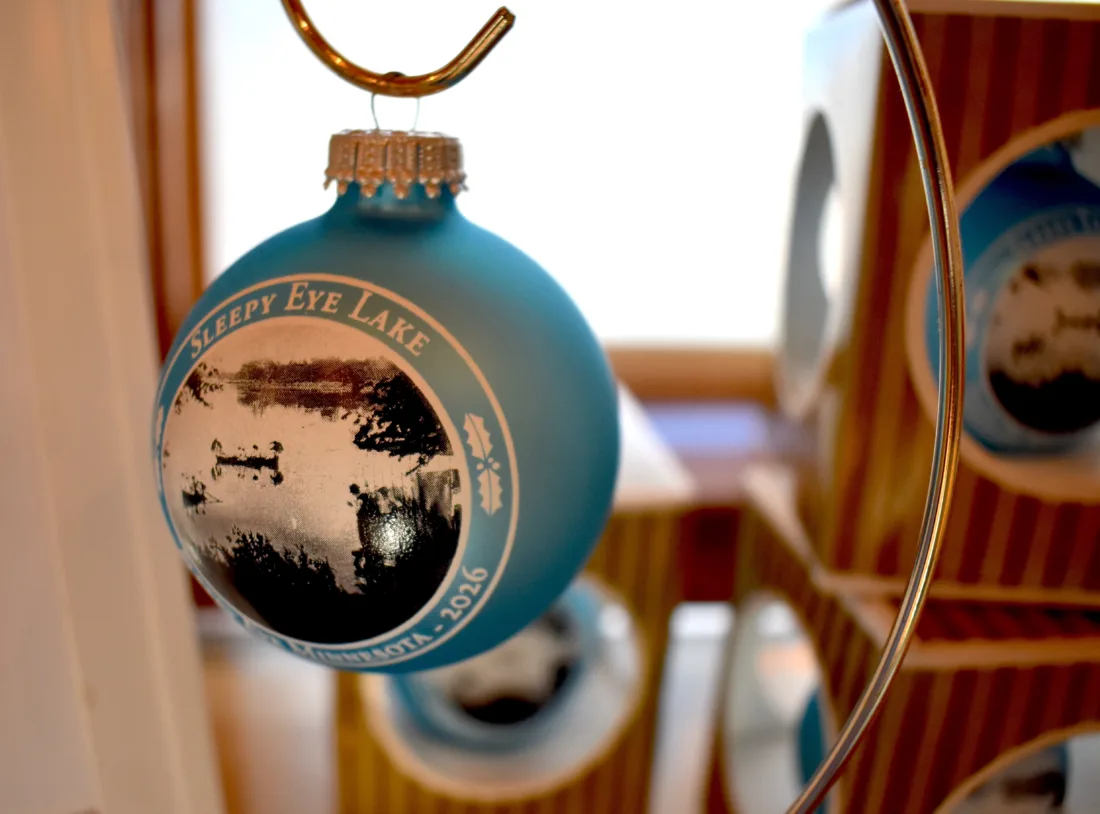
The Sleepy Eye Historical Society has released its 2026 Christmas ornament. This year’s bulb features an image of Sleepy Eye Lake. Photo by Clay Schuldt
The Sleepy Eye Museum is located in a former railroad depot, which was added to the Register of Historic Places in 1992. Directly outside the museum is a monument dedicated to Chief Sleepy Eye, for whom the community was named. Photo by Clay Schuldt
Before it was Sleepy Eye’s Museum, it was a railroad depot, complete with a telegraph station. The Sleepy Eye Historical Society decided to keep the station in place as a permanent display. Photo by Clay Schuldt
A mannequin in a railroad uniform stands on display in the Sleepy Eye Museum. Photo by Clay Schuldt
A collection of Native American artifacts found in and around Sleepy Eye. The collection is on permanent display in the Sleepy Eye Museum. Photo by Clay Schuldt
The Sleepy Eye Historical Society has released its 2026 Christmas ornament. This year’s bulb features an image of Sleepy Eye Lake. Photo by Clay Schuldt
Trending
SLEEPY EYE - The City of Sleepy Eye is full of rich history and for anyone looking to explore it, the museum is the perfect stop.
Sleepy Eye Museum is located at 115 2nd Ave NE in the former Chicago and Northwestern (C&NW) Railroad Depot. The former depot was constructed in 1902 and served as a stop for passenger trains for several decades. However, passenger trains eventually ended. The railroad still runs past the building, but traffic is limited to freight trains.
In 1984, C&NW Railroad offered to sell the depot. An organization called Sleepy Eye Depot Preservation Inc., formed specifically to purchased the historic building and find a new use of it.
Sleepy Eye Museum Coordinator Lorie Hoffmann said originally the preservation group considered using the deport as rental space, but in 1987 Sleepy Eye Historical Society (SEHS) acquired the builiding with a desire to operate as a museum. SEHS had been in operation since 1981, but had no formal location to store artifacts until the former depot became available.
For nearly 40 years, the depot building has served as Sleepy Eye’s main historical hub. The museum houses artifacts from all of Sleepy Eye's history.
However, there are a lot of history in Sleepy Eye and not near enough space to display it all. Hoffmann said there is a lot of historical items in the museum collection that are currently in storage, but they are working on methods of rotating in different items.
Hoffmann said there are some items on permanent display at the museum, but the exhibit in the museum's main room changes each year.
"Recently, I’ve tried to create a new theme for the room each year," Hoffmann said. "Right now, the display features items from Sleepy Eye's business history. The displays at the front of the museum contain business memorabilia, including signs, banners, buttons and other advertising items. Some of the items are from current Sleepy Eye businesses, while others are from businesses that are long closed.
Hoffmann said next year she hopes to feature displays on area schools and churches.
The museum's permanent displays are located in the side rooms. Located in one corner of the museum is the athletics wall, which is dedicated to the community's sports past. Old football and baseball team photos line the walls. There is even a prominent photo of Babe Ruth when he played a Barnstorming Game in Sleepy Eye over 100 years ago.
Hoffmann said the sports display is still under construction, with local volunteers working to reorganize it.
Next to sports is the military section, which includes uniforms donated by Sleepy Eye veterans as well as a section of captured military artifacts from WWII. This section includes a Japanese rifle bayonet and Nazi emblems.
Next to the military display are Native American artifacts, which include a collection of arrowheads, a peace pipe, moccasins and stone tools. This section of the museum also includes historical information on Chief Sleepy Eye, for whom the town was named. The Sleepy Eye monument is also located directly outside the Sleepy Eye Museum.
Hoffmann said the museum has been visited by the descendants of Chief Sleepy Eye.
One of the most prominent permanent displays in the museum is the original telegraph station from when the building was still a depot.
Hoffmann said the telegraph station display is set up the same way the last depot employee had it set up, complete with a wire code cheat sheet next to the typewriter.
Hoffmann said the old depot display is very popular with visitors.
"There are a lot of people who like trains," she said. Many out-of-town visitors drop in specifically to learn about railroad history.
Hoffmann said the Sleepy Eye Museum draws many out-of-state visitors. A lot of families on vacations will drop in while passing through the community. She said it is common for families taking a "Little House on the Prairie" tour to stop in Sleepy Eye on their way to Walnut Grove. There is a connection to the Ingalls family at the museum. One of Sleepy Eye’s first physicians, Dr. Jacob W. B. Wellcome, treated Mary Ingalls after she lost her sight. The museum includes medical artifacts from his practice.
November through April, the Sleepy Eye Museum is open by appointment only. From May to October, it is open 12-5 pm Thursdays and Friday; 9 am to 3 pm Saturday.
The Sleepy Eye Museum will be open from 9 a.m to 12 p.m. on Saturdays in December as part of the Second Annual Christmas Tree Decorating Contest.
The museum will be decorated with Christmas trees by businesses, groups and individuals. The public will have a chance to see the display Saturday, Nov. 28. The public is encouraged to visit the museum and vote on the best tree.
Ahead of the holidays, the museum has also released its 2026 Christmas ornament. This year's ornament includes a photo of Sleepy Eye Lake taken from the former Sleepy Eye Boat House.