
Vintage Barbies come to NU library
Cat Rossing shares collection with community
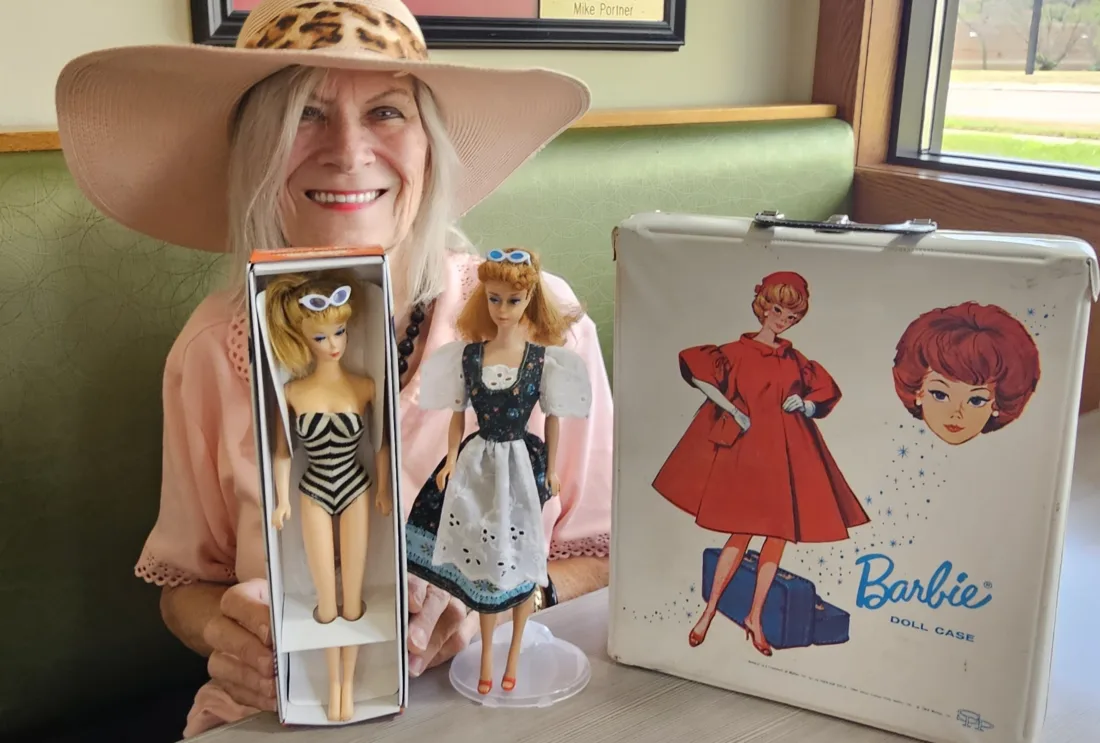
Cat Rossing holds early Barbie dolls and an original Barbie carrying case. Her collection includes first-edition dolls and outfits from 1959-1965. (Photo by Amy Zents)
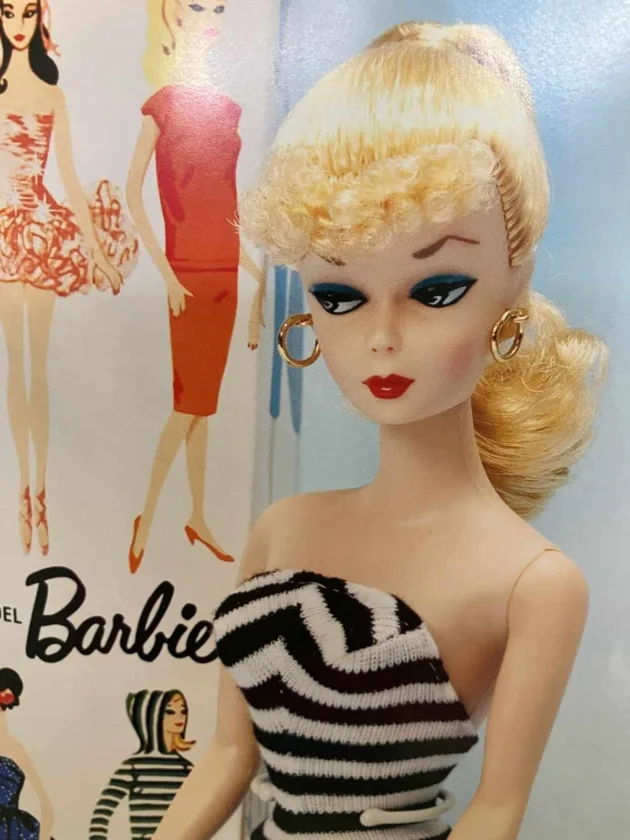
A classic early Barbie from Cat Rossing’s collection. (Photo by Amy Zents)
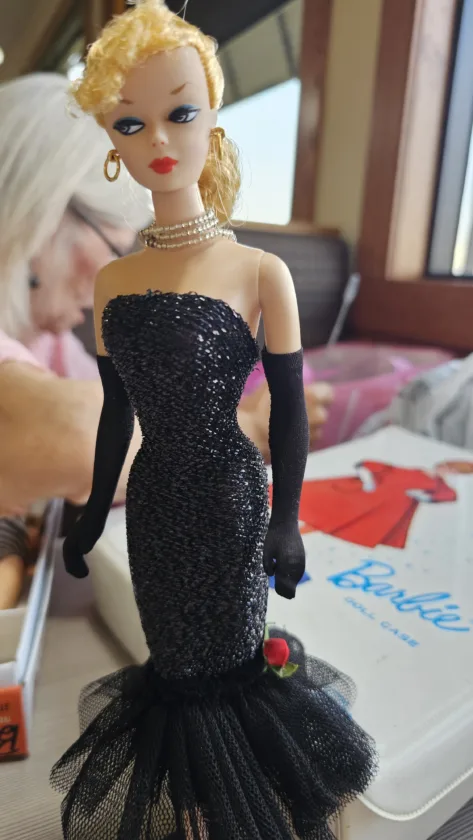
An early Barbie dressed in formal evening wear. The black long gown is “Solo in the Spotlight” (Barbie fashion #982) from Cat Rossing’s collection of 1959–1965 dolls and fashions. (Photo by Amy Zents)
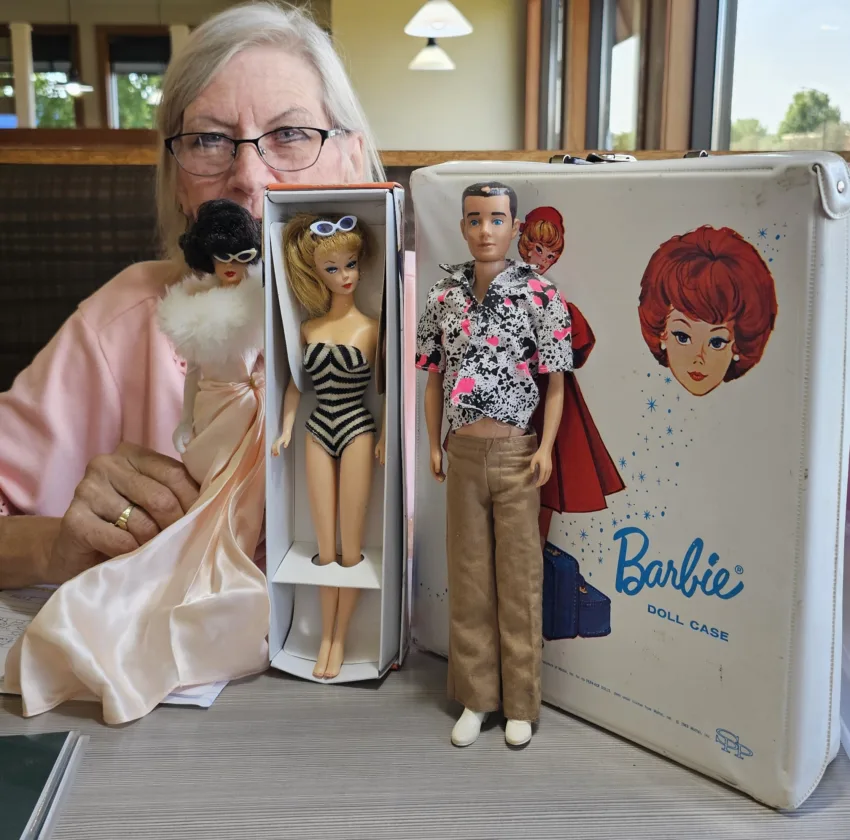
Cat Rossing (right) shows part of her vintage Barbie collection, including boxed dolls and an original Barbie carrying case. (Photo by Amy Zents)
Cat Rossing holds early Barbie dolls and an original Barbie carrying case. Her collection includes first-edition dolls and outfits from 1959-1965. (Photo by Amy Zents)
A classic early Barbie from Cat Rossing’s collection. (Photo by Amy Zents)
An early Barbie dressed in formal evening wear. The black long gown is “Solo in the Spotlight” (Barbie fashion #982) from Cat Rossing’s collection of 1959–1965 dolls and fashions. (Photo by Amy Zents)
Cat Rossing (right) shows part of her vintage Barbie collection, including boxed dolls and an original Barbie carrying case. (Photo by Amy Zents)
Trending
NEW ULM – On Monday, August 3, the New Ulm Public Library will open its doors to a colorful slice of mid-century childhood.
Local collector Cat Rossing is bringing a carefully chosen selection of her vintage Barbie dolls, original fashions, and accessories for a public display that focuses on the earliest years of the iconic doll, from 1959 through 1965.
This marks the first time Rossing has shared a portion of her long-held collection in a community setting.
Rossing's display stays firmly in those foundational years. She has no interest in later career dolls, celebrity editions, or modern interpretations for this particular exhibit.
The focus remains on the original concept: a teenage fashion figure who could become whatever a child imagined: nurse, college student, party-goer, or simply a best friend.
Ruth Handler, co-founder of Mattel toy company, introduced Barbie to the world in April 1959.
Handler noticed her daughter Barbara's frustration with paper dolls whose tabs constantly tore. She envisioned a three-dimensional fashion doll the same size, 11½ inches, that girls could dress and re-dress as they pleased.
The doll was named after their daughter Barbara’s nickname, “Barbie.”
Mattel had already revolutionized toy marketing in 1955 by making a bold $500,000 investment to advertise year-round on the Mickey Mouse Club.
When Barbie debuted four years later, Mattel leveraged that same TV power to air commercials directly to millions of young viewers.
The exposure helped the new doll take off quickly and become a cultural fixture.
Ken arrived two years later, named after the Handlers' son, Kenneth.
Early friends such as Midge followed, all sharing the same body size so clothing could be mixed and matched.
Rossing, 66, who was born the same year as Barbie debuted, has been collecting since she was about 10.
Growing up in a large extended family, she often received hand-me-down dolls from older cousins.
"I always got everybody's hand-me-downs," she recalled during a recent conversation. "I was thrilled. I loved going to my cousins' houses and playing with Barbies."
What began as childhood play gradually grew into a lifelong passion centered on the original straight-legged dolls and their meticulously made outfits.
She concentrates on the first six years of Barbie production.
Those early dolls, sometimes called first-edition or "straight-leg" Barbies, feature solid legs that do not bend at the knee. Rossing prefers them for both historical accuracy and practical reasons.
"They were so easy to dress," she said.
Later versions with bendable knees, she said frustrated many young owners because the rubbery legs made changing clothes difficult.
Visitors to the library will see a range of original fashions from that era, along with the tiny accessories that once filled playrooms across the country: open-toe shoes, gloves, sunglasses, stands, and more.
Rossing has preserved many complete outfits and takes care to keep the pieces together. She is especially fond of the quality of the early clothing.
"The outfits were of unmatched quality," she said. "That was their big statement."
Rossing also restores the dolls herself.
One common problem with the early dolls is green staining on the ears caused by the original metal hoop earrings.
"If they have green ears from leaving the earrings in, you have to take Cascade and a little bit of bleach and let it sit," she explained.
She handles the hair gently to preserve its vintage curl and carefully cleans and repairs clothing and accessories.
Her sister-in-law, Barb Schmidt, has watched this process over the years.
Schmidt, who never played with Barbies as a child despite her first name, still admires the care Rossing brings to the collection.
"I don't think Catherine grew up with money," Schmidt said. "I think she learned to be a thrifter and acquire other people's throwaways, and then she'd fix them."
Schmidt recalled handing Rossing a childhood Barbie that belonged to a friend.
"Immediately when I handed it to Catherine, she knew exactly what to do," Schmidt said. "Fix the outfit, the earrings that were fading, and you know all these different things."
Rossing continues to find pieces through thrift shops, yard sales, and family connections.
She still checks attics and secondhand stores when she travels. The hunt remains part of the pleasure.
"We're always looking," she said with a smile.
Library staff welcomed the idea after Rossing mentioned her collection while browsing a vintage Barbie book at the library one day. The response was enthusiastic.
“They're all excited. They're so pumped up about this," Rossing said.
She plans to bring stands so the dolls can be properly displayed and will include a few of the original cases and accessories that complete the picture.
The display will highlight the imaginative play these dolls once inspired.
Rossing remembers a time before screens, when children spent hours changing clothes, inventing stories, and sharing outfits with friends.
"Life was a simpler time back then," she said. "You used your imagination. It was in your own mind, and you learned to get along with other girls. That was half the fun, getting a doll trunk at Christmas, so you could take your dolls along and hang out with your friends."
The exhibit is free and open to the public.
Rossing hopes it will appeal not only to children but to the adults who once played with these same dolls, or who wished they had.
"It's not just for kids," she said. "It's for grown-up kids. Grandmas are just antique little girls now, and we get to relive it."
For many baby boomers, the sight of an original bubble-cut Barbie, or a carefully preserved early outfit may stir memories of birthday presents, shared play sessions, and the pure pleasure of dressing a doll in tiny, well-made clothes.
For younger visitors, the display offers a tangible look at a cultural icon in its earliest form.
Rossing will be present during the setup and opening.
She is happy to talk about the dolls and the stories behind them, though she asks that the focus remain on the history, the craftsmanship, and the joy of collecting rather than any commercial aspects.
Whether you once owned a Barbie, received a hand-me-down, or simply enjoy local history and craftsmanship, the display offers a chance to step back into a time when imagination was the main accessory.
Rossing summed up her own relationship with the collection simply: "They're like my family, and they all get along."
On August 3, a few of those "family members" will make their public debut in New Ulm.
The New Ulm Public Library invites the community to stop by on Monday, August 3, beginning at 3:30 p.m. to see these carefully preserved pieces of mid-century American childhood.