
Jeffers Petroglyphs unveils new visitor center exhibits
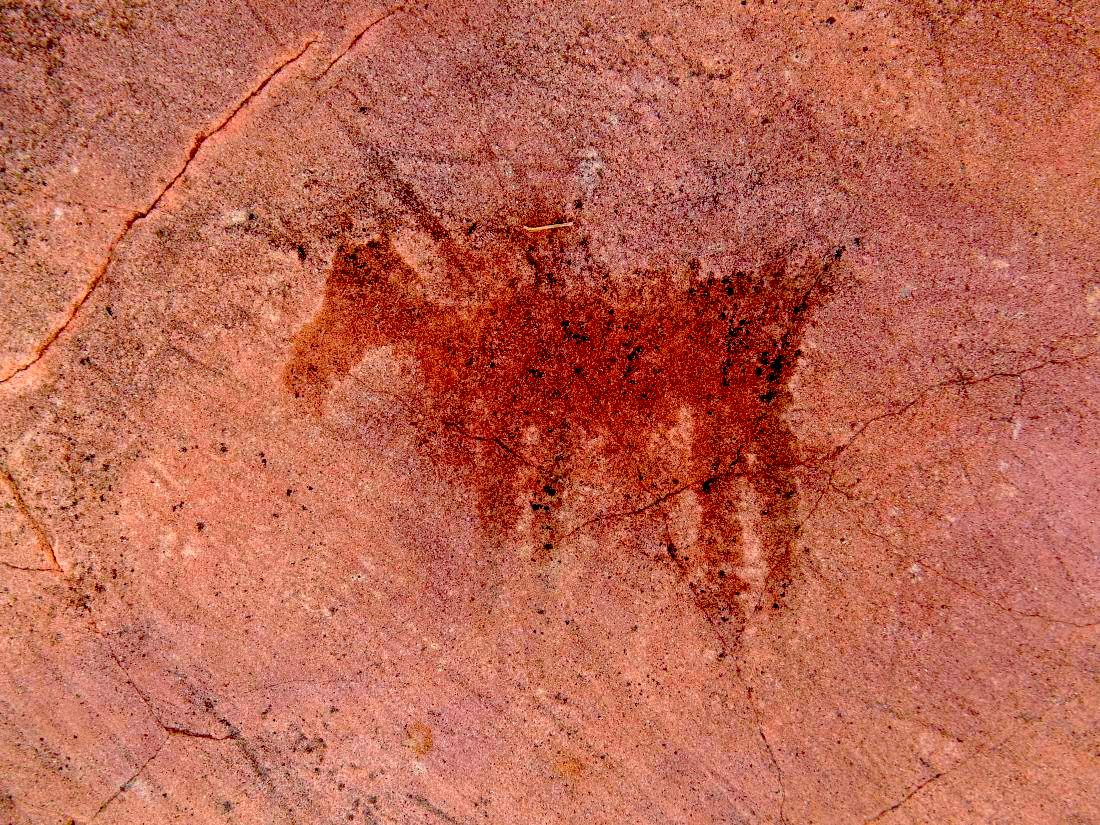
A centuries old carving of a bison at the Jeffers Petroglyphs. Photo by Fritz Busch
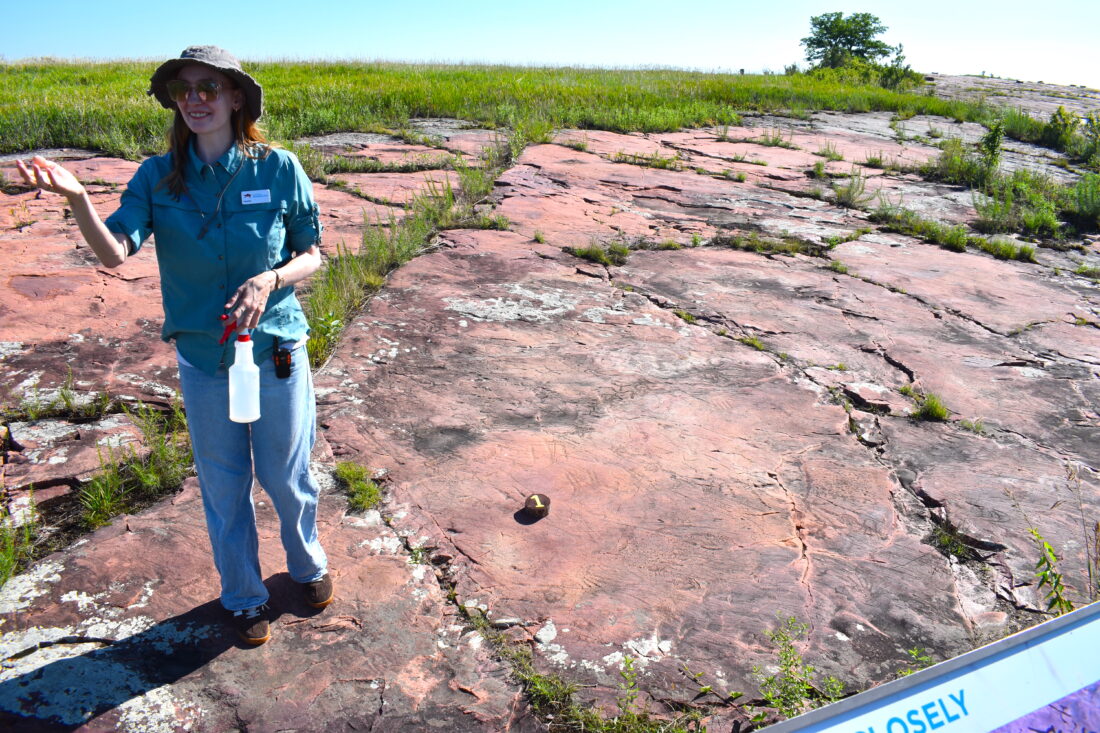
Historical interpreter Haylee Behrends marks a number of petroglyphs while leading a sunrise tour at the Jeffers Petroglyphs site. Photos by Fritz Busch
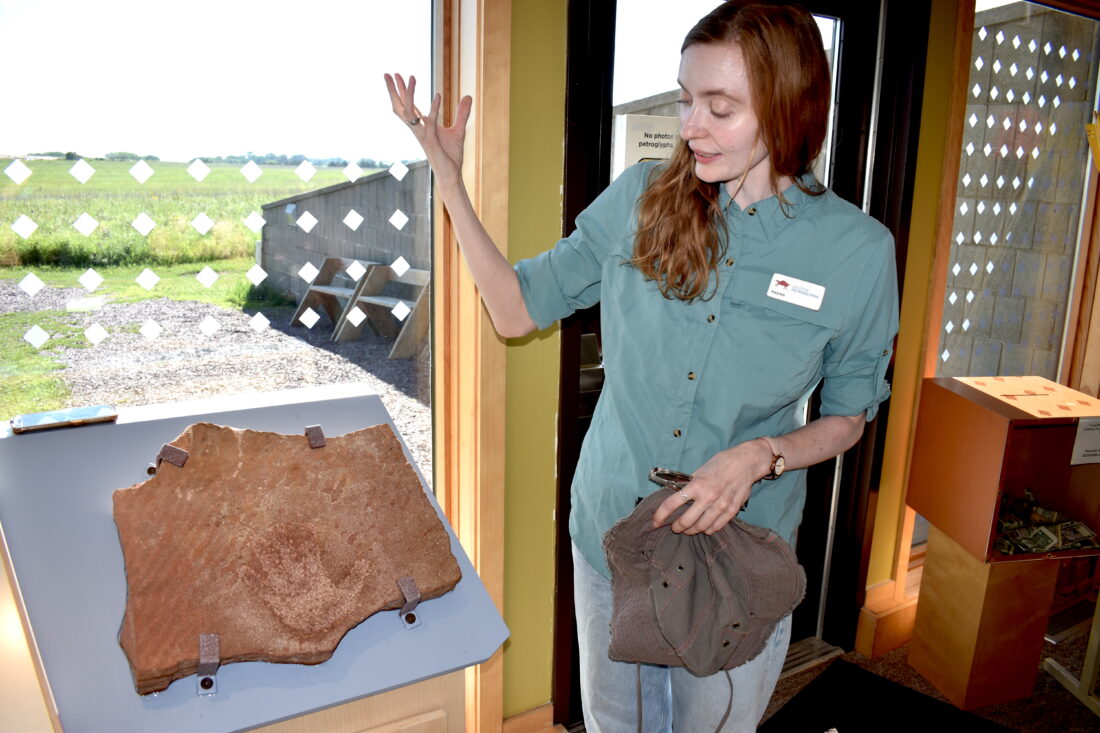
Historical interpreter Haylee Behrends talks about petroglyphs near an experimentally-created hand image on a quartzite rock slab during a July 11 sunrise tour at Jeffers Petroglyphs.
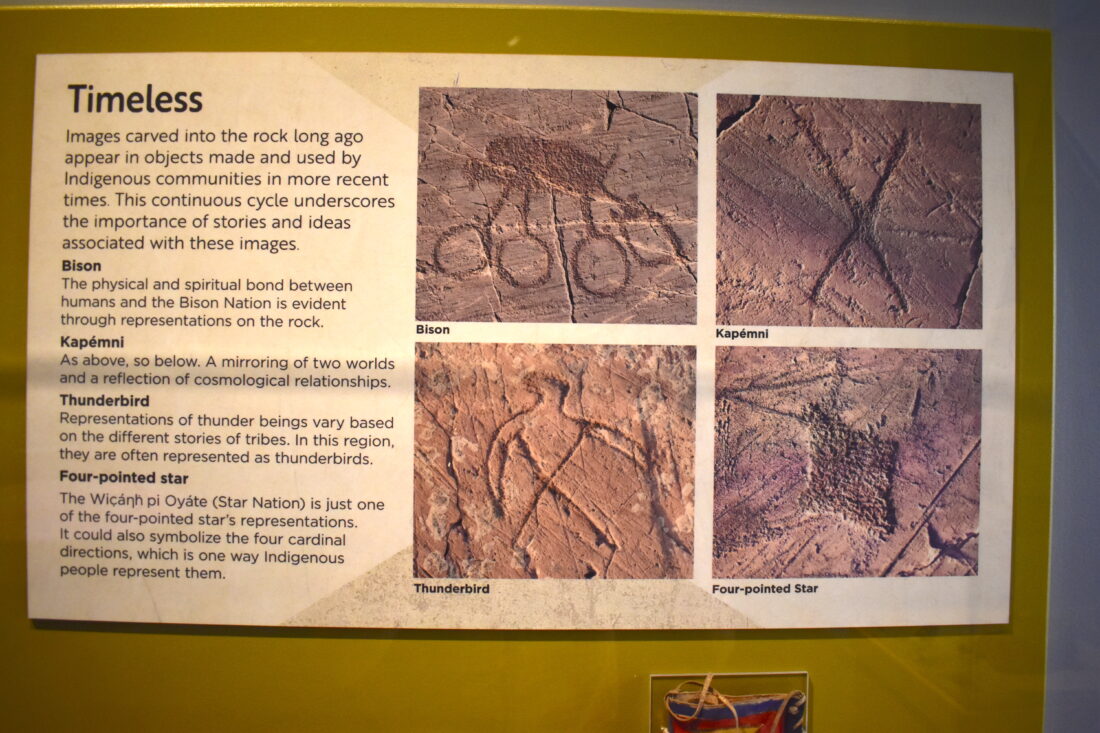
Historical signage at the Jeffers Petroglyphs visitor center explaining some of the carvings. By Fritz Busch
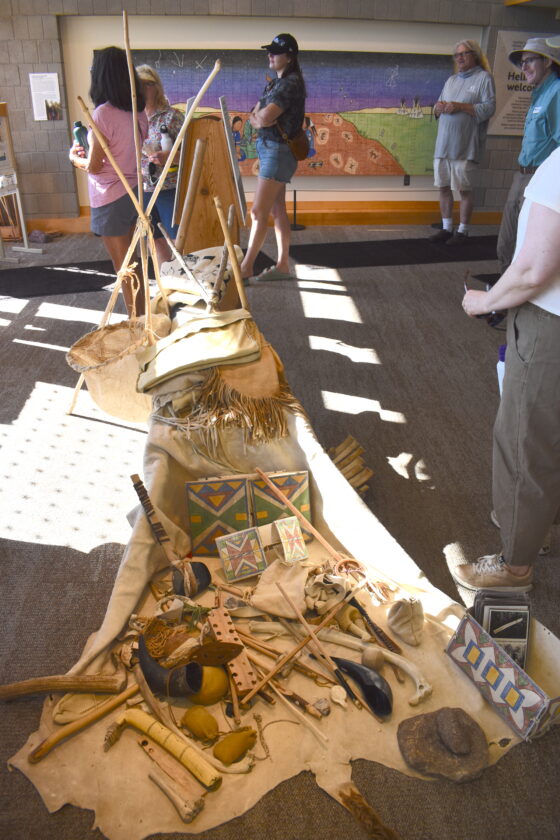
Visitors tour some of the new exhibits at the Jeffers Petroglyphs visitors center.
A centuries old carving of a bison at the Jeffers Petroglyphs. Photo by Fritz Busch
Historical interpreter Haylee Behrends marks a number of petroglyphs while leading a sunrise tour at the Jeffers Petroglyphs site. Photos by Fritz Busch
Historical interpreter Haylee Behrends talks about petroglyphs near an experimentally-created hand image on a quartzite rock slab during a July 11 sunrise tour at Jeffers Petroglyphs.
Historical signage at the Jeffers Petroglyphs visitor center explaining some of the carvings. By Fritz Busch
Visitors tour some of the new exhibits at the Jeffers Petroglyphs visitors center.
Trending
Jeffers Petroglyphs, home to thousands of rock carvings made by ancestors of today's Native Americans as long as 7,000 years ago, offers a newly redesigned visitor center this summer.
Updated displays with interactive elements and new multimedia installations allow visitors to engage with the stories, symbols, and traditions connected to the petroglyphs.
Sunrise tours are available 9:15 to 10:15 a.m. on select Saturdays through Aug. 22. The sun's position affects how well petroglyphs can be seen. They're easiest to see when the sun is low in the sky.
Minnesota Historical Society Historical Interpreter Haylee Behrends talked about the petroglyphs in detail during a July 11 sunrise tour. She displayed a large quartzite slab with a hand image that was experimentally recreated in the interpretive center that can be touched by tour participants.
"The quartzite rock slab here is common in southwest Minnesota. It's very stable, hard rock," she said. "A few years ago, our site manager, who was an archaeologist wanted to know how the petroglyphs were made. We don't know for sure, but the marks on the rocks indicate it was probably a hammer stone of some kind, a piece of rock used as a hammer."
She said viewing the petroglyphs is best earlier in the morning or around dusk in summer, when the sun's position creates more of a shadow effect than later in the day.
"All the carvings here are on a reddish-pink quartzite rock outcropping on a high point, the 23-mile long Red Rock Ridge in the middle of prairie land," said Behrends. "This is definitely a destination in and of itself. This rock is 1.6 billion years old."
According to petroglyphs signage, site visitors can see different petroglyphs at different times of the day or year.
Many of the carvings are of buffalo. Other examples are spear points, used by early people in Minnesota said to inhabit the area 9,000 to 12,000 years ago.
Atlatls, a powerful hunting tool used before bows and arrows for spear throwing, can be seen among the carvings. The tools have a hook on one end and a hand grip or finger loops on the other that enable darts to travel further and faster than throwing them from the hand.
Petroglyphs were described as pictorial communication used used in many ways including telling family history, among other things.
The carvings are sacred, prayers, teaching tools, an encyclopedia, marks from ancestors, mysterious and spiritual, according to Joe Williams of the Wahpeton-Sisseton Oyate.
Tour participants were warned of prickly pear cactus with long, sharp spines growing on quartzite rock that hook into animal hides and people's footwear.
The Red Rock Ridge that preserves the petroglyphs saved the prairie around it.
Tough, shallow soil made poor farmland. Hundreds of acres around the ridge were never plowed.
The site maintains 33 acres of native prairie and more than 100 acres of restored prairie.
In 1974, the Minnesota Historical Society began one of the state's first prairie restorations. Today, it is one of the highest-quality prairies in the Midwest with nearly 300 species of flowering plants.
Prairie bush clover, with silvery-green leaves, chocolate-brown pods and pink or lavender flowers, grows at the Jeffers Petroglyphs. Found in just four Midwestern states, the plant is a threatened species in danger of extinction. Very few pods contain seeds, and very few seeds take root. Those that take root, seldom survive their first two winters.
Other flowers and grasses include rattlesnake master, red clover, cordgrass, cup plants, sedge and buffalo grass that will grow six to seven feet tall this fall.
Jeffers Petroglyphs visitors can take home a science and nature activity kit for K-6 students from the Bell Museum at the University of Minnesota.
Site admission is $12 for adults, $10 for seniors, veterans, active military and college students, $8 for children age 5-17. Children under age 4 are free.
Hours are 10 a.m. to 8 p.m. Thursday through Saturday and 11 a.m. to 5 p.m. Sunday.
For more information, call 507-628-5591 or visit https://www.mnhs.org/jefferspetroglyphs.