
Recalling life on the Poor Farm
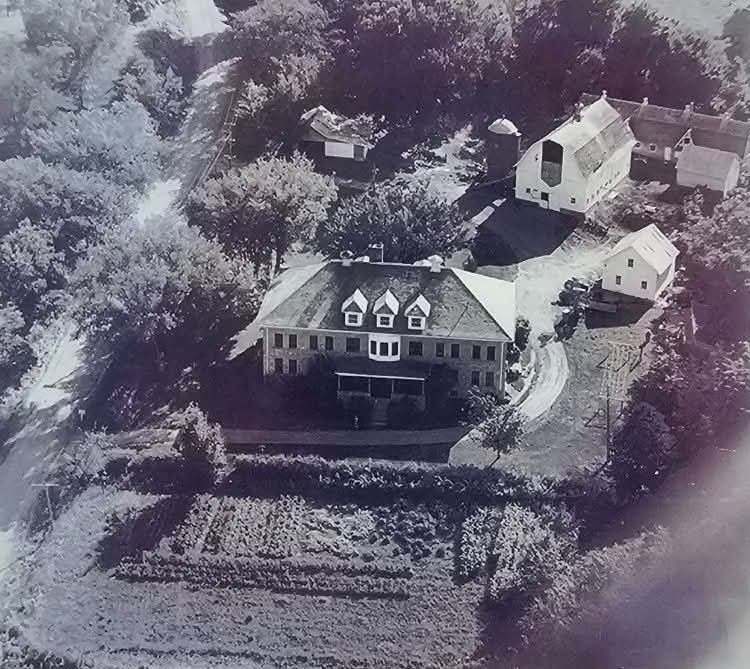
Aerial view of the Brown County Poor Farm, showing the main house, outbuildings, and surrounding farmland as it appeared during the era when Ann Vogel and Norma “Bunny” Wieland spent time there. (Courtesy of Norma Wieland)
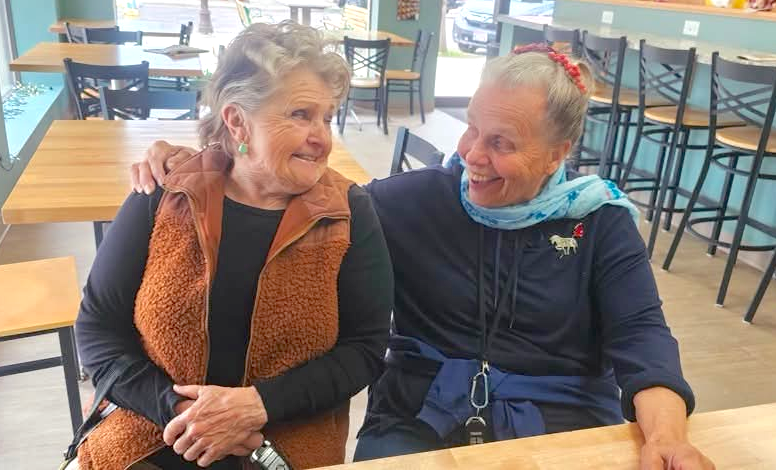
Lifelong friends Norma “Bunny” Wieland (left) and Dr. Ann Vogel share a laugh. The two have remained close for more than 80 years since meeting in first grade. (Photo by Amy Zents)
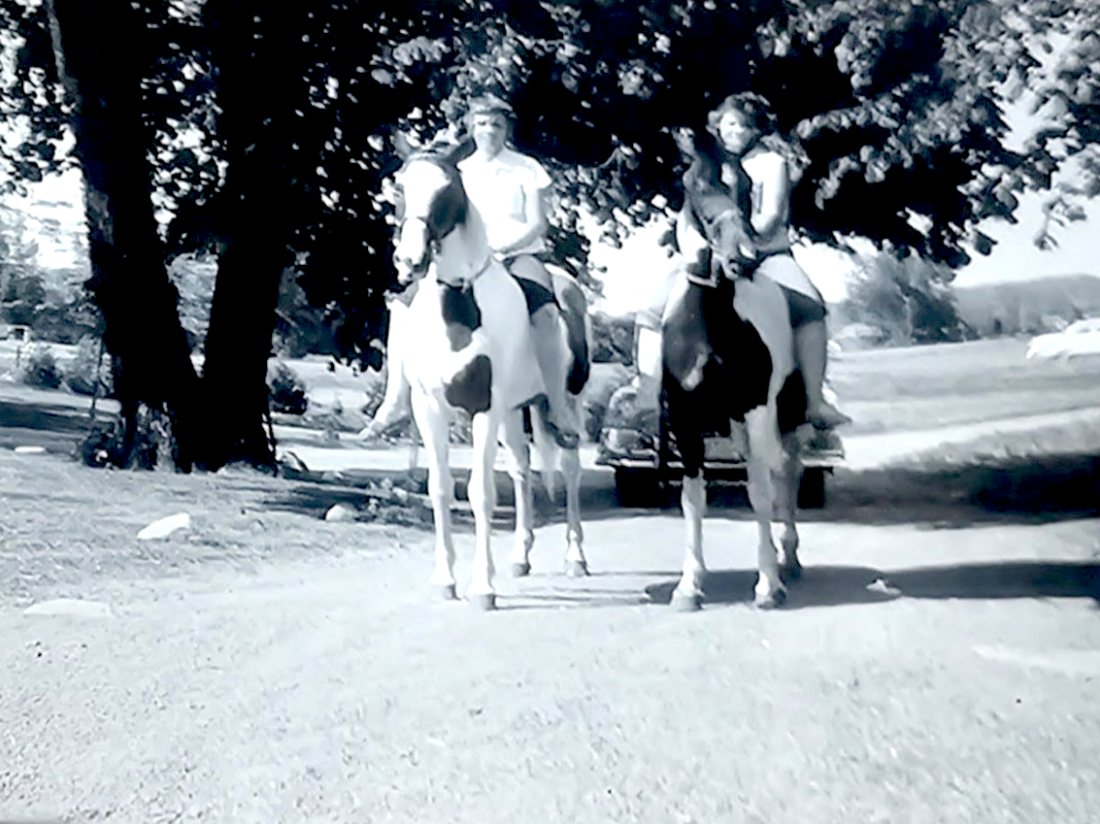
Ann Vogel (left) riding a horse named lady and Norma “Bunny” Wieland (right) riding a horse named star on the Poor Farm in 1956.
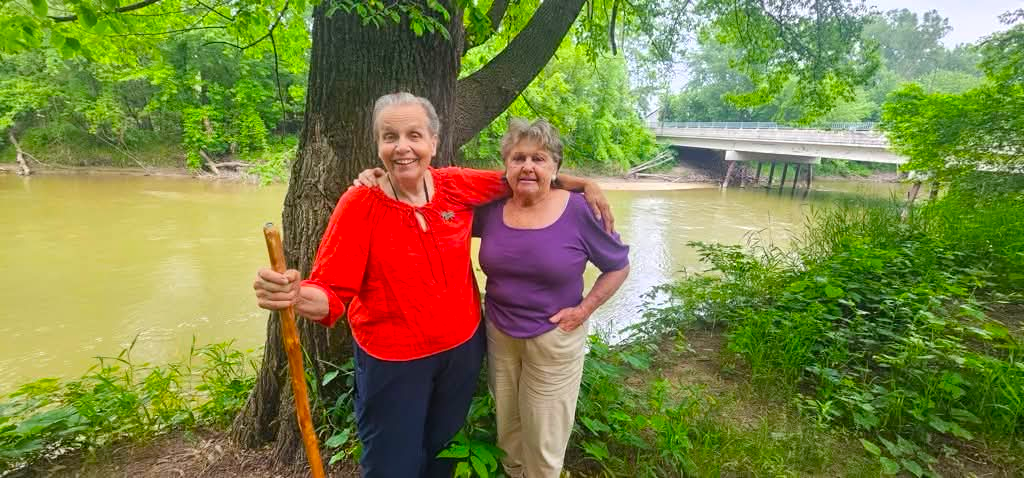
Dr. Ann Vogel (left) and Norma “Bunny” Wieland (right) stand by the Cottonwood River. The friends used to ride their horses along trails in this area. (Photo by Amy Zents)
Aerial view of the Brown County Poor Farm, showing the main house, outbuildings, and surrounding farmland as it appeared during the era when Ann Vogel and Norma “Bunny” Wieland spent time there. (Courtesy of Norma Wieland)
Lifelong friends Norma “Bunny” Wieland (left) and Dr. Ann Vogel share a laugh. The two have remained close for more than 80 years since meeting in first grade. (Photo by Amy Zents)
Ann Vogel (left) riding a horse named lady and Norma “Bunny” Wieland (right) riding a horse named star on the Poor Farm in 1956.
Dr. Ann Vogel (left) and Norma “Bunny” Wieland (right) stand by the Cottonwood River. The friends used to ride their horses along trails in this area. (Photo by Amy Zents)
Trending
NEW ULM -- Dr. Ann Vogel and Norma "Bunny" Wieland, two lifelong friends recently shared memories of growing up at the Brown County Poor Farm.
Poor farms were county-run facilities that provided housing, meals and basic care for elderly residents and others who had no family support or means to care for themselves.
In many rural areas, including Brown County, they operated as a form of early public assistance, often combining living quarters with farmland worked by residents and staff.
Vogel and Wieland spent many hours on the grounds in the 1950s and early 1960s while Wieland's parents managed the facility. Their stories offer a window into a chapter of local history that ended in 1965.
The Brown County Poor Farm stood along what is now Cottonwood Street, then known as Poor Farm Road. Wieland's parents, Norman and Linda (Tews) Wieland, ran the operation during two stretches between 1950 and 1965.
The home cared for roughly 21 elderly men from several counties, most of them older bachelors from Europe who had worked as hired hands on area farms.
"Some of the older gentlemen living at the poor farm helped with daily chores on the acreage," Wieland said. "They raised weaned calves, milked cows, repaired pasture gates and fences, and worked in the large vegetable garden."
A longtime cook named Frieda MacIninch, who came from Canada, prepared meals on a four-burner gas stove. Residents lived in barracks-style quarters.
Norman Wieland hauled coal for the furnace and truckloads of “spent grain,” primarily malt, from Schell's Brewery for livestock feed.
"According to Ted Marti of the Marti family at the brewery, this was the term for the brewing byproduct," Wieland said. The chickens and ducks would gather near the tilted truck bed and sip the leaking juice. "The ducks or chickens would get kind of tipsy," she recalled. The larger livestock did not.
Vogel and Wieland met in first grade at St. Paul's Lutheran grade school and shared classrooms all the way through their graduation from New Ulm Public High School. They sat near each other in school because of alphabetical order -- Vogel under V and Wieland under W.
They rode bareback on their Paint horses. Vogel's cost $50 and Wieland's $25, both purchased from farmer Reuben Schreyer. Saddles were often left behind, especially in winter.
"We threw buffalo robes over our laps for warmth," Wieland said.
They frequently rode through Adams Park and along the roads near the poor farm. Vogel's aunt, Martha Backer, often drove her out to visit.
The girls' adventures often led them to the Cottonwood River.
"We roasted hot dogs over campfires even in winter," Wieland said.
They trapped pocket gophers and once rode all the way to Schell's Brewery with a nursing foal trailing its mother.
The Cottenwood river could be dangerous, with its fast current, sandy bottom and submerged driftwood.
"Ann described it as very dangerous," Wieland said. One child had drowned there years earlier, and signs still warn visitors about strong currents and high water.
Wieland's great-grandfather, Fred Wieland Sr., and grandfather, Fred Wieland Jr., worked on the original Poor Farm bridge construction in 1907.
The girls had close calls of their own. Vogel remembered one time her horse sank partway into the riverbank.
"My horse sank with half of her hind legs buried in the river bank," Vogel said. "I kicked the living daylights out of her. I hung on to her mane."
The horse scrambled back to solid ground.
Crossing the nearby Metzen Bridge with its metal plates also made the horses nervous.
"Especially Lightning," Vogel recalled. "Her shod hoofs would go clickety-clack."
Lightning had horseshoes on her front hooves only because the girls could only afford to pay for the front ones. Their parents did not cover the cost of the blacksmith.
One memorable mishap occurred when the old sleigh harness disintegrated mid-ride. Vogel had to pull the sleigh herself while Wieland led the horse.
Daily routines included helping with laundry. The girls picked up clean bundles from the Oswald Laundry, wrapped in brown paper and tied with white string.
They called out residents' names and tossed the bundles onto beds in the second-floor ward. They set tables for supper and rang a heavy cowbell.
"They came running like a herd of elephants," Vogel recalled.
Meals featured home-cooked food with bread and dessert, usually peach or pear sauce. Wonder Bread, donuts and cookies arrived twice a week from delivery man Mr. Larson.
At Christmas, local clubs brought gifts and sang carols. One club donated a television set. Residents watched Kate Smith and would say good night to her.
Farm chores mixed with play. When it was time to castrate hogs, the girls assisted. On one occasion, a calf needed transport but there was no proper wagon available.
Norman Wieland padded a manure spreader with straw bales. Vogel and Wieland climbed on top to hold the calf down during the trip.
One of the most memorable experiences came on July 31, 1956. Wieland called Vogel early that morning. Their shared Palomino mare, Sunshine, was about to foal.
The girls prepared army cots, hot dogs, Seven-Up and a deck of cards. They settled into the barn and waited from 5 p.m. until after midnight.
"Around 1 a.m., things started to happen," Vogel said. "In 15 short minutes, we had a beautiful red filly with two white stocking feet and a small white blaze on her forehead."
They named her Dawn because she arrived as the day was breaking. The excited girls sent out birth announcements and Christmas cards featuring the new foal.
The Brown County Poor Farm closed around 1965 as newer facilities like Highland Manor opened.
Broader changes in federal and state welfare programs shifted responsibility away from county-run homes.
Vogel and Wieland, both born in the early 1940s, revisited the area recently. Much of the former pasture and buildings are now homes.
"Our top pasture is all houses now," Wieland said.
"It was like visiting Brigadoon," Vogel said of the changed landscape.
The friends remain close more than 80 years after they met.
Wieland recalled a resident who played the fiddle and claimed he had performed for the king of Norway.
"Now you can take that with a grain of salt," she said. "I don't know if it was true or not, but it's a nice story."
The friends also remembered smaller details of daily life. They helped deliver laundry and called out names. They rang the cowbell for meals. They watched the men come running.
Wieland said her parents managed the facility for about 20 years in total. The home served men from Brown and surrounding counties.
The Poor Farm era reflected a time when counties directly cared for elderly residents who had no other support.
Their stories preserve a piece of New Ulm history that might otherwise fade. The 1956 photo of the two girls on horseback captures a moment that still resonates decades later.