
Space quality, not quantity, is problem at junior high
Trending
So what's the matter with the junior high?
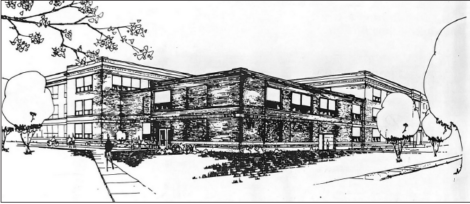
Why should the public pay $650,000to build a three-level addition?
And won't the crowding problem go away with projected declines in enrollment?
Those are questions that District 88 voters will be asking themselves and each other before the special referendum Tuesday on whether to authorize that $650,000 for a junior high addition.
Those same questions have been considered by the District 88 board of education, which authorized the referendum. The amalgam answer that the board and school administrators came up with goes like this:
The junior high is crowded this year, and while it may be less crowded in coming years, it is crowding in particular areas that necessitates expansion.
Those particular crowded areas include industrial arts, art and mathematics. Space scarcity in industrial arts and art, of course, means cramped storage for materials, including some odorous and some downright dangerously flammable and toxic chemicals.
POWER AND energy instructor Dean Lindquist runs a class that deals with motors, including gasoline motors. That kind of class should have a concrete floor under it, he said, but the junior high class meets over a wood floor.
The volatile substances can soak into a wood floor and make the wood that much more flammable, even through a wax finish. Lindquist said that among the volatiles his class uses is carburetor cleaning fluid, which burns 10 times faster than gasoline.
He could give up the volatiles and the gasoline engines with which the class works, but he argued that the course was extremely popular with junior high students. "I feel that the course is going the right direction," he said. "We had a lot of good kids."
Lindquist emphasized the fire danger in his teaching area. Only a wood panel separates the power and energy room from the woodworking room, and if that door burned out there would be a "beautiful draft" that would fan the fire.
"Some parents came in last year," he said, "and they didn't think we needed a new building. But when they left they sure did."
VENTILATION IS another problem with the existing power and energy room. Lindquist brought his own fan from home to move fumes out faster, but he still says he has to take the class and evacuate the room occasionally.
He has to remain especially wary of carbon monoxide buildup in the room when motors are running. Monoxide fills a room like water fills a fish tank, he explained--from the bottom up.
"Little kids get carbon monoxide first," he said. "If you're over six feet you might make it to the door."
Principal Dean Risius said the district has explored the possible use of temporary classrooms as relief for the shop crowding, but it didn't wash.
The state requires concrete floor for industrial arts classes, he said, and no amount of room juggling will provide the school with more than its present one concrete floor space.
Art classes don't need a concrete floor. They just need more area. Art instructor John Ingebritson, dismissing his before-lunch art class in room 218, said he was perfectly satisfied with his room.
"This is a very fine room," he said."The trouble is we don't have another one."
THEY DO have another one, of course, but it is a converted math room without running water. The proposed addition would provide two new art rooms, with the present makeshift art room going back to math classes.
Risius explained that, even though enrollment will probably decline in coming years, the junior high still needs more room.
The state requires a certain number of art teachers per student enrolled, he said, and each art teacher needs a room.
The junior high presently employs two full time teachers and one three-fifths time teacher to meet the state's requirements. The present two art rooms limit the school to two art teachers, he said, and two art teachers limit enrollment to 690 students.
The problem is, Risius continued ,present enrollment is over 900 students, and conservative projections show enrollment will almost certainly not drop below 750 in any of the next six years.
His enrollment figuring takes into account only students coming up through the public school systems, and does not consider parochial school transfers or families moving into town.
The projection, using these guidelines, shows a 10 per cent decline in enrollment between now and 1982-82.
RISIUS SAID he does not know how interested the community is in the proposed bond issue." I work up here all day long," he said,"and don't get involved in the public relations aspect.
"I don't think there's really anybody who has organized a campaign for or against it."
A loss for the bond issue would not ruin morale for the staff or students at the school, said Risius, who has been principal seven years. "The students seem happier being in school today than they were seven years ago," he said. "Students really don't know what there was seven years ago because they weren't here."
Risius is, however, thinking in winning terms. "I think it has a very good chance of passing," he said.
New Ulm Daily Journal
Oct. 3, 1976