
From farming to flight in the Arctic
Dennis Frederickson shares the story of his naval service
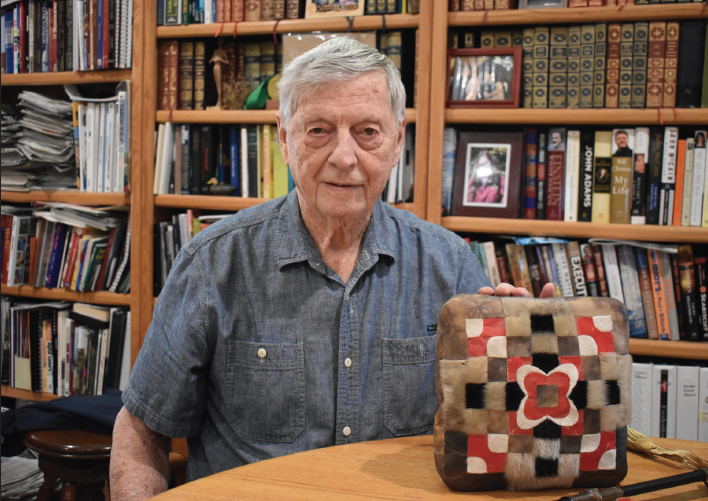
Photo by Dylan Jackson Pictured is Dennis Frederickson with the sealskin pillow he purchased from a village in Greenland.
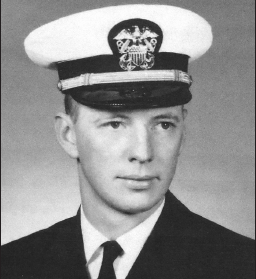
Photo by Dylan Jackson Pictured is Dennis Frederickson with the sealskin pillow he purchased from a village in Greenland.
Trending
Dennis Frederickson grew up on a farm in Morgan, Minnesota, graduating from Morgan High School and attending the University of Minnesota. He received a Bachelor of Science degree in Economics and Agriculture.
Growing up, Frederickson was surrounded by a military family. His father had served in World War I, and his brother-in-law, who had been in the Navy, helped spark his military interest.
Frederickson's wife, Marj, also had relatives in the military. Both Dennis and Marj Frederickson had older brothers who had served in World War II, and Marj's father unknowingly appeared in the same photo as Dennis' father on their way to war.
The picture was taken in North Redwood at the train depot while men who were drafted into the Army were leaving to fight in WWI.
"They were going to fight in Germany in World War I," Frederickson said. "They discovered they left on the same train decades later when they were visiting us in our home here with the picture out and they were both in it."
In 1962, following in the footsteps of his brother-in-law, Frederickson signed up for the Navy.
"If I hadn't joined the Navy, I would have been drafted into the Army," he said.
During his time in the Navy, Frederickson, who was always interested in flying, became an aviator. He spent two years in flight training.
Screening for flight training was incredibly intense.
"There was quite a high attrition rate of people who either decided to quit because it was too tough or there was part of the training that they weren't able to successfully complete," Frederickson said. "Maybe academics, maybe physical, maybe flying. Something like one third of our cadets had been collegiate athletes. It was very intense physical training."
Following flight training, Frederickson served aboard four different Navy ships and one Coast Guard ship as the Senior Aviation Officer.
During his service, Frederickson traveled all over, with notable locations being Greenland and the Mediterranean.
"We escorted supply ships to Thule Air Base and Sondrestrom Air Base, which is far north of the Arctic Circle," Frederickson said. "We saw very primitive villages living on seals, polar bears, and birds that they could catch."
Frederickson said that they brought supplies to these villages. During one of his trips to the villages, he purchased a sealskin pillow.
After his Arctic deployment, Frederickson went to the Mediterranean where he brought admirals and generals to various locations, some of which were highly protected and classified sites.
Frederickson was able to do so because he went to Registered Publication System school in Rhode Island, where he learned how to handle high secret messages.
During one of Frederickson's last deployments, he was stationed on the USS Northampton and the USS Wright National Emergency Command postal float ships when nuclear war was a threat.
"It was a location that the president and cabinet officers might have gone to if the United States had come under attack," Frederickson said.
Frederickson had to be prepared to fly to Washington D.C. and help evacuate high officers if a nuclear attack were to occur.
Frederickson made the decision to leave the military in 1967.
"It was a very tough decision," Frederickson said. "My father wanted to retire from farming and told me if I ever wanted to farm, I was going to have to come back then, because he was quitting."
Frederickson also had three young children to take care of, all of whom had been born while he was on active duty.
"One of them in Pensacola, Florida, and two of them (twins) in New Jersey," Frederickson said.
He stays connected with the military by attending American Legion events, where he enjoys being around other members who had served in the military and spent time on active duty.
To Frederickson, this is what being a veteran means: "It means I did my share to defend the country against enemies or potential enemies. When our country needed me to fly airplanes and take very important admirals and generals around, go to sea, and be separated from my family, I did that."